
✦ Curious
9 Brain Coloring Pages Free printable PDF · color online
ForAges 3–8Home and classroomEasy to detailed
Brain coloring pages here show smiling brain characters holding books and light bulbs, alongside decorative jigsaw-pattern pictures. The broad faces make an easy starting point; small gears and stars suit children who like more detail. Color one character doing something familiar, then talk about a time you used memory, movement or curiosity today.
- Free printable pages
- Sorted by topic and age
- One-click PDF
- Color online
Kids practise: Color choice · Fine motor control · Creative storytelling
Explore related pages
All brain coloring pages

Think Big Brain Artist

Smiling Brain with Light Bulb

Brain with Learning Symbols

Brain Reading a Book

Brain, Book and Pencil

Brain with Jigsaw Shapes and Stars

Detailed Brain and Learning Symbols

Jigsaw-Pattern Brain
At home or in class
Ways to use these pages
1
Name a brain job
Color a smiling brain character and ask what it helped you do today: remember, move, notice or decide.
2
Find the learning icons
On a detailed page, look for a book, pencil, music note or light bulb before filling the little shapes.
3
Draw a new idea
Add a small picture of something the child wants to learn beside the brain character, then label it together.
A friendly picture for a big idea
The smiling brain characters make an unfamiliar body part easier to approach. Some sit with books and light bulbs; others appear next to decorative jigsaw shapes, music notes and school supplies. Start with the simplest character if a child mainly wants to color. For someone curious about how the body works, point to the brain shape and talk about how it helps us think, remember, move, and notice things around us. Those are broad jobs, and a coloring sheet can open the conversation without trying to become a medical lesson.
Match the sheet to the question
The smiling brain and jigsaw-pattern sheets work well when a child asks why the brain is drawn this way. Use a detailed page for an observation game: find the gears, book, light bulb, and other symbols before filling them in. Some retained sheets have many small gears, stars and jigsaw-shaped spaces, so offer a thicker crayon for the large brain outline and colored pencils for the small icons. The coloring is the activity; any facts a child asks for can come from an age-appropriate science book or a trusted classroom resource.
Keep the science concrete
After coloring, ask a child what they used their brain for today: remembering a friend's name, following a recipe, or deciding which color to pick are easy examples. Move to the eye coloring pages to talk about one way we gather information, or browse scientist coloring pages for children testing ideas. A useful follow-up is to let the child make their own small diagram of something they are learning. The picture can carry the explanation, and the grown-up can write down the child's words beside it.
Some pages show a smiling brain with a light bulb; others turn the brain into a dense puzzle of gears, tiny icons and lettered ideas. Begin with the broad character if the goal is an easy introduction. The puzzle pages are better for slow coloring and noticing how many different activities the drawings suggest.
Happy coloring!
Keep the finished brain pages in a folder or hang them up as a seasonal display.
Keep coloring
Related coloring pages
 Eye coloring pages
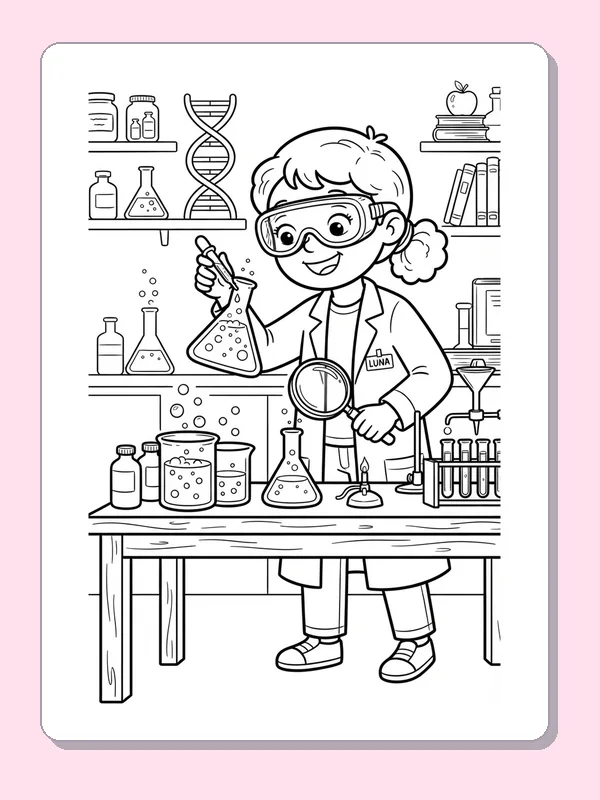 Scientist coloring pages
 Teacher coloring pages
Questions
How many brain pages are here?
There are 9 printable sheets in this collection.
Can I print the whole set?
Yes. Use Print all for a single PDF, or download one sheet from its card.
Can children color these online?
Yes. Every sheet opens in the online coloring tool.