School days
Classroom books, supplies and school-day scenes for the opening weeks.
Everything you need to print for a lesson, a theme week or a quiet afternoon: a school-year calendar, class sets with a name line, letter of the week and ready-made units with the skills each one practises.
Each theme has single pages, a “print all” PDF and a class set: two copies per page with a name line, so 13 sheets cover a class of 26.
Classroom books, supplies and school-day scenes for the opening weeks.
Leaves, apples and pumpkins for autumn science and displays.
Friendly ghosts and pumpkins for the party afternoon.
Gratitude turkey and harvest pages before the break.
Cards, ornaments and a quiet last-week-of-term activity.
Snowmen and polar animals for indoor-recess days.
Friendship cards for the class card swap.
Shamrock shapes, patterns and a rainbow road for a color-words lesson.
Chicks, bunnies and eggs for spring displays.
Cards kids color and give.
End-of-year keepsakes and summer-break packs.
Choose a pictured word for the letter you are teaching, then print one page or the whole letter set. The available collections run from A through Z.
Each class-set page holds two copies of a picture with a name line. Print one page × 13 copies for a class of 26, then cut down the middle.
All pages are black outlines on white. Use your printer's draft or grayscale mode; they still copy cleanly.
Pages are US Letter. On A4 choose “fit to page”.
Every set labels pages Easy or Medium. Give Easy pages to younger or newer colorers and Medium to early finishers.
Thank-you week coming up? Pick a favorite printable page and let children write a message on the back.
Each unit is a themed set with the skills it practises, ideas for the table, a complete coloring book and online coloring for screen days.
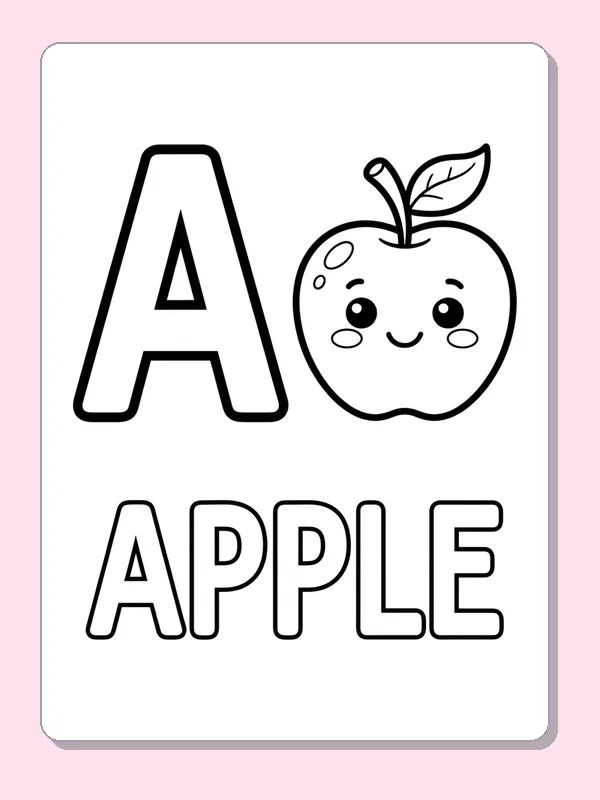
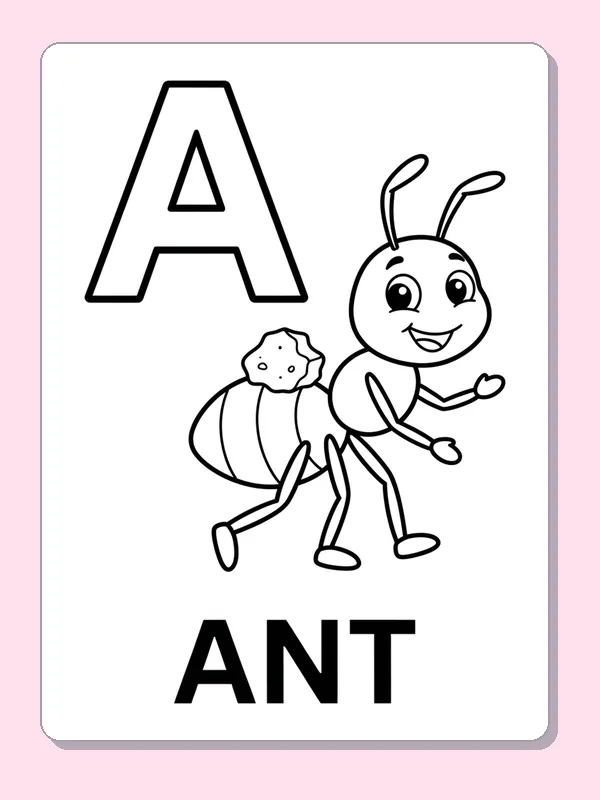
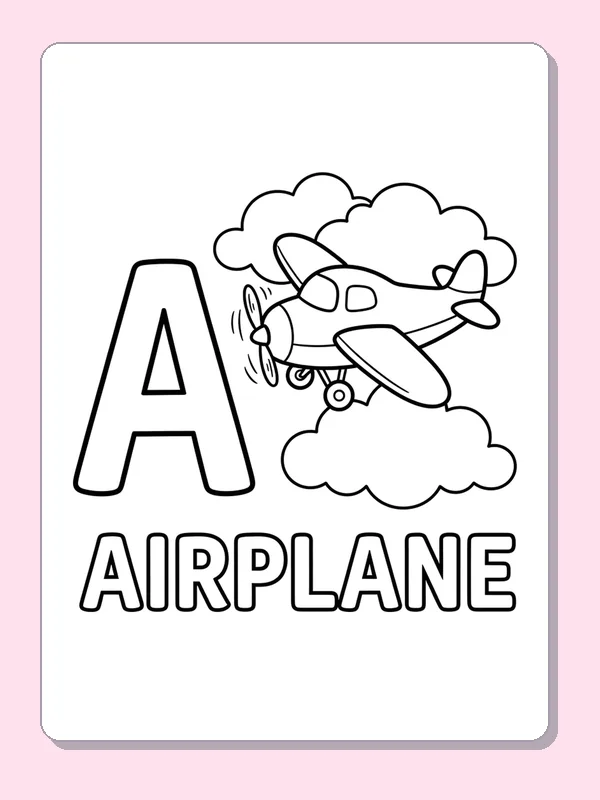
12 pagesAges 3–6Preschool letter learners
Skills: spotting uppercase A and lowercase a · connecting a picture word with its first letter · controlling a crayon around large and small shapes
Try this: Point to both A shapes. Use the Aa and apple sheet to find the capital and lowercase shapes before adding color.
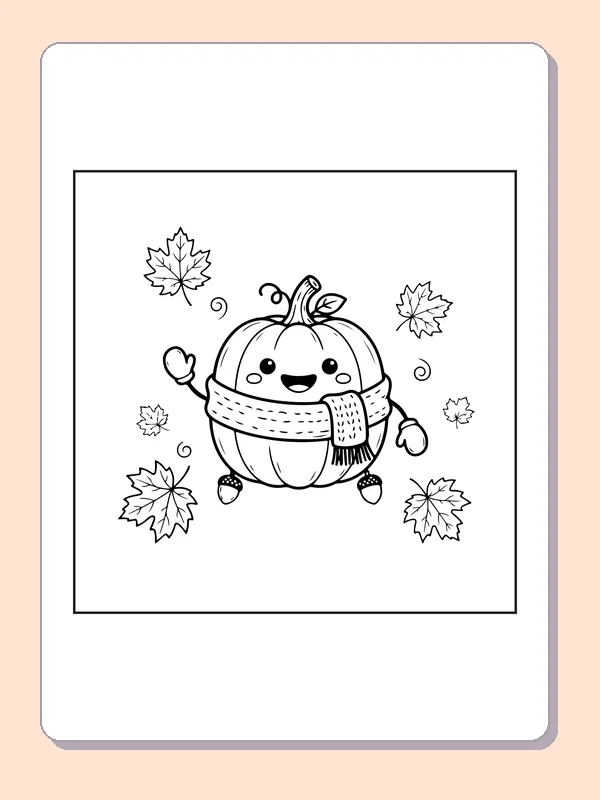
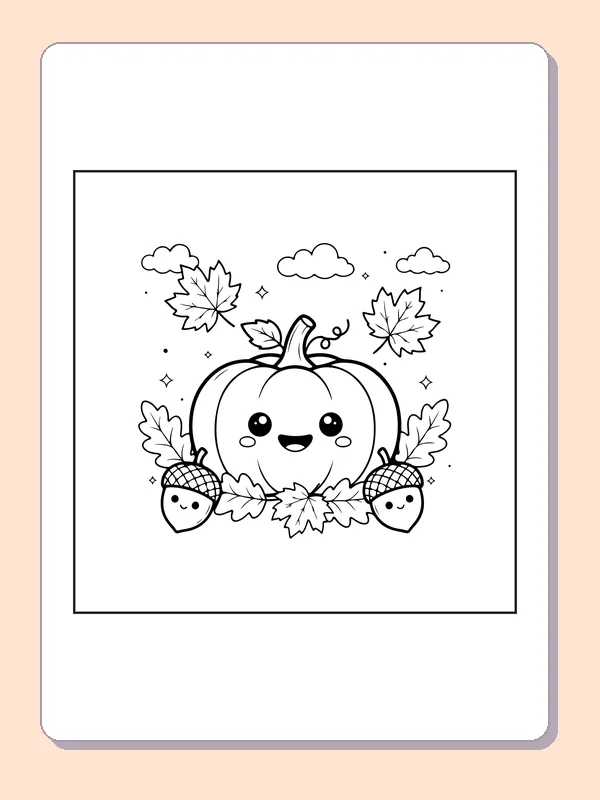
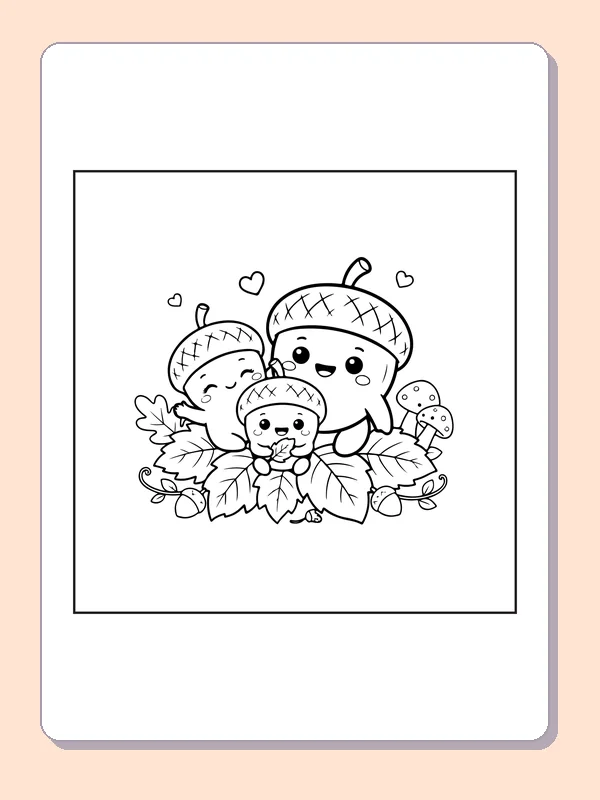
50 pagesAges 3–8Home, kids’ table & classroom
Skills: Talking about thankfulness · Fine motor control · Following a theme
Try this: Little place cards. Color a leaf wreath or frame, write a guest's name in the open center, then set it beside a plate.
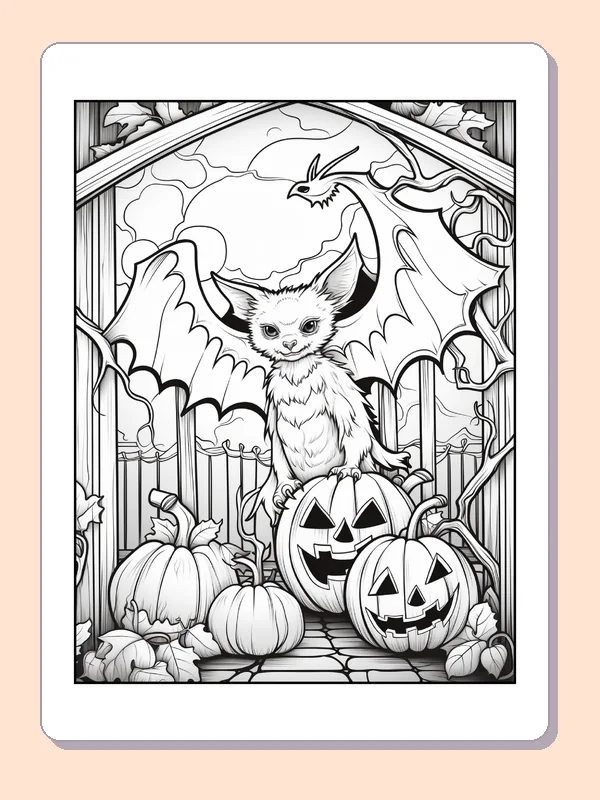
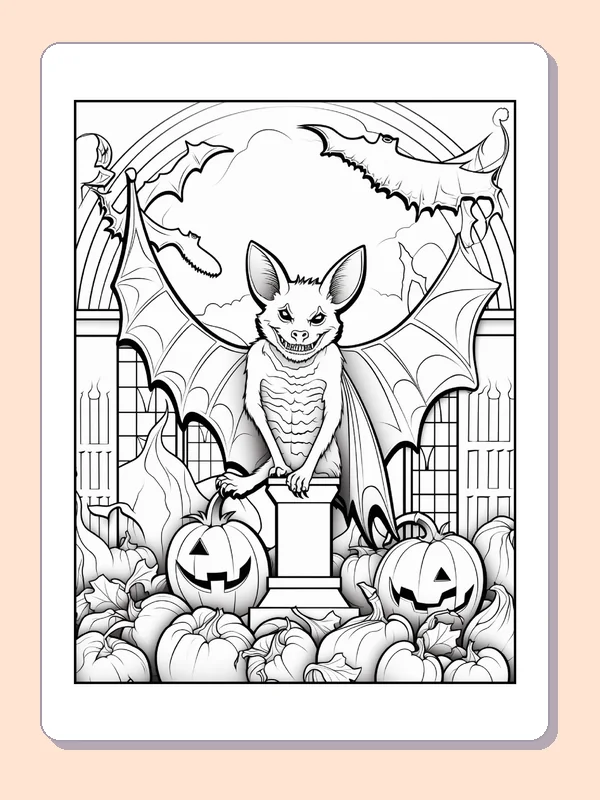
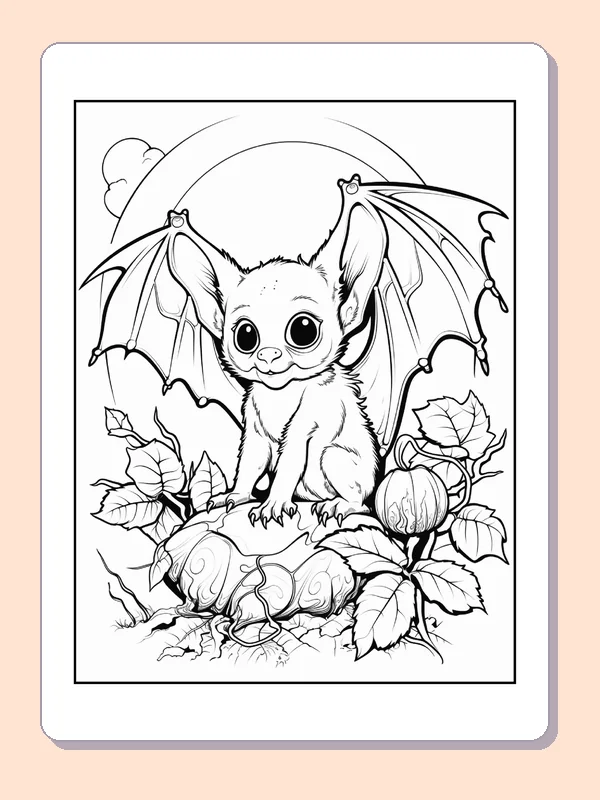
49 pagesHome and classroomOpen-wing and detailed Halloween scenes
Skills: Choosing light and dark colors · Coloring small background shapes · Comparing flying and perched poses
Try this: Start with open wings. Choose the flying bat with little background when there is time for only one picture.


27 pagesAges 3–8Home and classroom
Skills: Coloring broad open shapes · Adding a simple background · Finding the word Boo
Try this: Color the empty space. Leave the ghost white and draw a doorway, moon or stars around it.
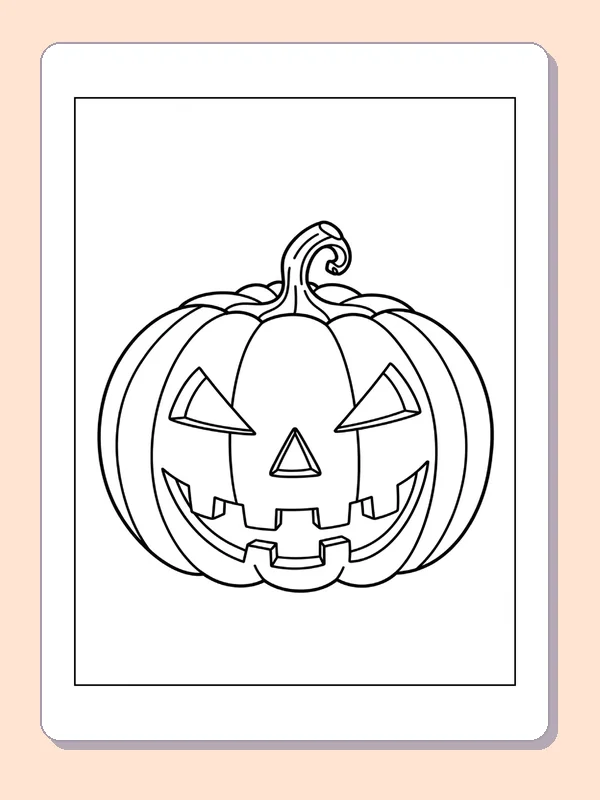
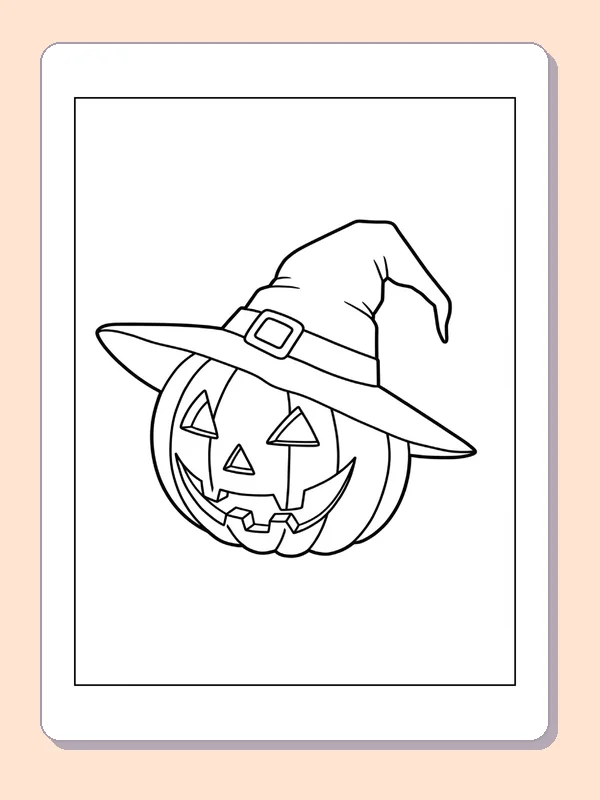
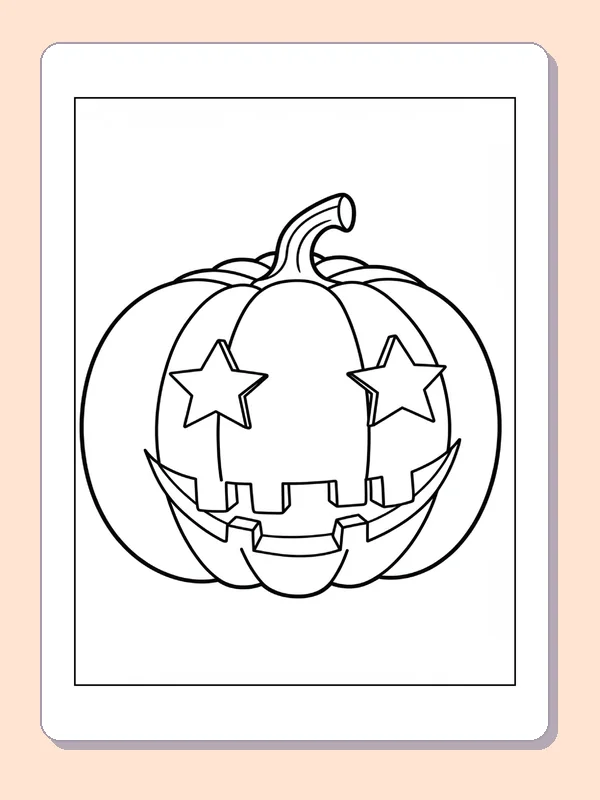
19 pagesAges 3–8Home and classroom
Skills: Recognizing facial expressions · Using light and dark contrast · Comparing carved face shapes
Try this: Name the expression. Choose a wink, star eyes and a toothy grin, then decide what each face seems to say.
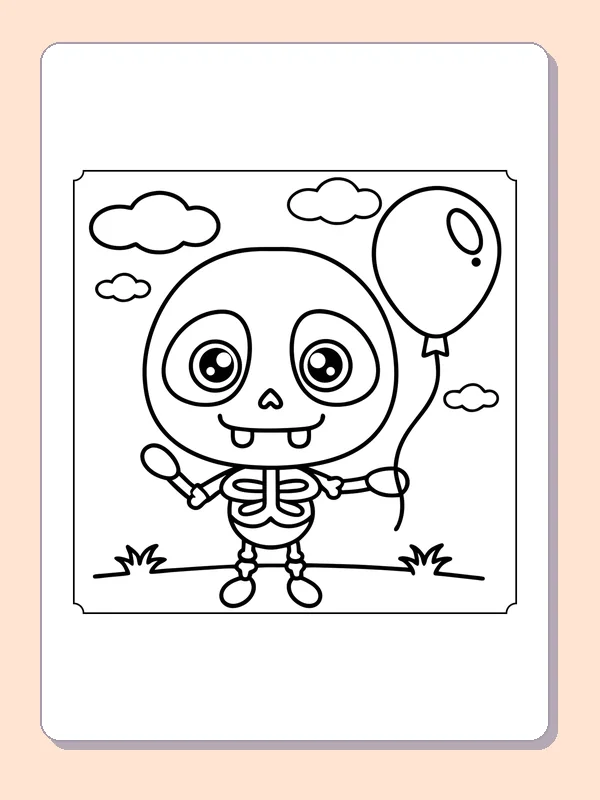
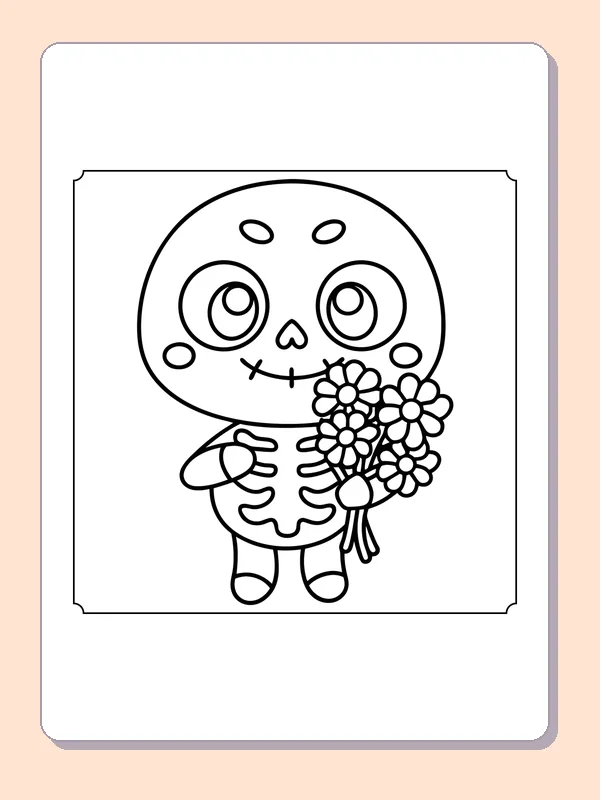
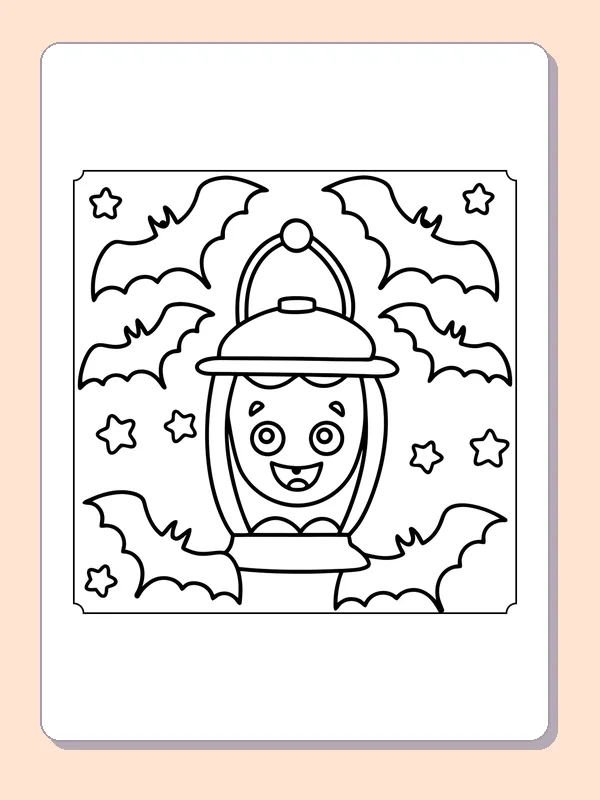
58 pagesHome and classroomMixed gentle and darker Halloween scenes
Skills: Choosing a comfortable scene · Changing mood with color · Describing character expressions
Try this: Make a comfort choice. Show a few thumbnails and let the child choose what feels funny rather than too spooky.
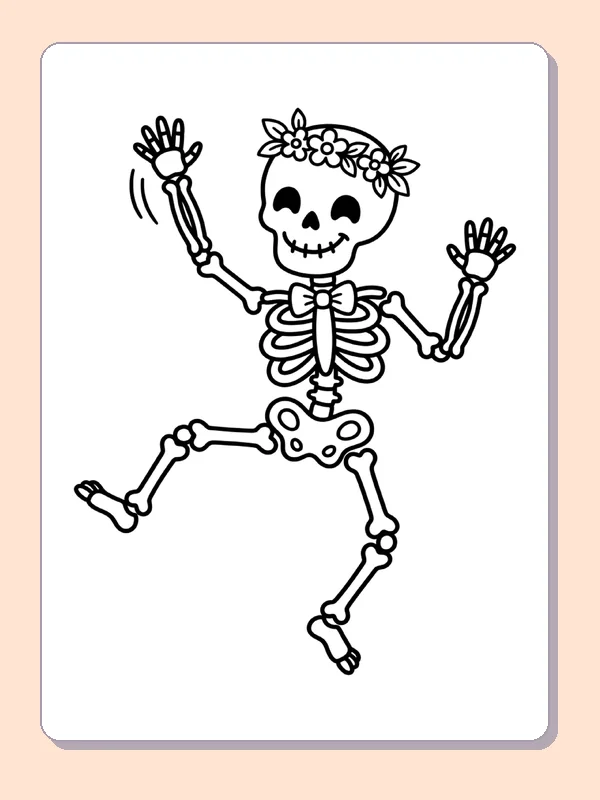
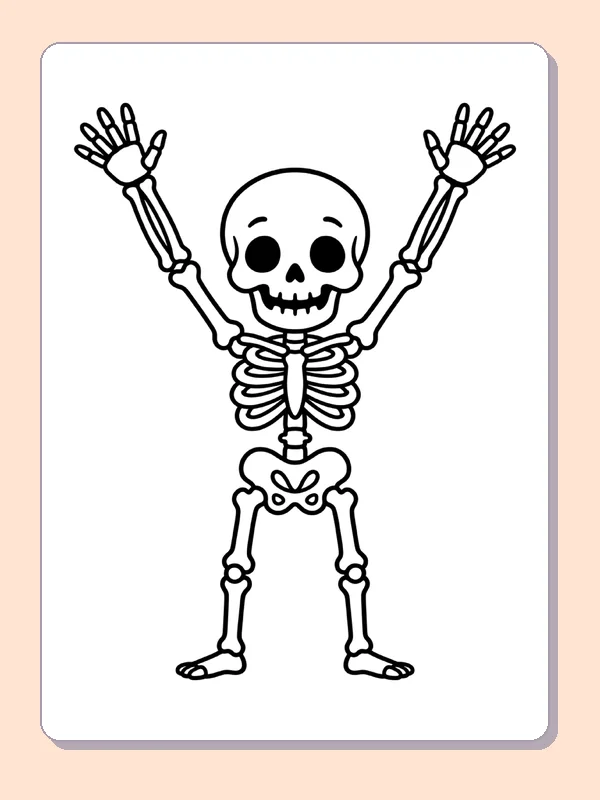
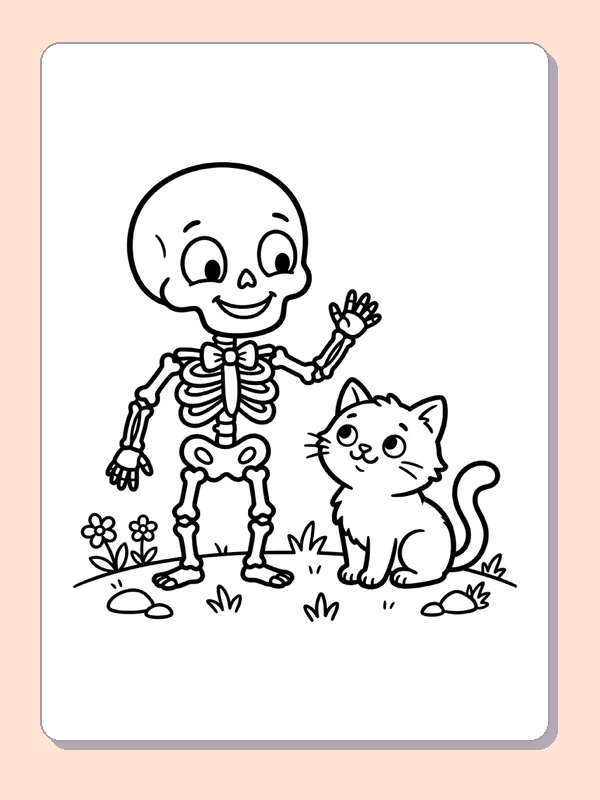
60 pagesChildren who like silly skeleton charactersFamilies choosing activity-themed coloring pages
Skills: Finding the main prop in a pose · Separating white bones from colored clothes or objects · Comparing open and crowded page layouts
Try this: Sort by activity. Place finished violin, soccer, reading and cooking pictures into music, sport, quiet time and pretend-job groups.
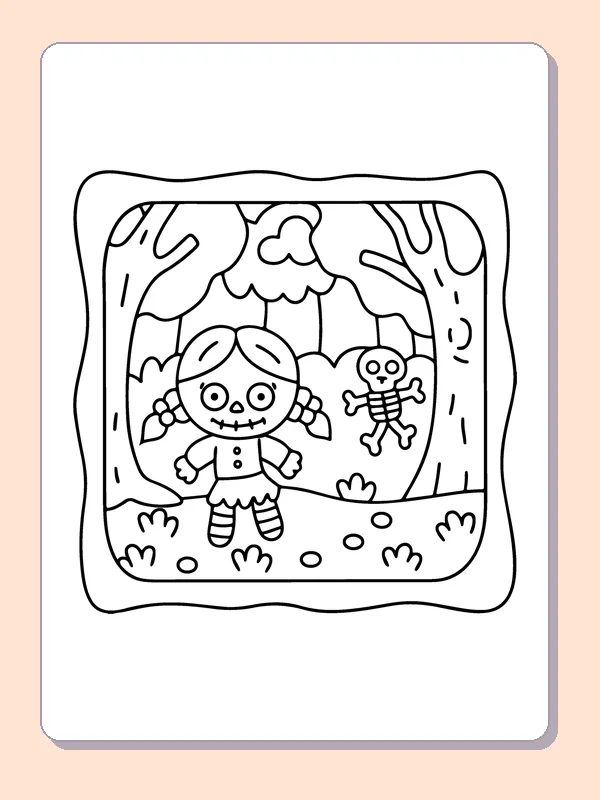
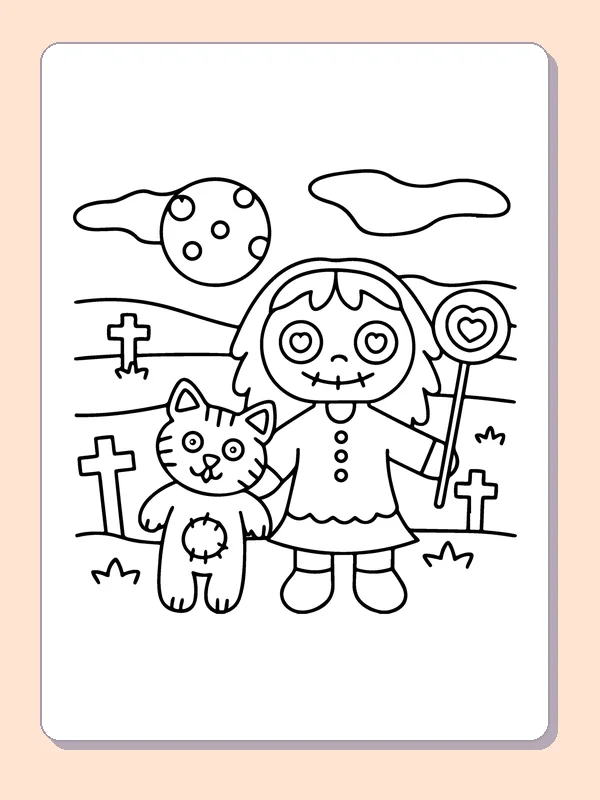
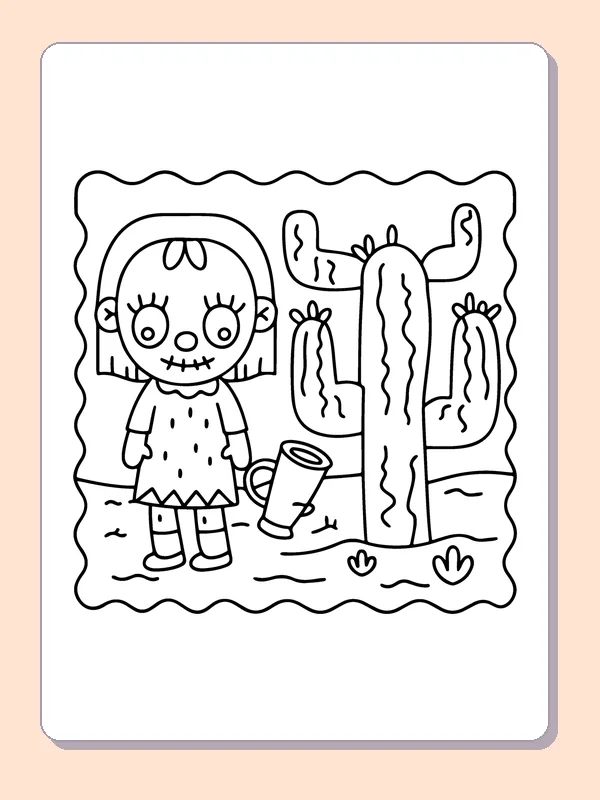
57 pagesHome and classroomGentle to spooky choices
Skills: Story sequencing · Color planning · Small-shape coloring
Try this: Build a three-page tale. Choose an outing, an activity and a bedtime scene, then let a child put them in order and narrate the gaps.
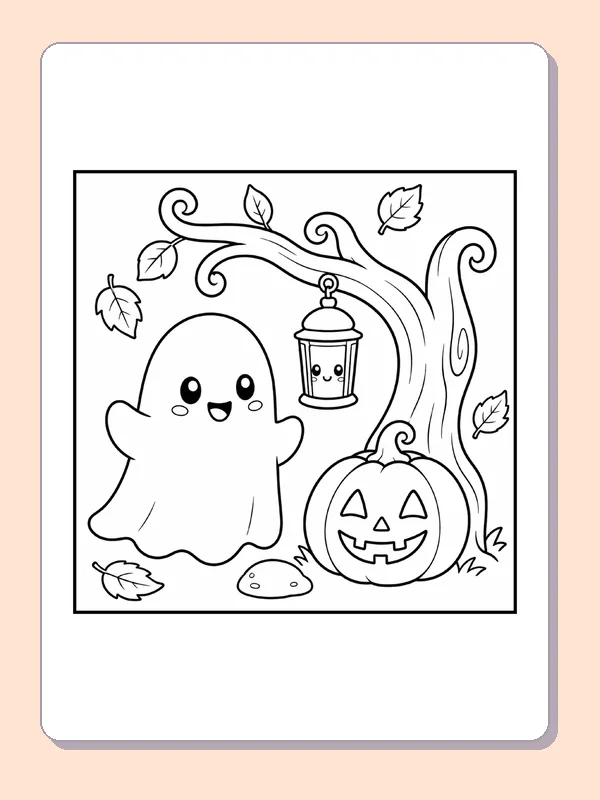
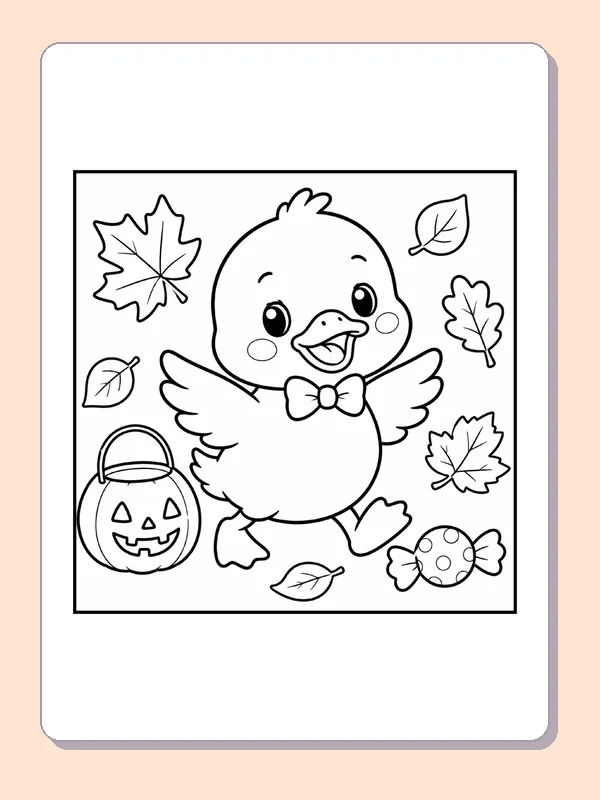
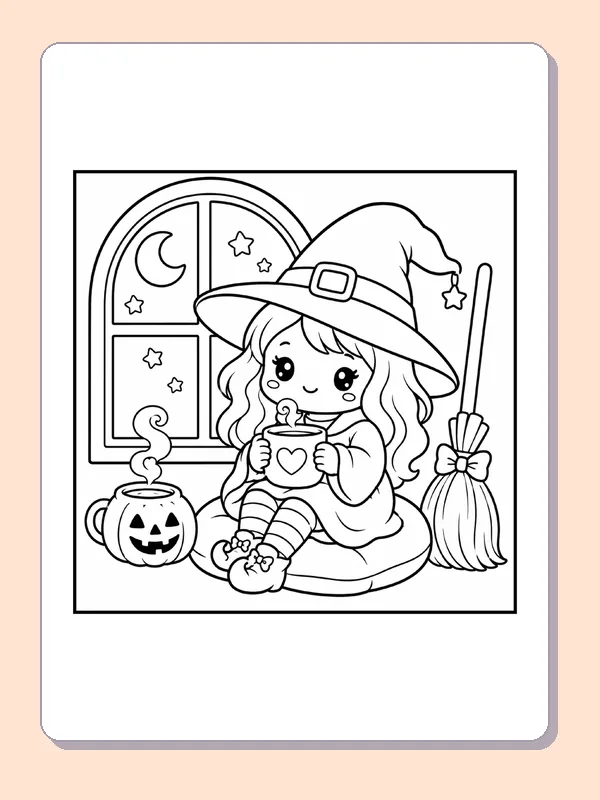
42 pagesChildren who like friendly Halloween characters and costumesOctober home, library and classroom activity tables
Skills: Noticing costume and setting clues in illustrations · Comparing expressions on carved pumpkin faces · Sorting pictures by ghosts, witches, pumpkins and animals
Try this: Build a three-picture party. Choose one ghost, one witch and one pumpkin sheet, then arrange the colored pictures as a short party story.


59 pagesAges 3–8Home and classroom
Skills: Comparing stems, caps and leaves · Following repeated patterns · Inventing a short picture story
Try this: Cap color test. Color three caps in different browns or imaginative shades while keeping the seed bodies alike.


38 pagesChildren and familiesAutumn classroom activities
Skills: Noticing leaf shapes and veins · Choosing and blending autumn colors · Coloring within repeated small spaces
Try this: Compare real leaves. Set one fallen leaf beside a maple or oak printout and look for its edge, stem and veins before coloring.


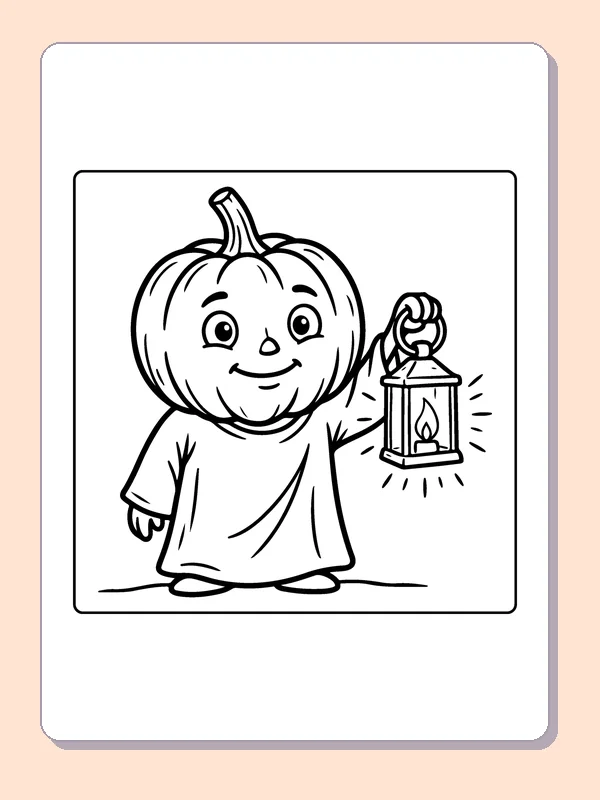
38 pagesHome and classroomFall and Halloween
Skills: Visual sorting · Storytelling · Color contrast
Try this: Create a pumpkin character. Choose a costume page, color the outfit, then give the pumpkin a name and one sentence about its day.


9 pagesAges 3–8Home and classroom
Skills: Color choice · Fine motor control · Creative storytelling
Try this: Choose by detail. Start with a roomy outline for younger children; give older children a scene with more small shapes.


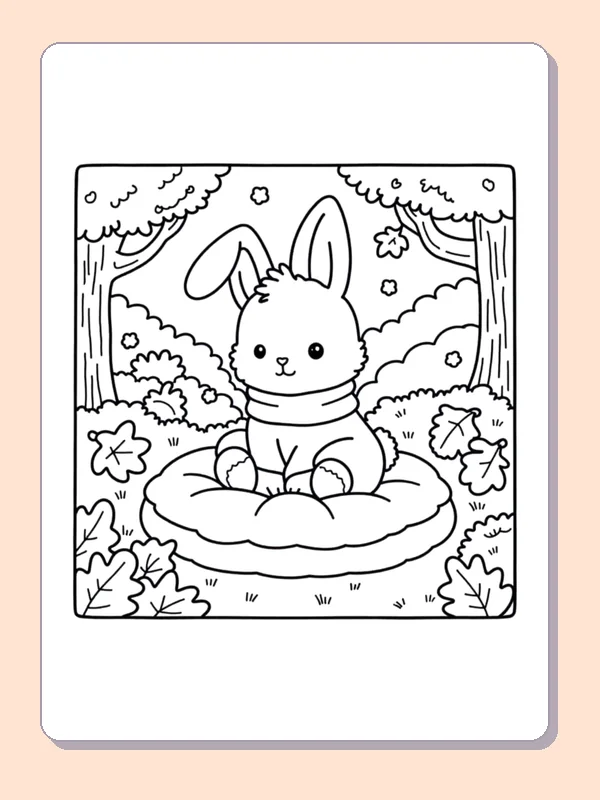
51 pagesHome and classroomNature walks and rainy days
Skills: Observation · Color matching · Descriptive storytelling
Try this: Compare a real leaf. Bring one fallen leaf indoors and let a child borrow its colors for a woodland page.


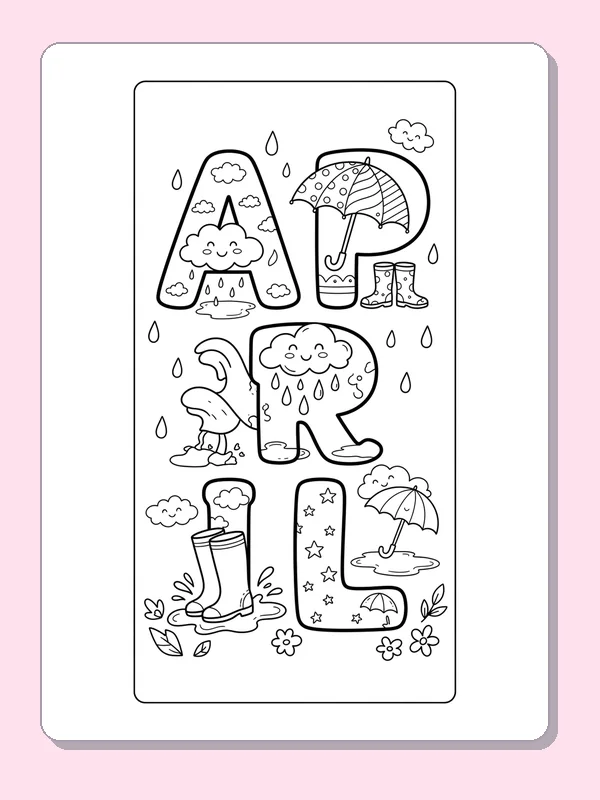
12 pagesChildren who follow the seasonsHome and classroom weather activities
Skills: Noticing rainy and sunny weather · Planning colors across letters and scenes · Careful coloring of small flowers and leaves
Try this: Check the sky first. Choose a rainy or sunny April sheet after looking outside, then point to one matching detail in the picture.


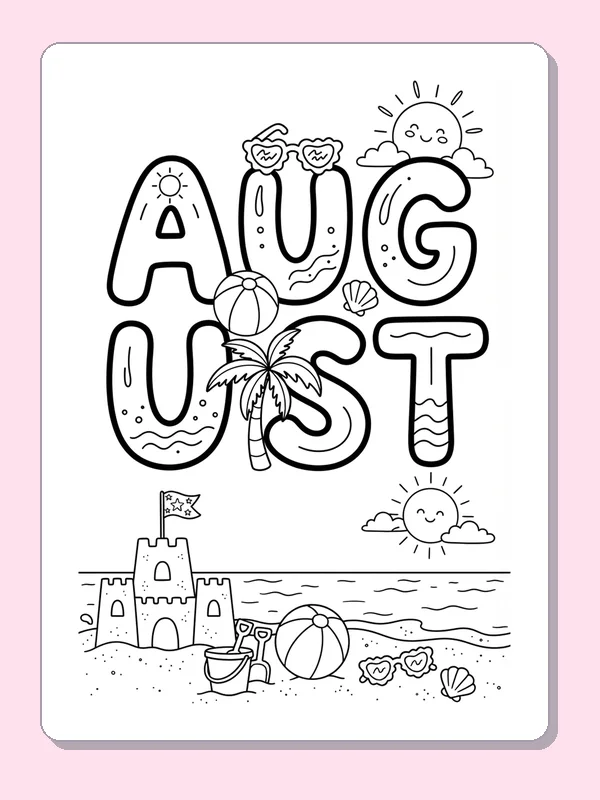
12 pagesChildren marking the summer monthsFamilies and classrooms
Skills: Comparing summer settings · Planning colors across repeated petals and patterns · Describing objects in a familiar outing
Try this: Pack the picnic. Color the picnic scene and point to three things the family brought on its blanket.

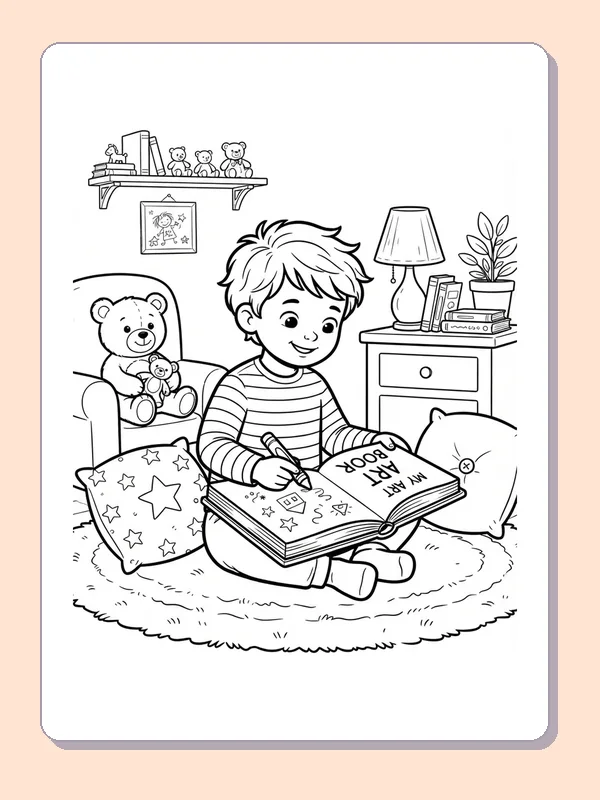
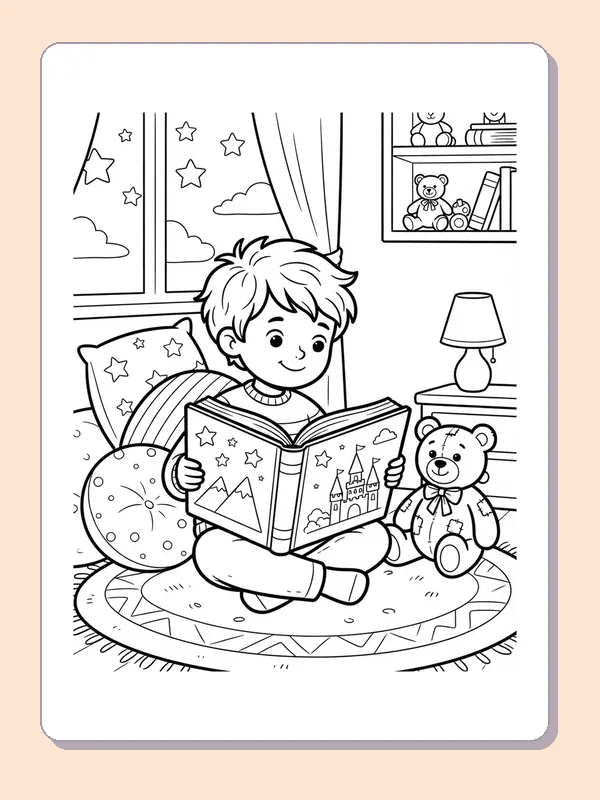
10 pagesAges 3–8Home and classroom
Skills: Color choice · Fine motor control · Creative storytelling
Try this: Invent the next page. After coloring a castle rising from an open book, ask what might happen next and write the child's sentence on the back.

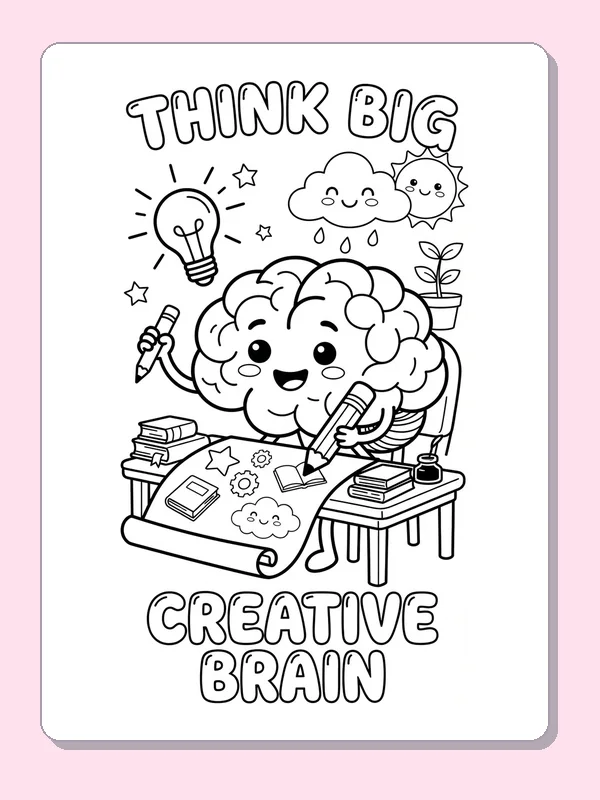
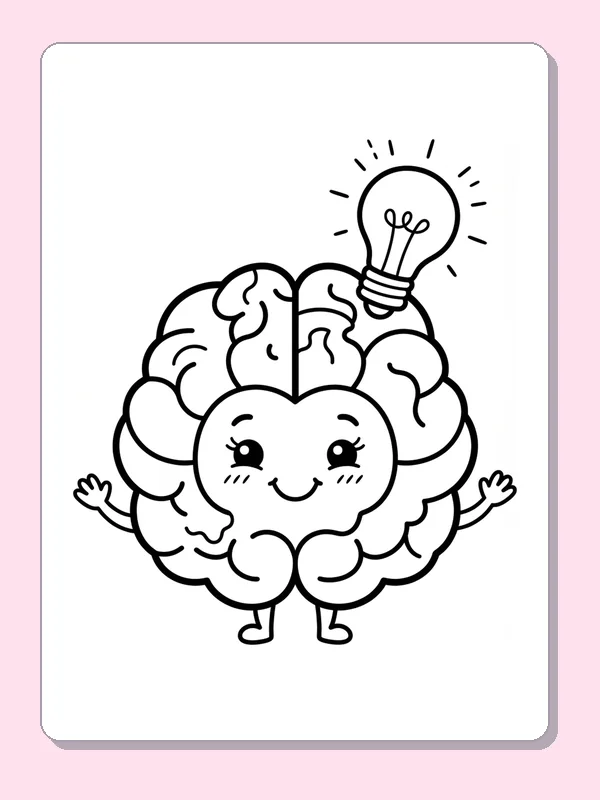
9 pagesAges 3–8Home and classroom
Skills: Color choice · Fine motor control · Creative storytelling
Try this: Name a brain job. Color a smiling brain character and ask what it helped you do today: remember, move, notice or decide.

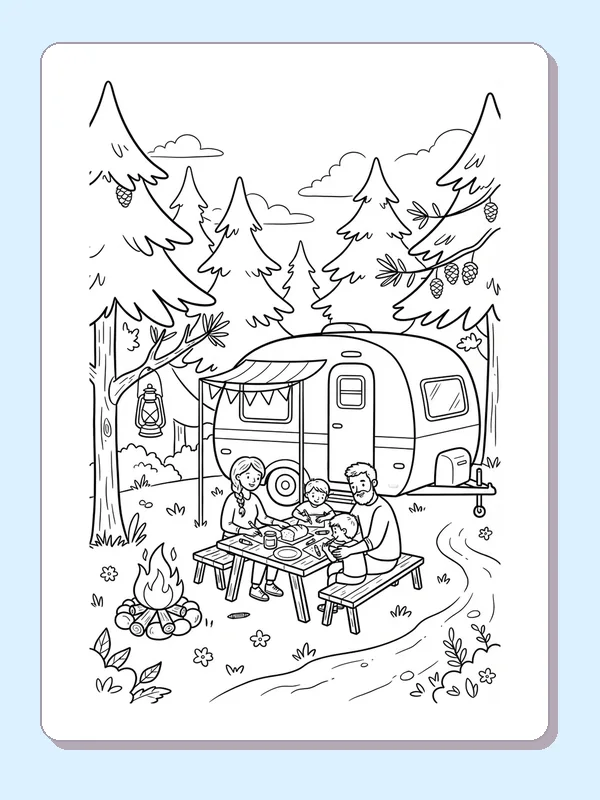
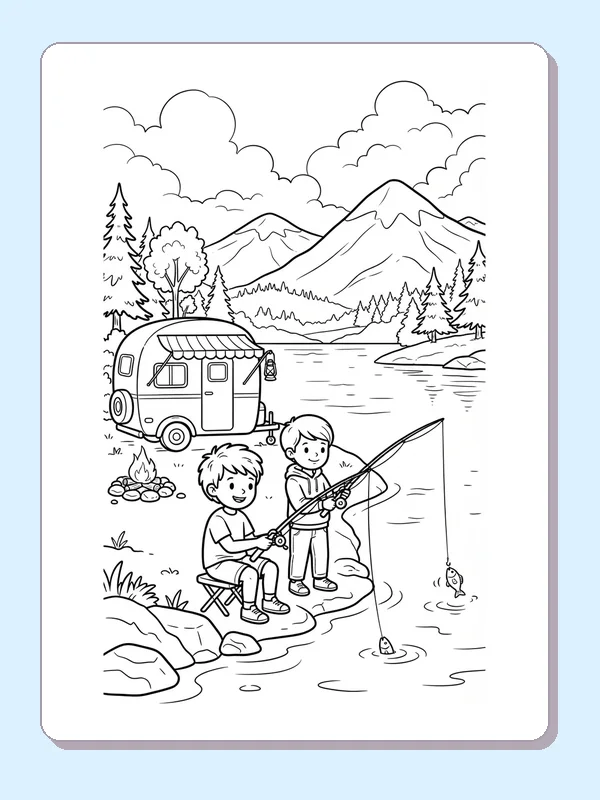
10 pagesAges 3–8Home and classroom
Skills: Color choice · Fine motor control · Creative storytelling
Try this: Pack a pretend camper. Choose a family campsite page and ask the child to draw one useful item they would pack for the trip.

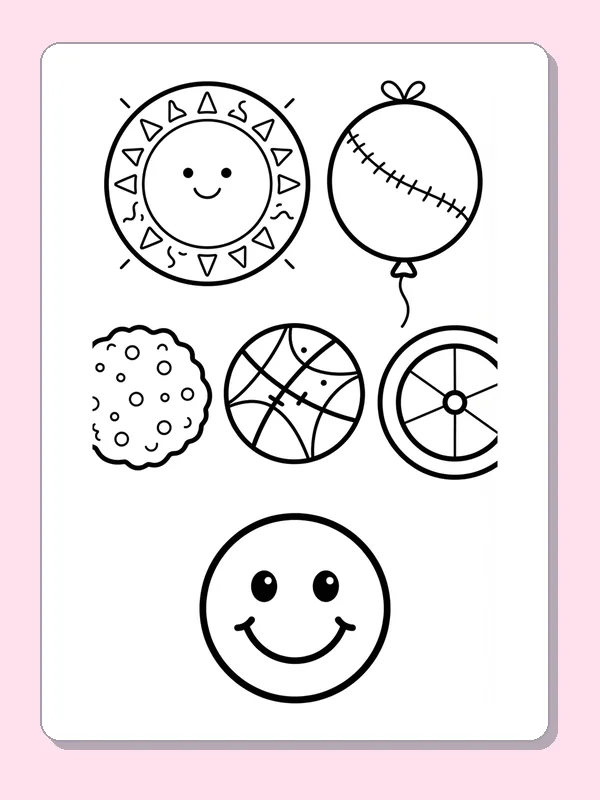
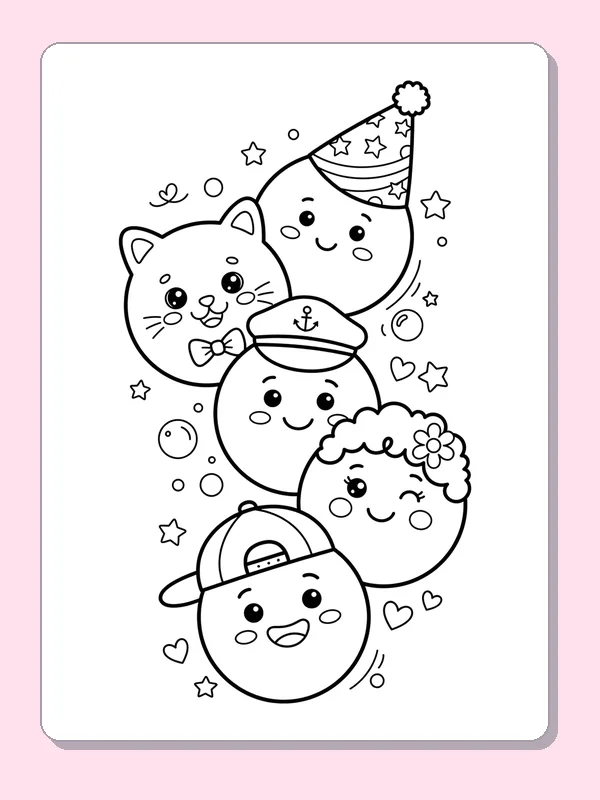
10 pagesAges 3–8Home and classroom
Skills: Color choice · Fine motor control · Creative storytelling
Try this: Find five round things. Point to the sun, ball, cookie, balloon and wheel on an object-hunt sheet before choosing colors.

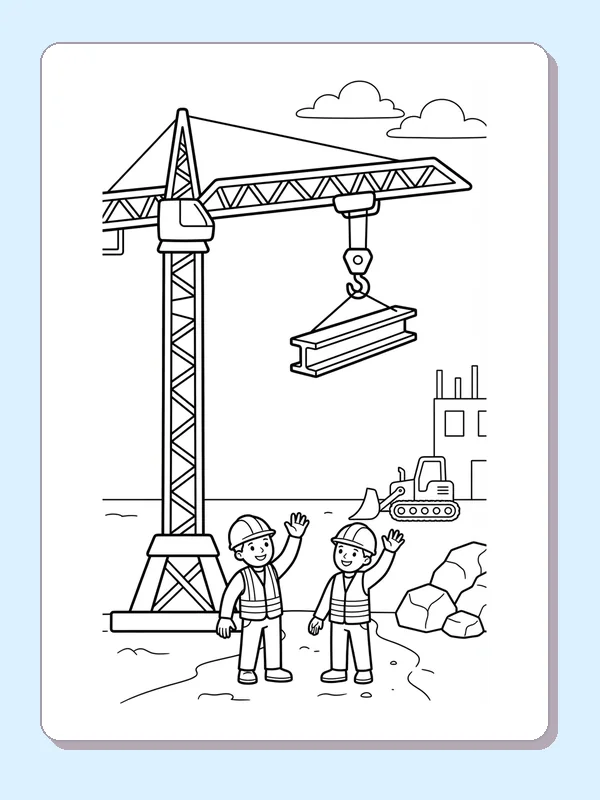
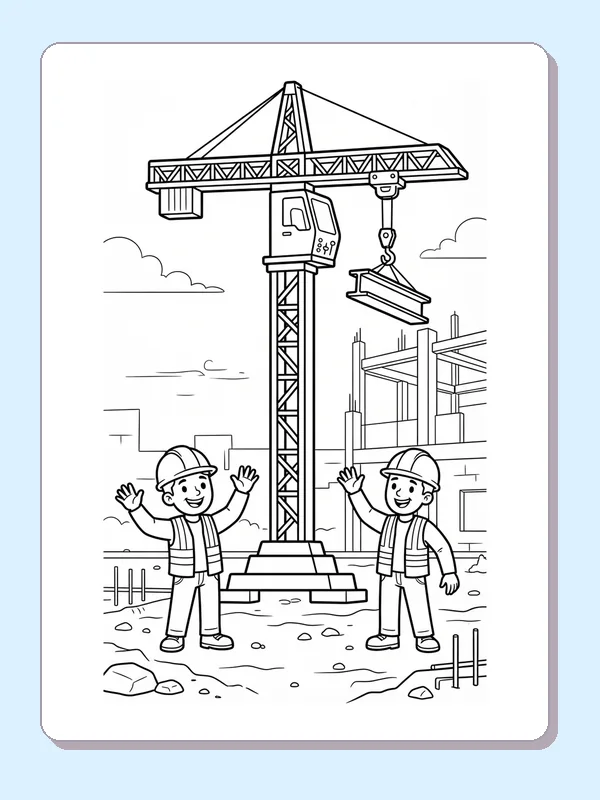
10 pagesAges 3–8Home and classroom
Skills: Color choice · Fine motor control · Creative storytelling
Try this: Find the load. Point to the hook and name what each real or toy crane is lifting before coloring it.
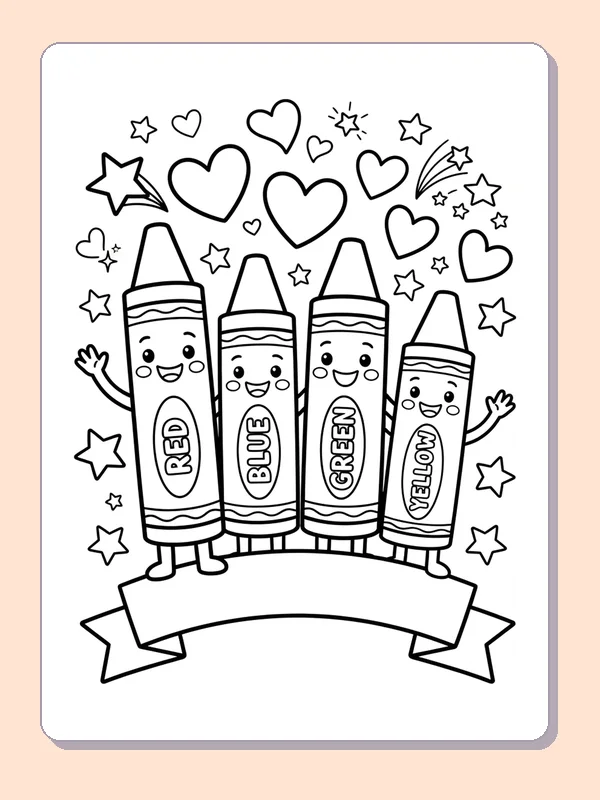


11 pagesAges 3–8Home and classroom
Skills: Color choice · Fine motor control · Creative storytelling
Try this: Invent a fifth crayon. After coloring the four named crayon friends, draw one more character on the back and give its new shade a name.


12 pagesChildren who like movement and musicFamilies making a dance-party activity
Skills: Reading a pose from arms and feet · Separating foreground dancers from a busy room · Repeating color across balloons or music notes
Try this: Find the pose. Pause a song, choose one pictured dancer and compare how their arms and feet are placed with your own frozen pose.


10 pagesAges 3–8Home and classroom
Skills: Color choice · Fine motor control · Creative storytelling
Try this: Date two December pages. Color one snowy scene early in the month and another near the end, then write a memory from each day on the back.


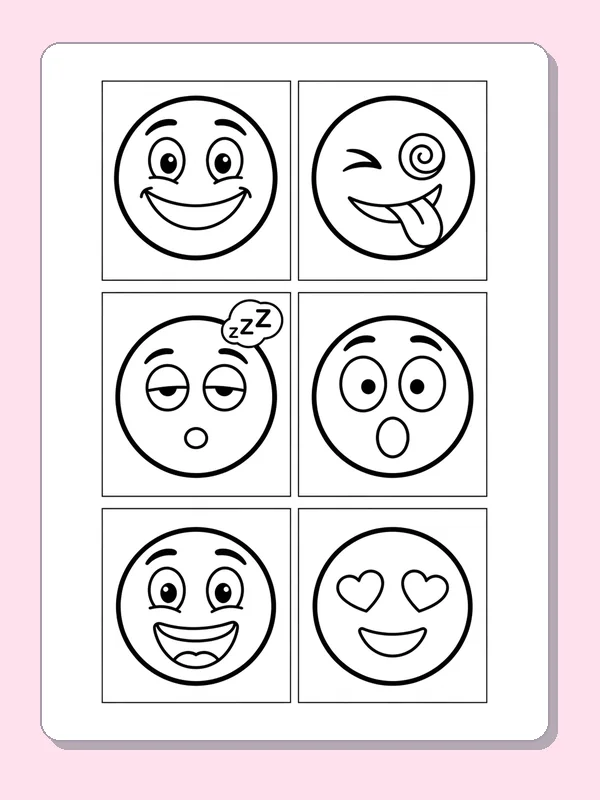
12 pagesAges 4–9Children exploring facial expressions
Skills: noticing eyes and mouths as expression clues · telling a short story from party scenes · coloring both broad faces and tiny decorations
Try this: Cover the mouth. Look at two faces with their mouths hidden and guess what their eyes might be saying.

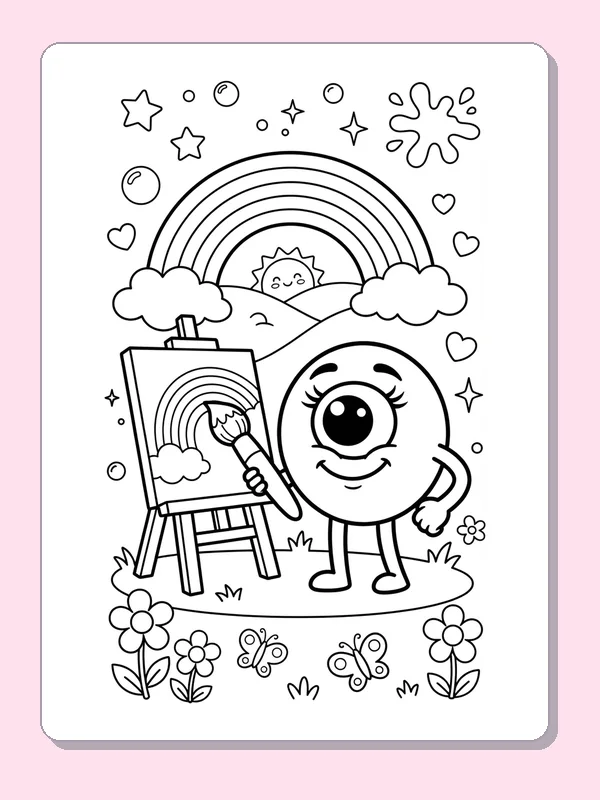
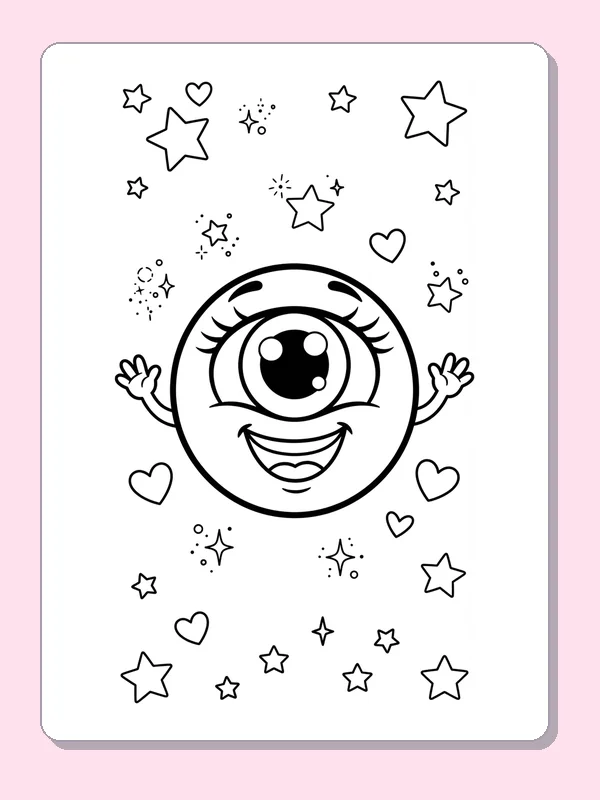
9 pagesAges 3–8Home and classroom
Skills: Color choice · Fine motor control · Creative storytelling
Try this: Design new frames. Choose a glasses portrait and try two different patterns on the frames before coloring the rest of the picture.

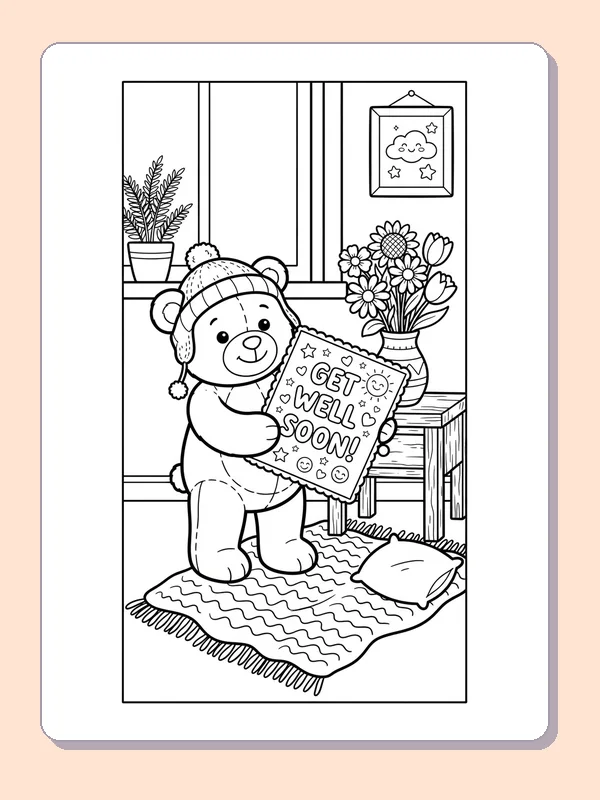
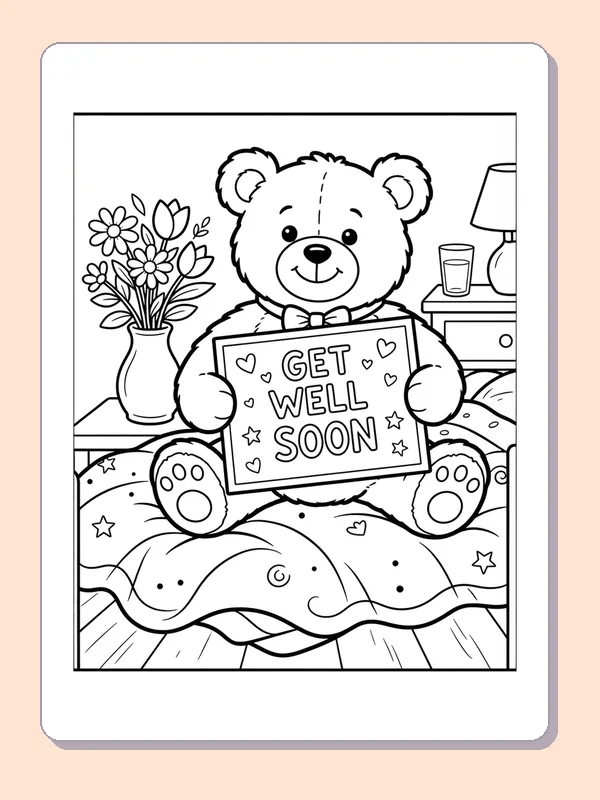
10 pagesAges 3–8Home and classroom
Skills: Color choice · Fine motor control · Creative storytelling
Try this: Add a personal message. Color a teddy card, then write the recipient's name and one short sentence in the margin or on the back.

9 pagesAges 3–8Home and classroom
Skills: Color choice · Fine motor control · Creative storytelling
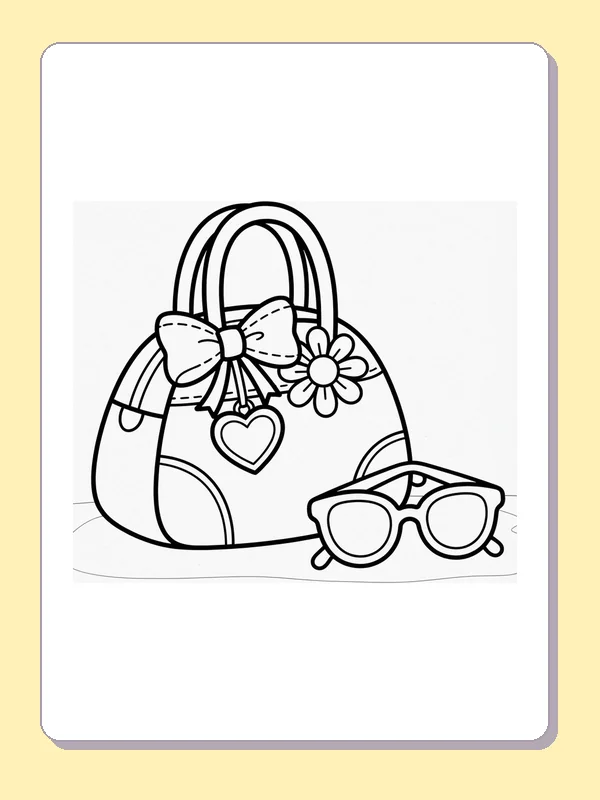
Try this: Invent a fabric pattern. Fill the large front panel of a bow bag with stripes, dots or a checkerboard, then try a different pattern on a second copy.


11 pagesAges 3–8Home and classroom
Skills: Color choice · Fine motor control · Creative storytelling
Try this: Find both rotors. Point to the large blades above the cabin and the small blades near the tail before coloring the aircraft.


12 pagesChildren marking July in a calendarFamilies recalling a summer outing
Skills: Noticing details across related scenes · Planning colors for letters and setting · Describing a summer memory
Try this: Grow a paper garden. Color the tomato vine, then draw one more plant beside the watering can.

9 pagesAges 3–8Home and classroom
Skills: Color choice · Fine motor control · Creative storytelling
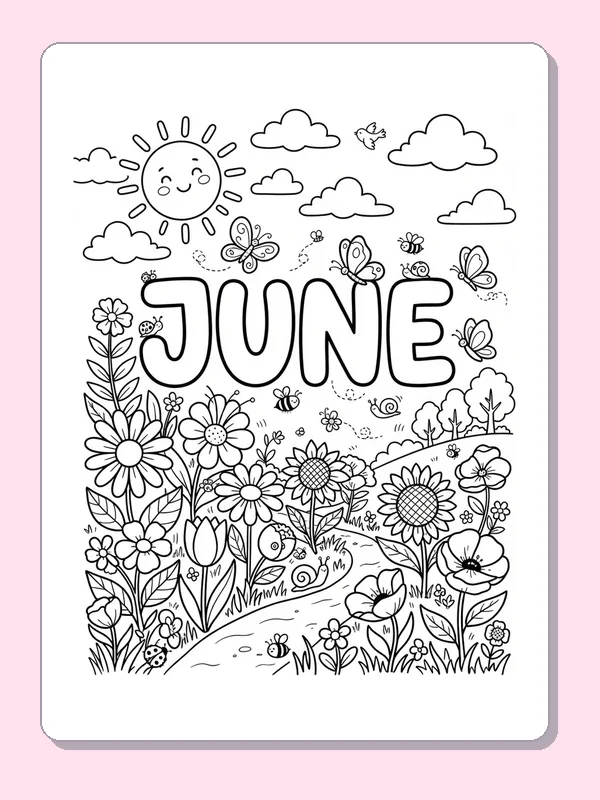
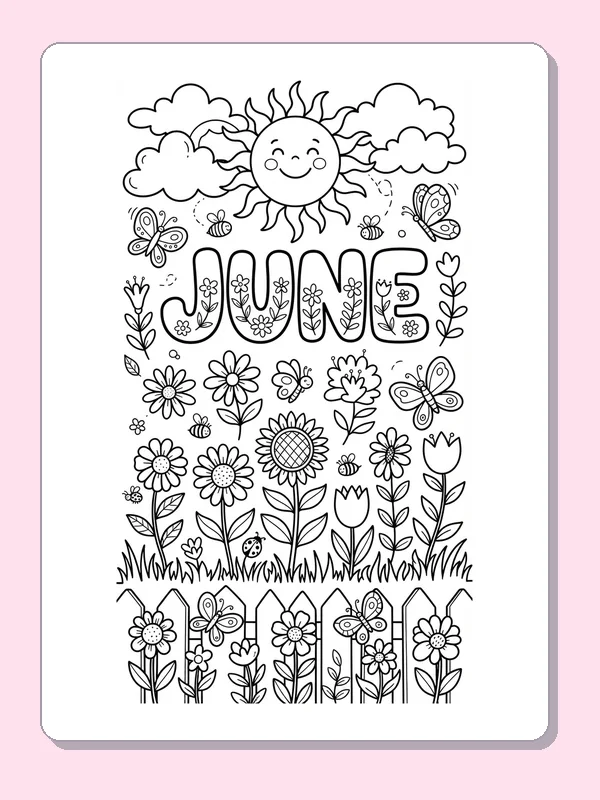
Try this: Build a month banner. Color the large JUNE letters, then hang the page on a calendar wall or seasonal display.

10 pagesAges 3–8Home and classroom
Skills: Color choice · Fine motor control · Creative storytelling
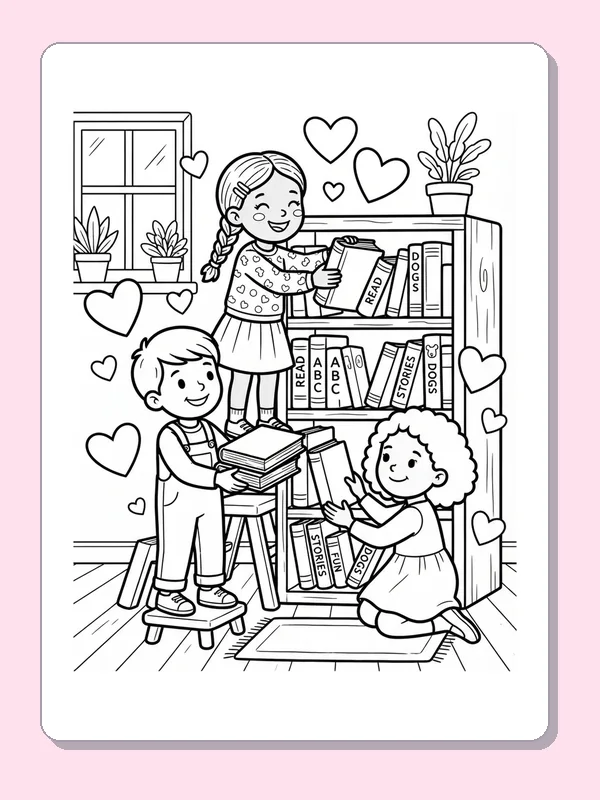
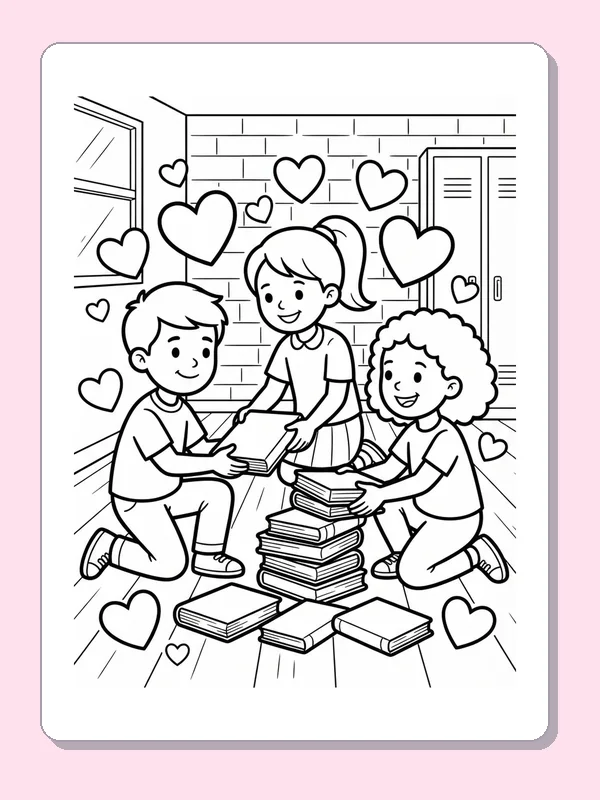
Try this: Say the helpful words. After coloring the library or grocery scene, ask what a child might say before offering help.


11 pagesAges 3–8Home and classroom
Skills: Color choice · Fine motor control · Creative storytelling
Try this: Trace a path first. Point to a start and a destination on a treasure page, then follow the route with a finger before coloring it.


11 pagesAges 3–8Home and classroom
Skills: Color choice · Fine motor control · Creative storytelling
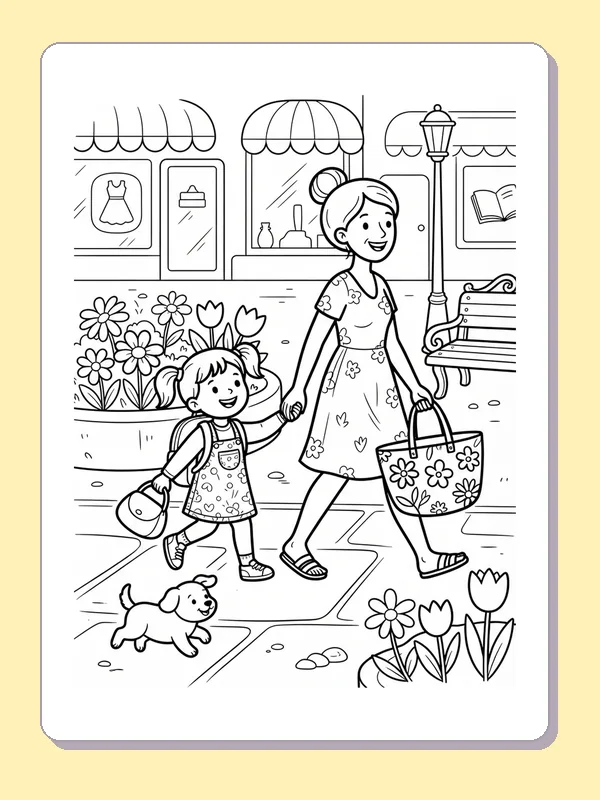
Try this: Look around the plaza. On a family scene, ask children to find the fountain, a window and one hanging paper banner before choosing colors.

8 pagesAges 3–8Home and classroom
Skills: Color choice · Fine motor control · Creative storytelling
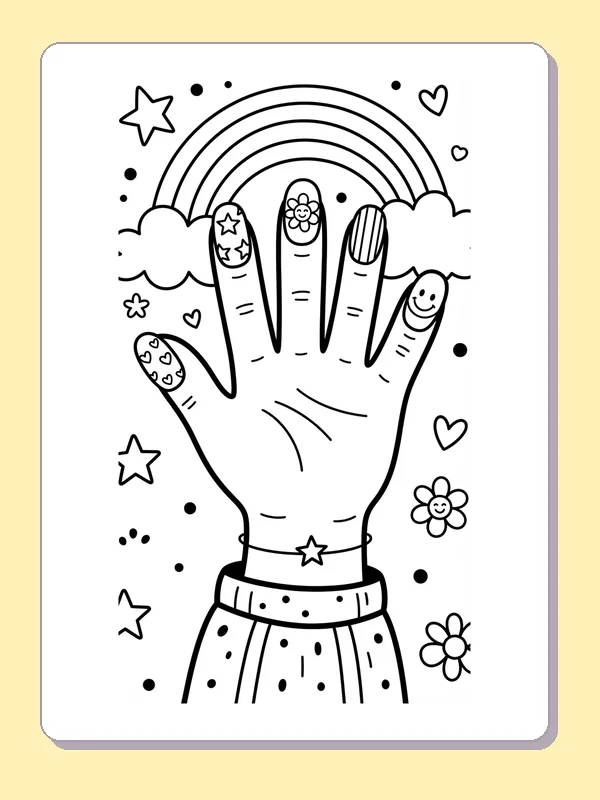
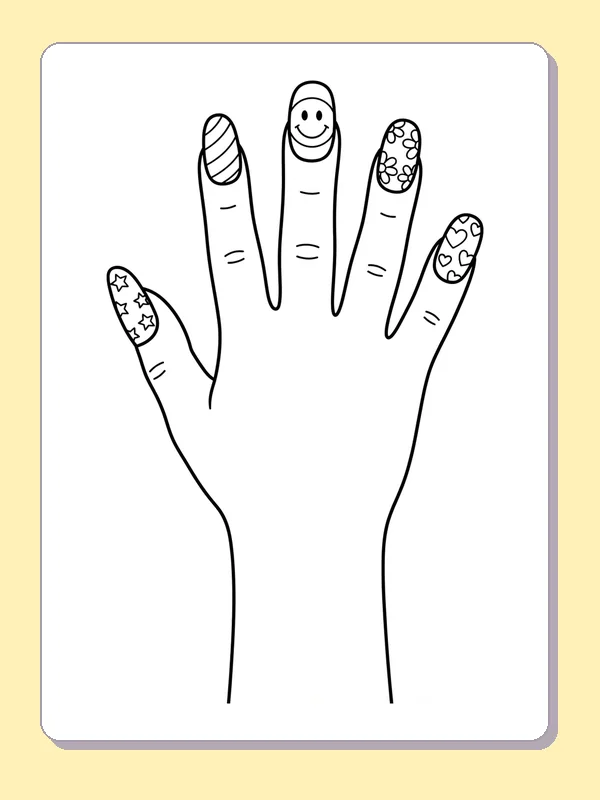
Try this: Try five patterns. Give each nail on an open hand outline a different mark: a stripe, dot, heart, star or little flower.


11 pagesAges 3–8Home and classroom
Skills: Color choice · Fine motor control · Creative storytelling
Try this: Compare the weather. Color an October walk, then ask which coat or shoes would fit the weather outside today.

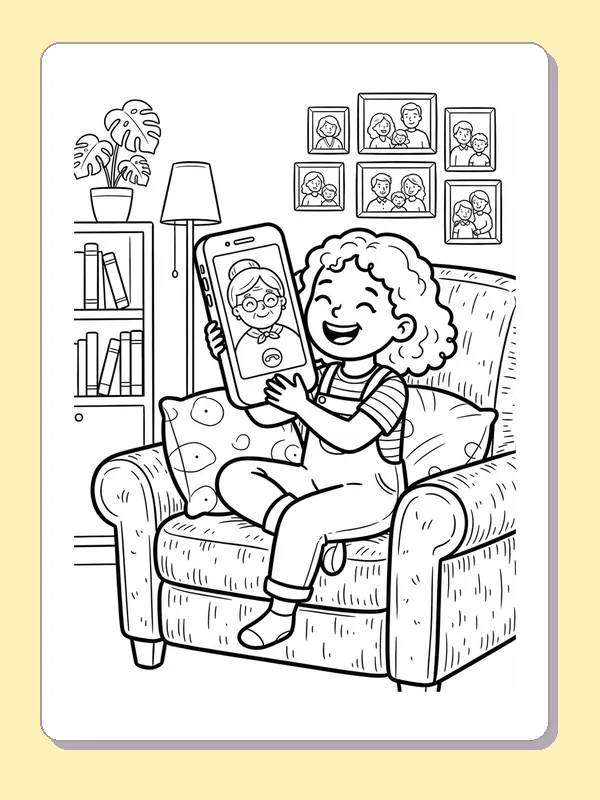
9 pagesAges 3–8Home and classroom
Skills: Color choice · Fine motor control · Creative storytelling
Try this: Draw a first hello. Ask who is on the other end of the call, then write the first words they might say beside the picture.


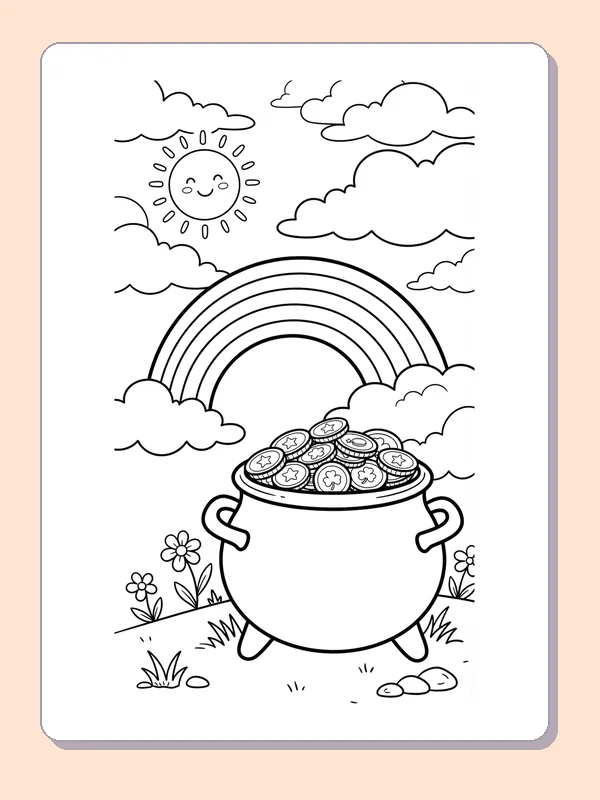
11 pagesAges 3–8Home and classroom
Skills: Color choice · Fine motor control · Creative storytelling
Try this: Trace the rainbow. Follow each rainbow band from cloud to pot before choosing a different crayon for every stripe.

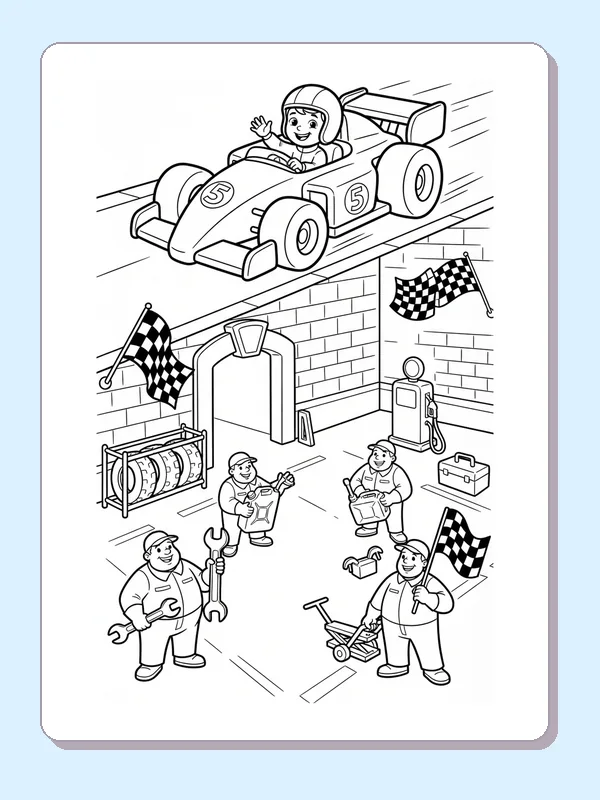
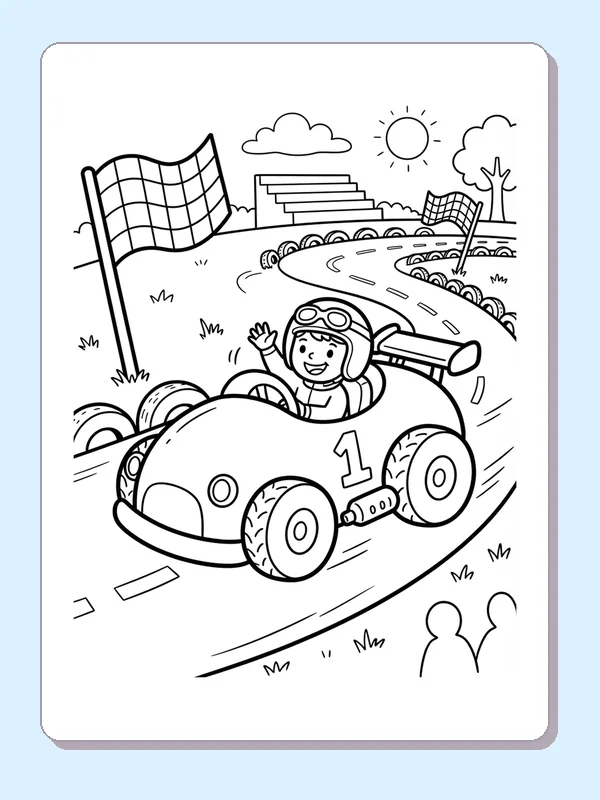
10 pagesAges 3–8Home and classroom
Skills: Following a picture sequence · Finding helpers and tools · Choosing a team color
Try this: Choose a team color. Give the car one color in a track sheet and repeat it in a pit or trophy picture.


10 pagesAges 3–8Home and classroom
Skills: Color choice · Fine motor control · Creative storytelling
Try this: Make an observation. After coloring a nature page, look outside together and name one thing you can see without touching it.

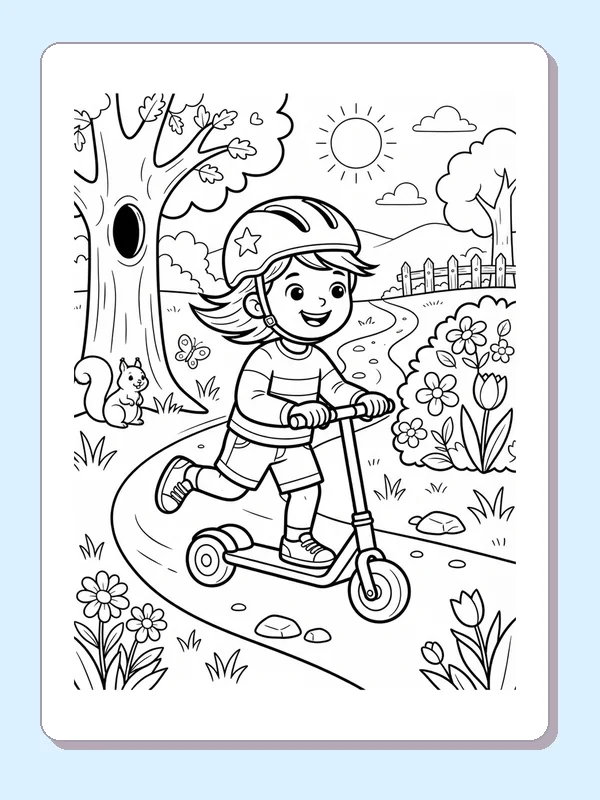
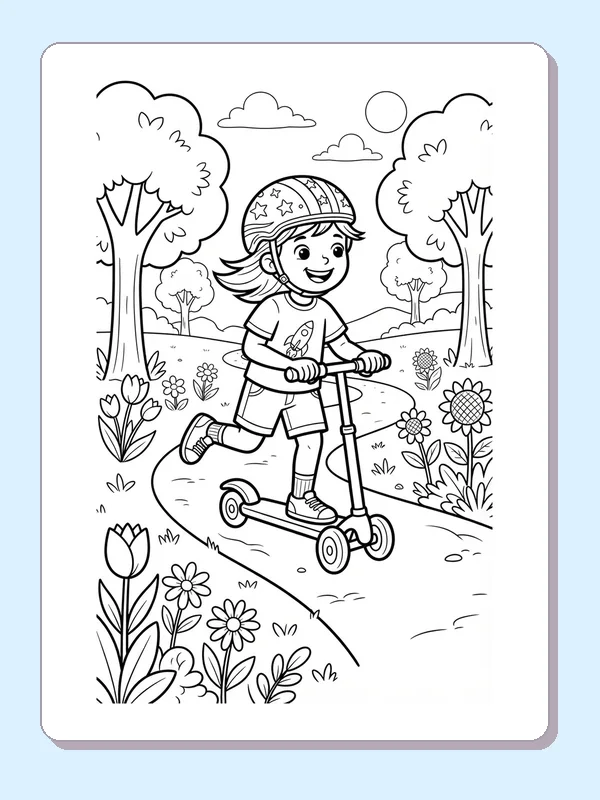
10 pagesAges 3–8Home and classroom
Skills: Color choice · Fine motor control · Creative storytelling
Try this: Map a park ride. On a path sheet, draw one destination at the end of the curve and name what the rider might see.


12 pagesChildren who enjoy smiling leaf charactersFamilies making a March craft activity
Skills: Identifying three-leaf and four-leaf shapes in pictures · Repeating a chosen color pattern across small motifs · Moving from broad leaves to fine stars and flowers
Try this: Count the leaf shapes. Compare the three-leaf character with the clovers beneath a rainbow and see which outlines change.


12 pagesChildren choosing between face symbols and full party or outdoor scenesBirthday and classroom expression activities
Skills: Noticing how eyes and mouths change a drawn expression · Planning a color order from main face to small background objects · Following kite strings, paths and balloon ribbons through busier scenes
Try this: Compare three grins. Set the large-face pages side by side and point out one difference in eyes, mouth or background on each.


11 pagesAges 3–8Home and classroom
Skills: Color choice · Fine motor control · Creative storytelling
Try this: Make a team color. Color a cap, shirt and cheering flag in one invented team color across separate sheets.

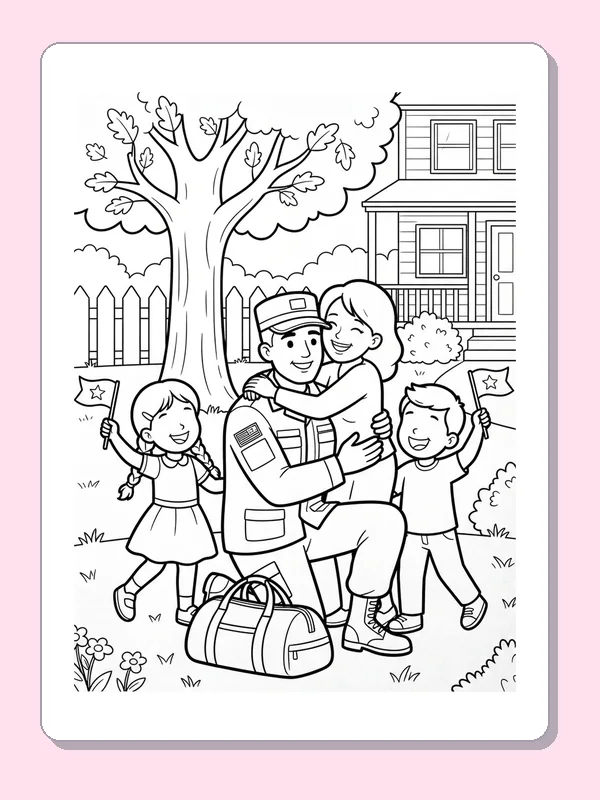
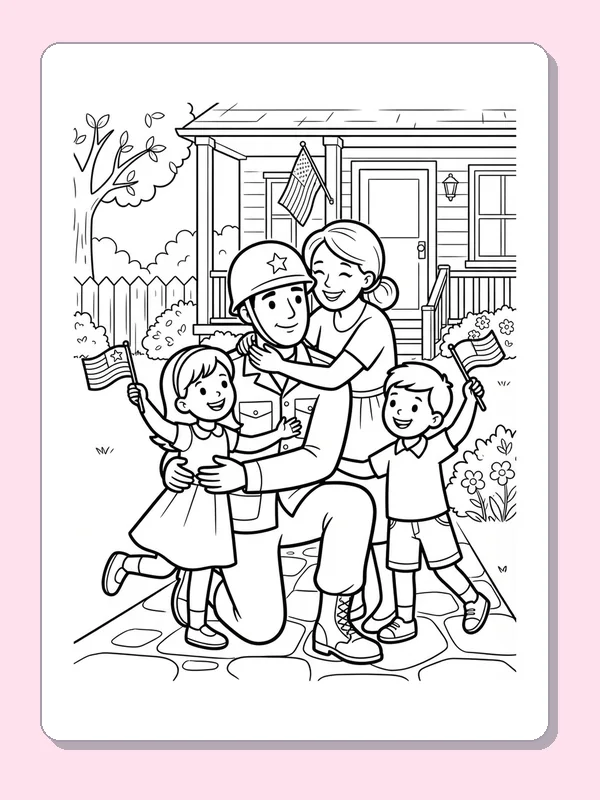
11 pagesAges 3–8Home and classroom
Skills: Color choice · Fine motor control · Creative storytelling
Try this: Share a family story. Choose a homecoming or drawing sheet and ask the child what the people might be saying to each other.
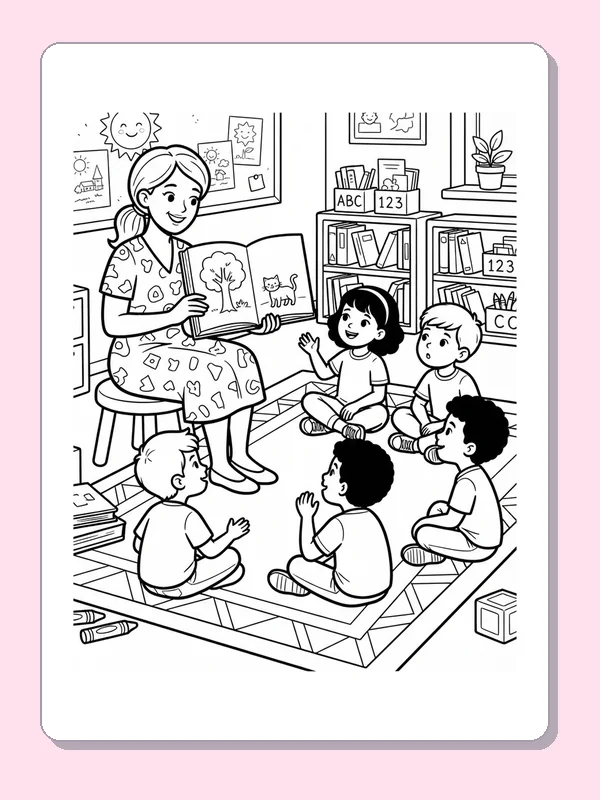
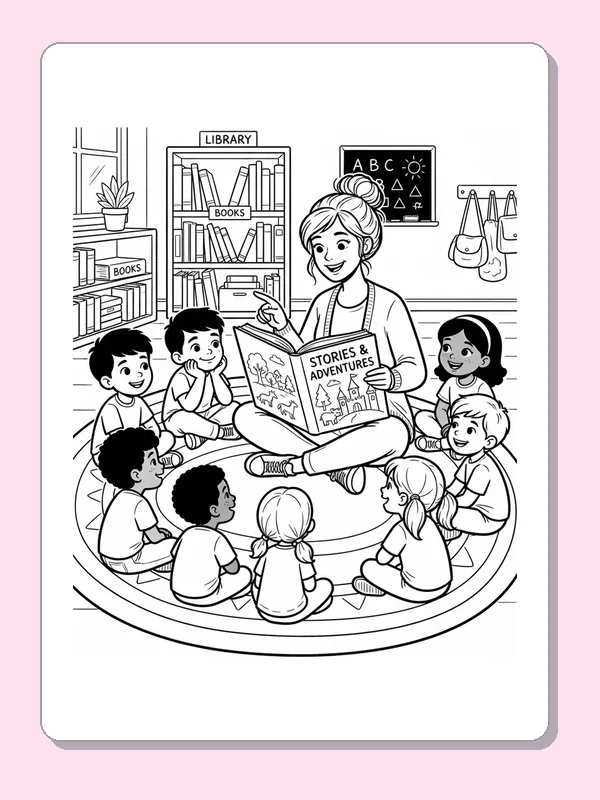
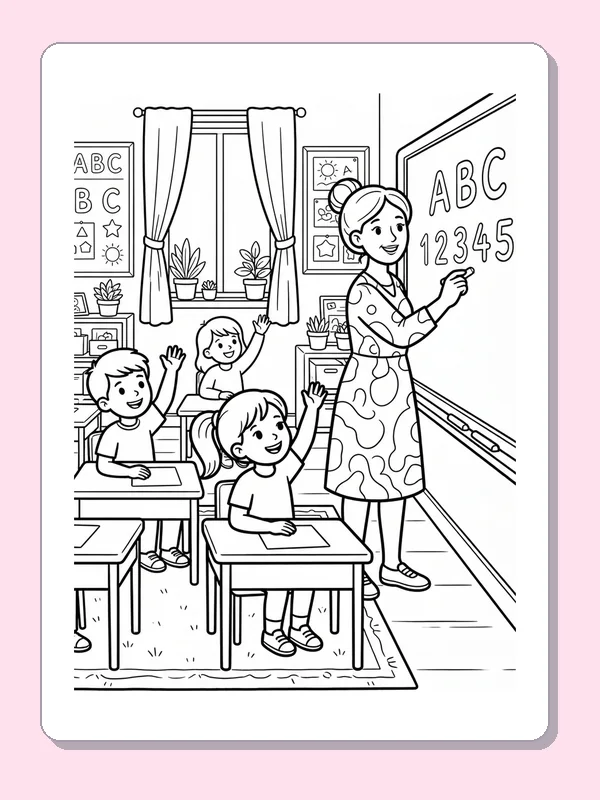
9 pagesAges 3–8Home and classroom
Skills: Color choice · Fine motor control · Creative storytelling
Try this: Remember storytime. Color a reading circle and ask which book the child would bring to share with the class.
10 pagesAges 3–8Home and classroom
Skills: Color choice · Fine motor control · Creative storytelling
Try this: Name the recipient. Choose a flower, gift, classroom or hug scene to fit the person the child wants to thank.


50 pagesAges 5–12Home and classroom
Skills: Recognizing state shapes · Comparing outlines · Color control
Try this: Start with your state. Find a state that matters to your family, color its outline and add one place you know inside it.

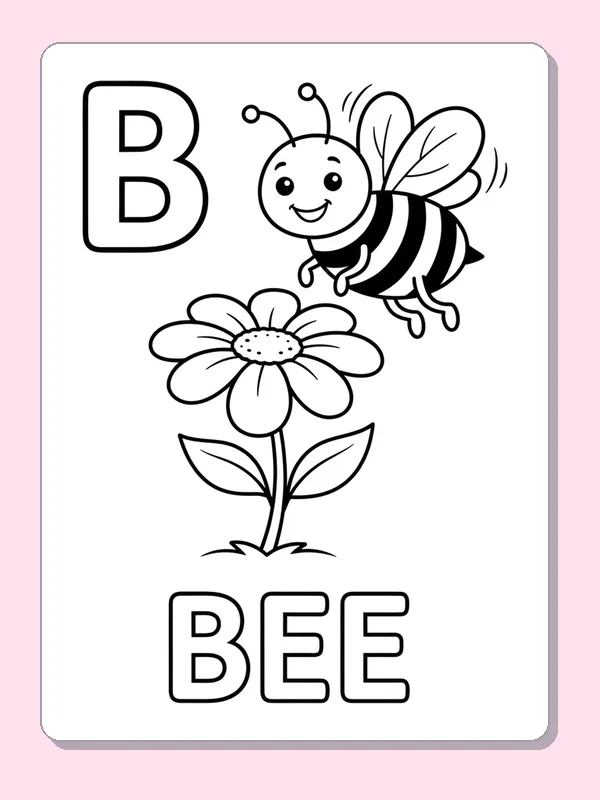
10 pagesAges 3–8Home and classroom
Skills: Color choice · Fine motor control · Creative storytelling
Try this: Say the first sound. Point to the B, say the pictured word slowly, and listen for the first sound together.

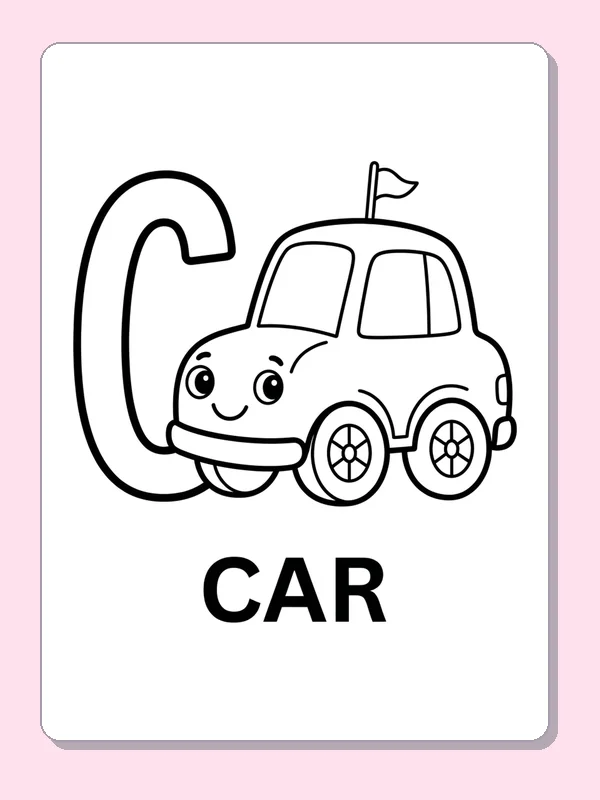
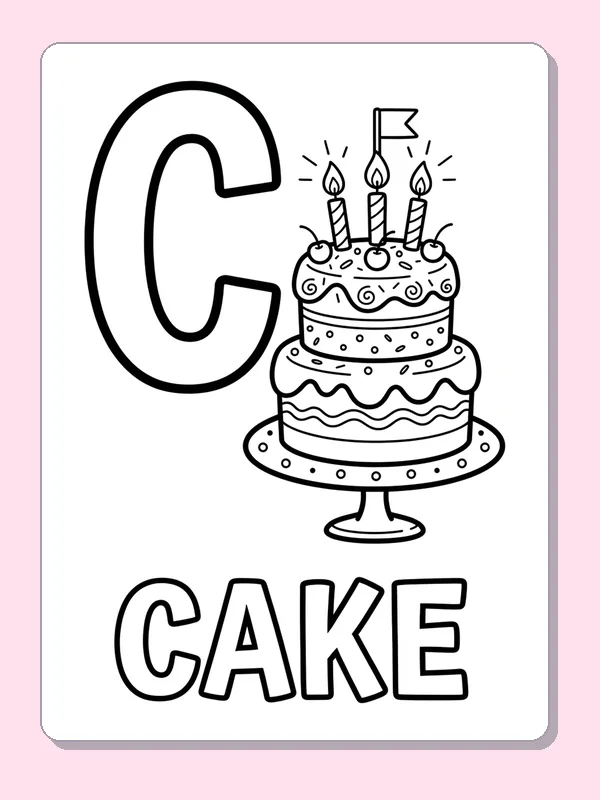
12 pagesAges 3–8Home and classroom
Skills: Hear the hard C in cat, car and cow · Compare C at the start of cake and inside cupcake · Color the large C before the smaller picture
Try this: Find three C starts. Lay the cat, car and cow pages together. Say each word slowly and point to the matching picture.

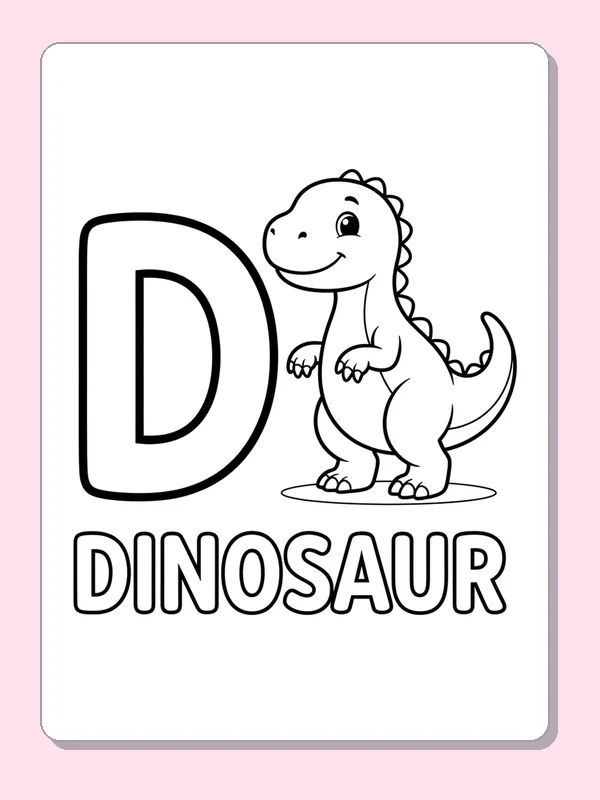
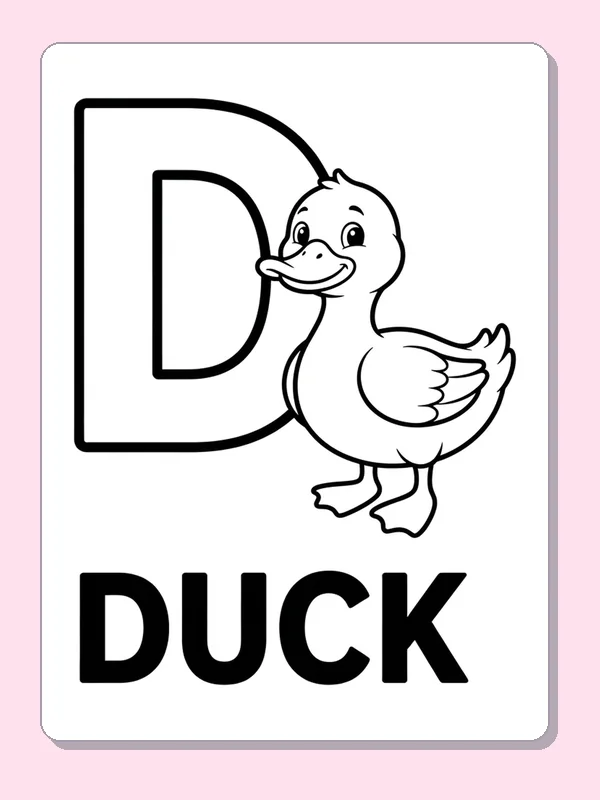
12 pagesAges 3–8Home and classroom
Skills: Hear D in dog, duck and drum · Compare a real animal with the fantasy dragon · Trace the straight back and curved side of D
Try this: Follow the D shape. Trace the straight side of D, then its rounded side on the dog or duck page before coloring.

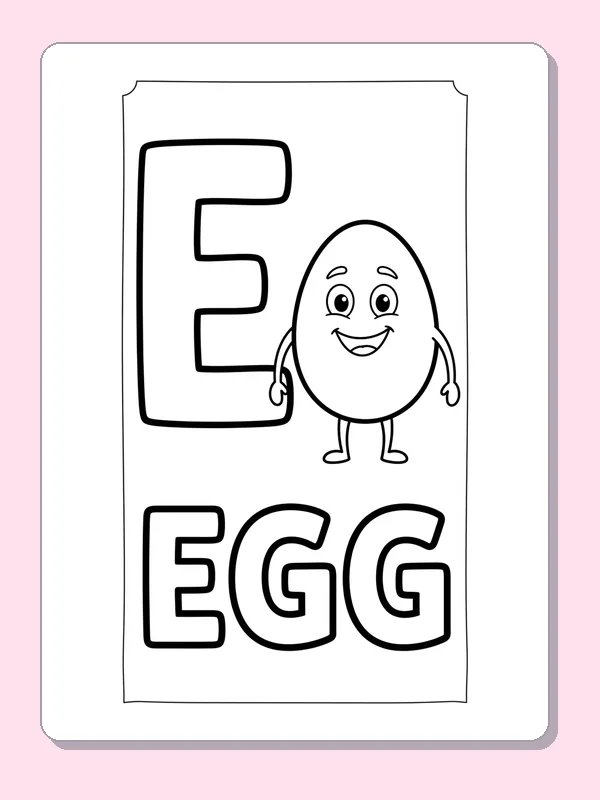
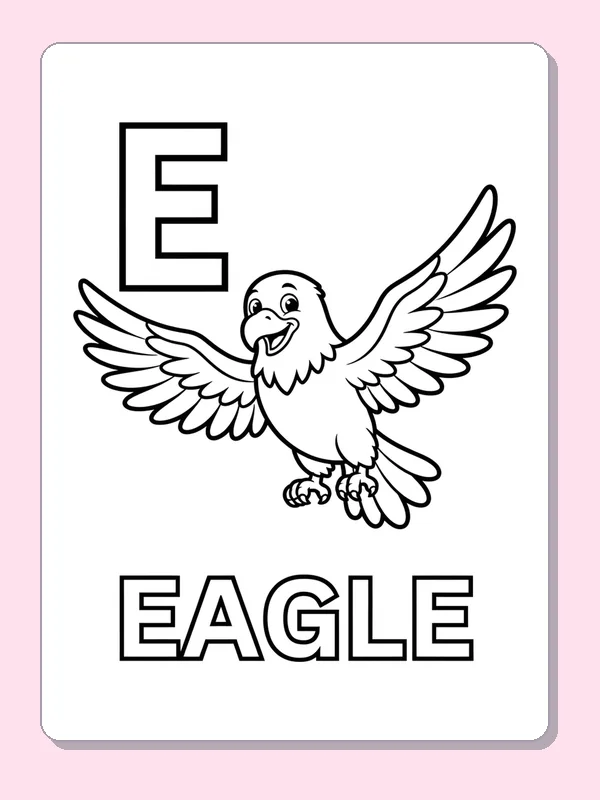
12 pagesAges 3–8Home and classroom
Skills: Hear the opening E in egg and elephant · Compare the eagle's wings with the eel's fins · Color the big outlined E before its word label
Try this: Hear two E beginnings. Say egg and eagle slowly, then ask the child which opening sound they hear in elephant and eel.

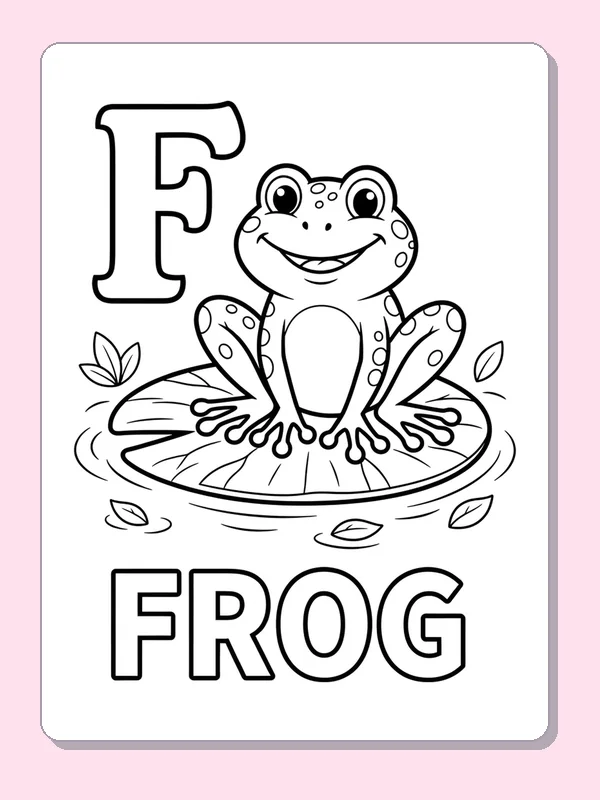
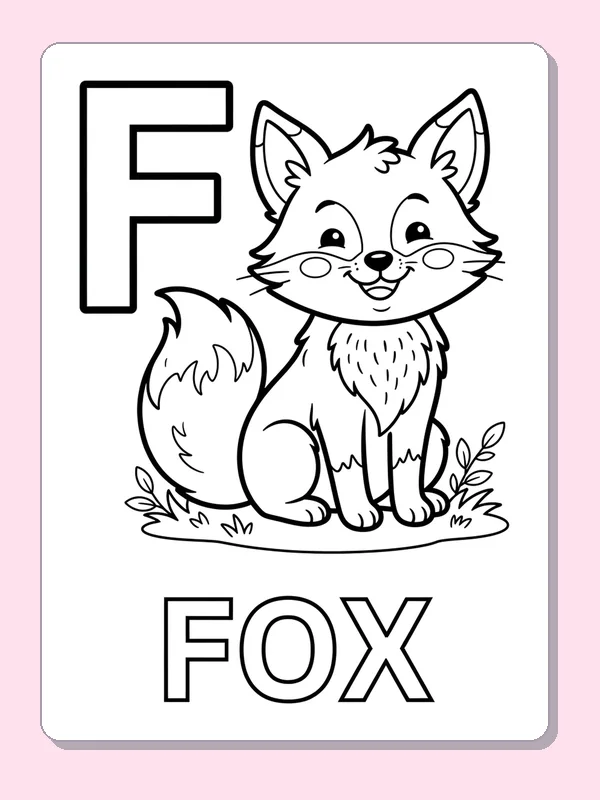
12 pagesChildren beginning to notice letter shapes and first soundsGrown-ups choosing a named picture for a short activity
Skills: finding uppercase F in different page layouts · matching a spoken F word to its pictured object · moving from broad letter shapes into smaller drawing details
Try this: Say it slowly. Point to fish, frog and flower while saying each word slowly, then let the child choose one to color.

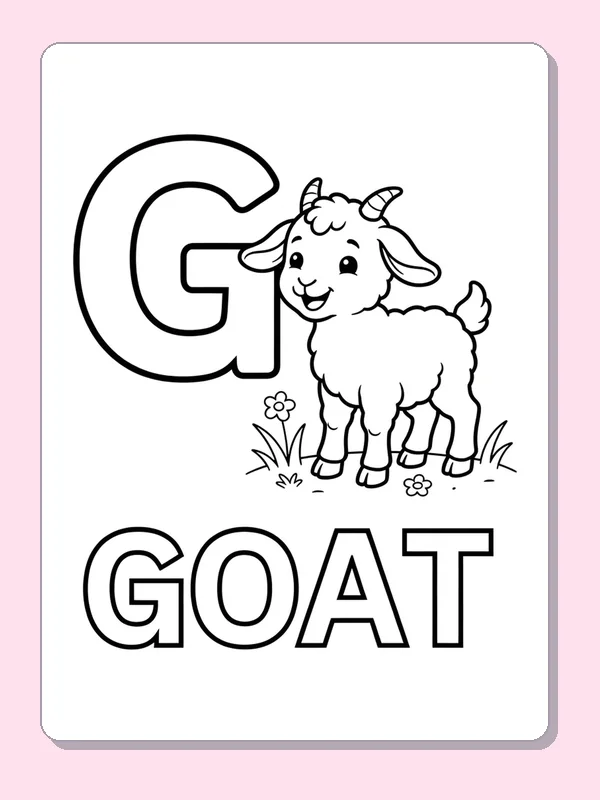
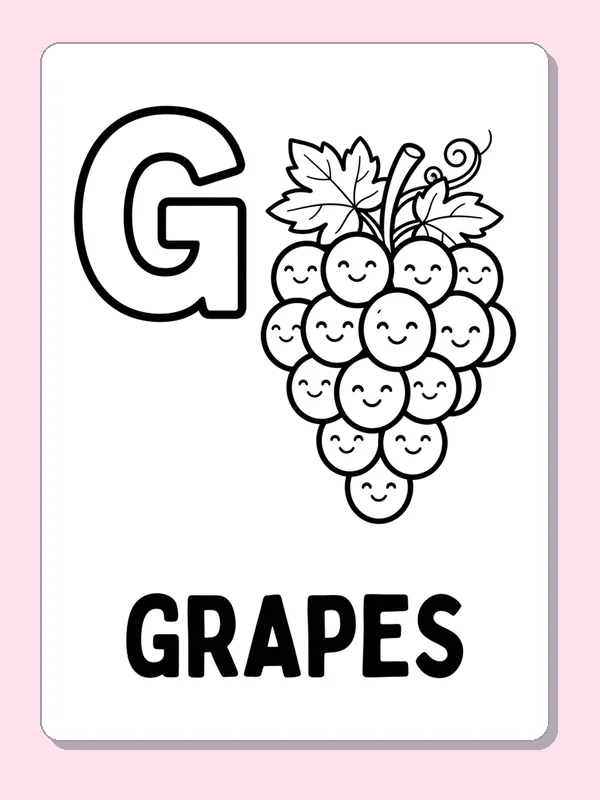
12 pagesAges 3–8Home and classroom
Skills: Hear the hard G in goat and grape · Notice the same G beside animals, food and music · Count the small circles in the grape bunch
Try this: Sort two G sounds. Say goat and gift, then giraffe and ghost. Let a child hear how the letter G changes sound.

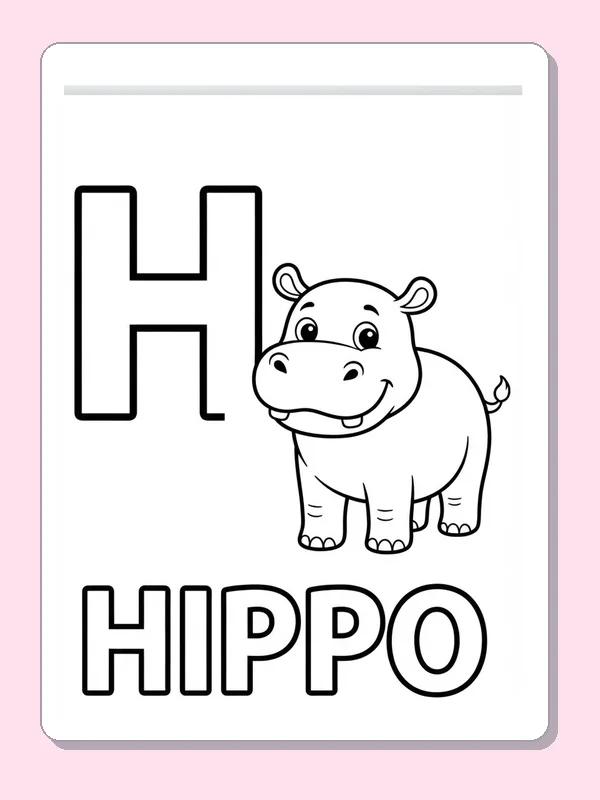
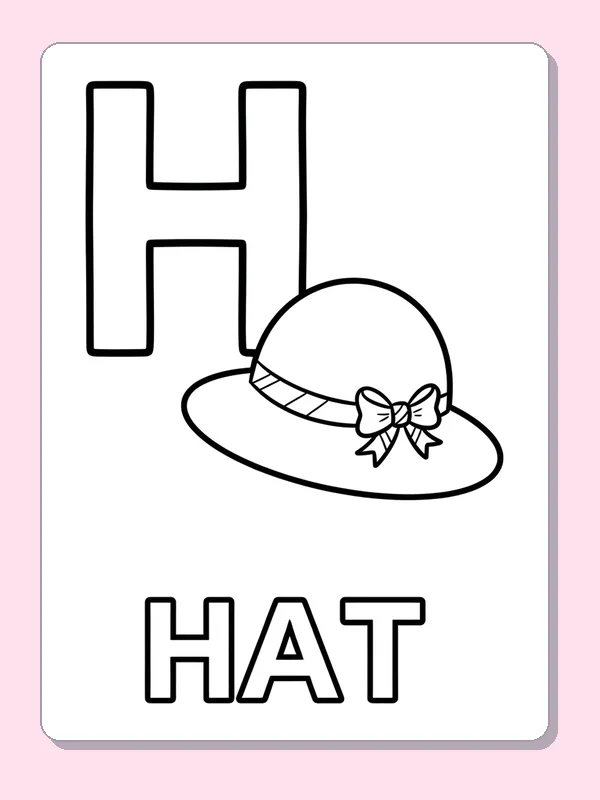
12 pagesAges 3–8Home and classroom
Skills: Hear H in horse, house and heart · Compare the wide roof with the small window details · Find two upright stems and the bridge in H
Try this: Build H with lines. Trace the two tall strokes and middle bar of the H on the hat page with a finger.

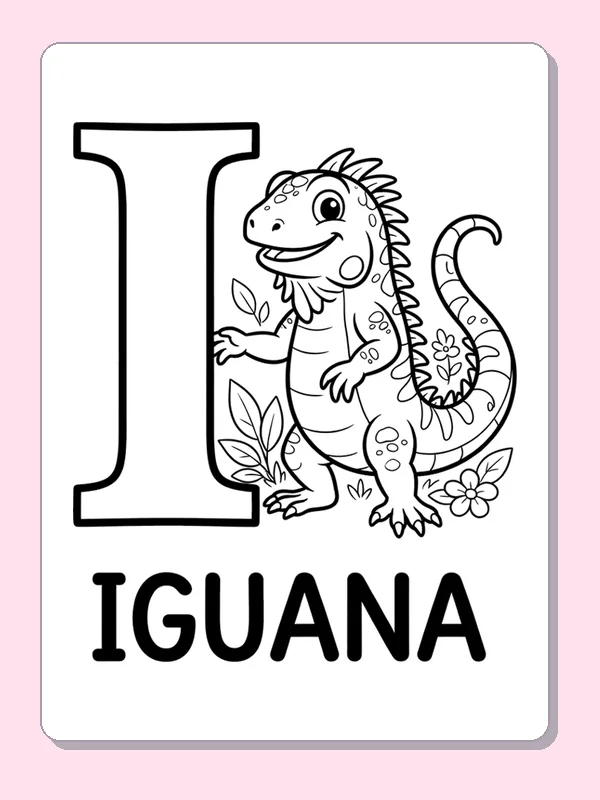
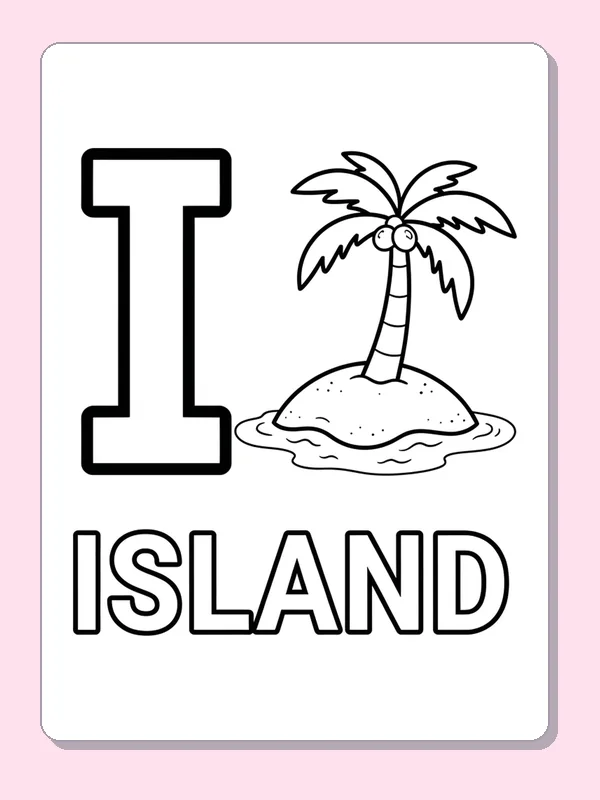
12 pagesAges 3–8Home and classroom
Skills: Hear the different I sounds in ice and insect · Trace the straight I on each word card · Compare the ice cream cone with the ice cube
Try this: Hear two I sounds. Say ink and insect, then ice and island. Ask which pair begins with the same sound.

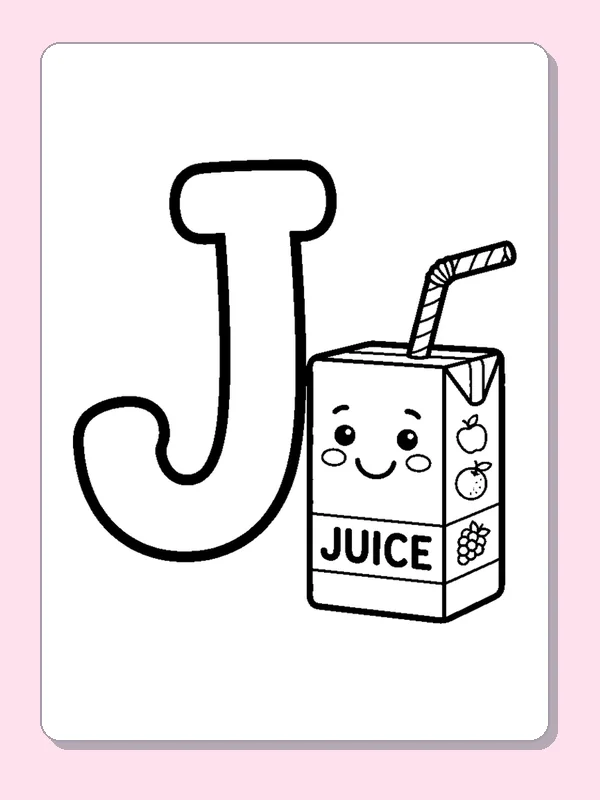
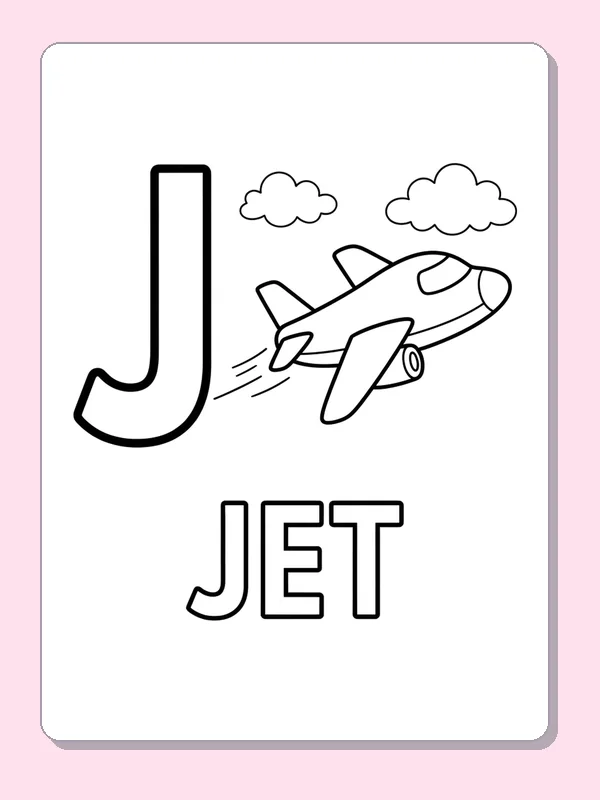
12 pagesAges 3–6Home and classroom
Skills: Hear J in jet, jam and jacket · Follow the long curve of uppercase J · Compare two jellyfish drawings with different spots
Try this: Make a J sound pair. Color jellyfish and jaguar, then say both words slowly to hear their shared opening sound.

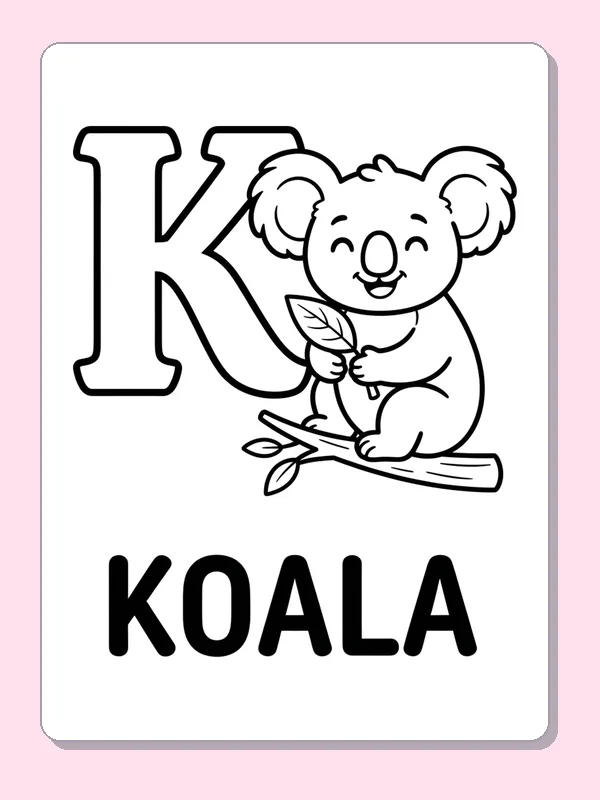
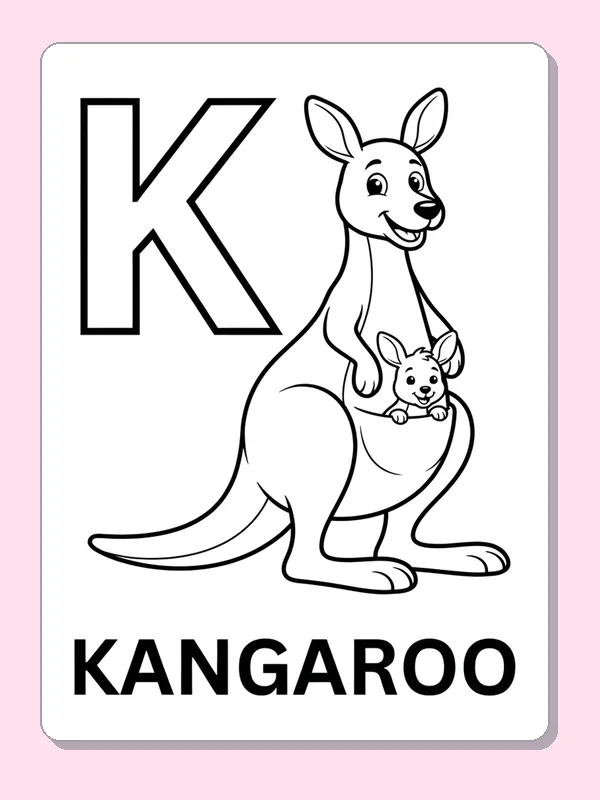
12 pagesAges 3–6Home and classroom
Skills: Hear K in key, kite and koala · Point to the straight stem and two arms of K · Use the dot-marker circles as a separate color game
Try this: Sort the K pictures. Place koala and kangaroo in one animal pile and key and kettle in another everyday-object pile.

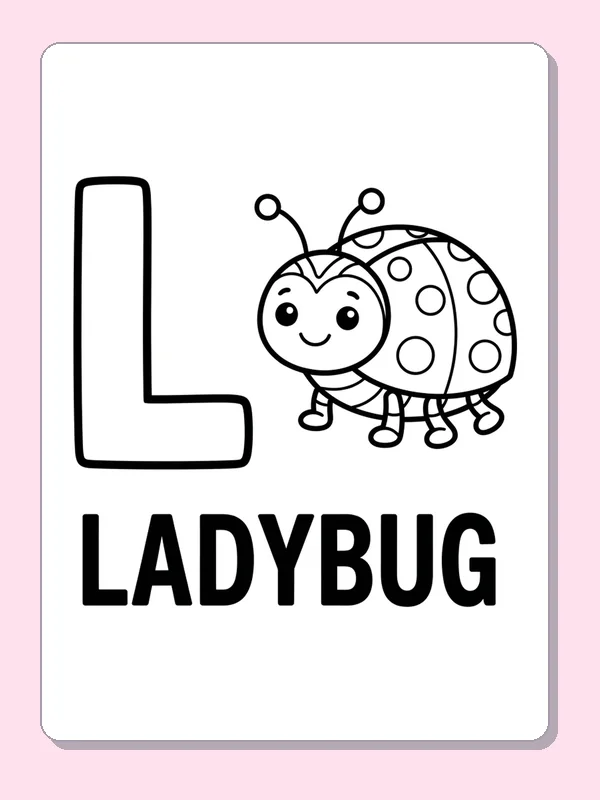
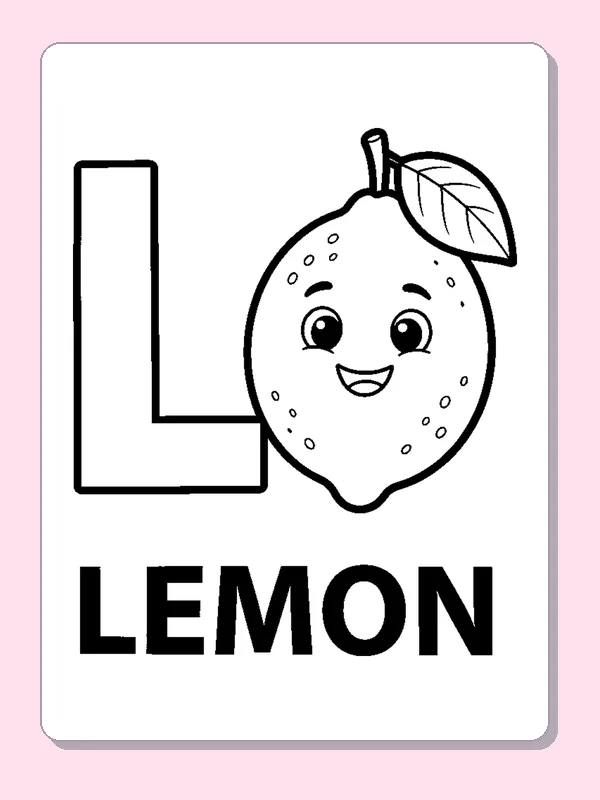
12 pagesAges 3–6Home and classroom
Skills: Hear L in lion, leaf and lamp · Trace the tall stroke before the short foot of L · Compare a real lion with the little letter-and-lion picture
Try this: Make an L with crayons. Lay one crayon down and one across, then compare the shape to the outlined L on the ladder sheet.

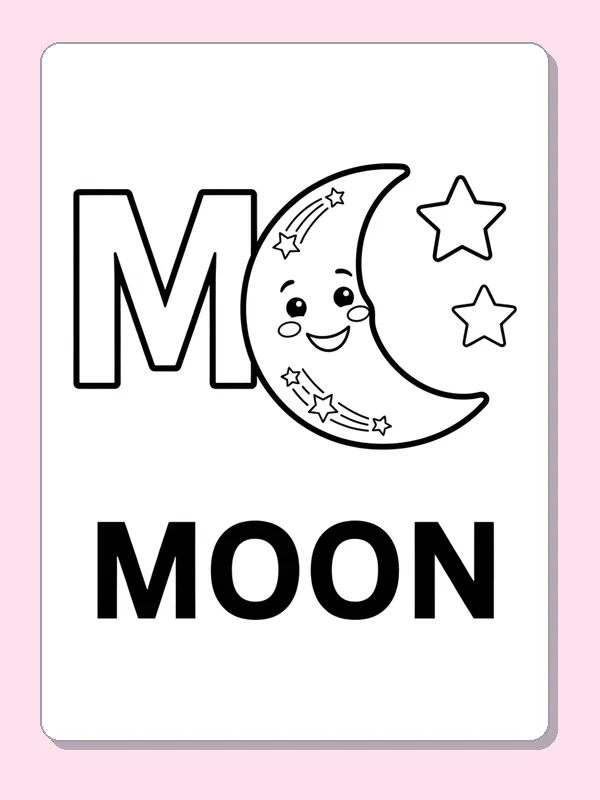
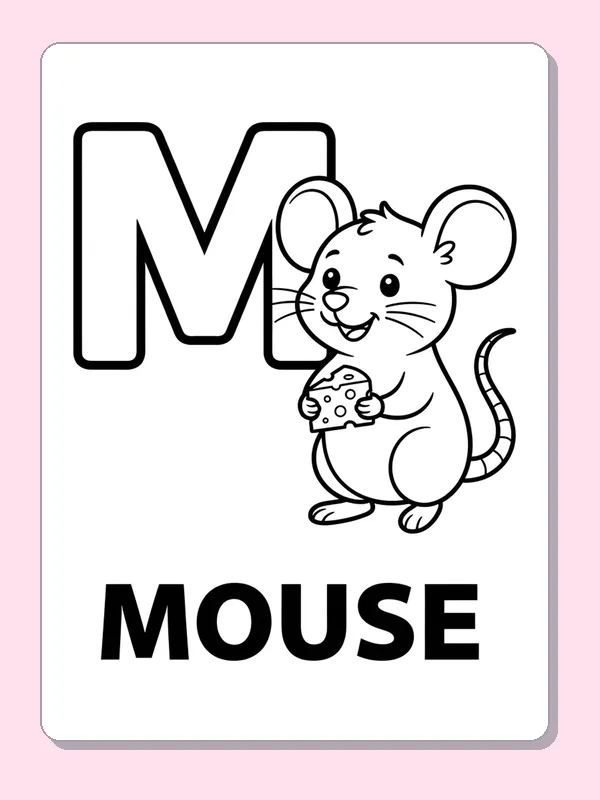
12 pagesAges 3–6Home and classroom
Skills: Hear M in moon, mouse and mitten · Follow the peaks of the uppercase M · Compare the drawn mouse with the outlined mouse word
Try this: Hum the first sound. Say moon and mouse slowly, then ask the child whether their lips start in the same position.

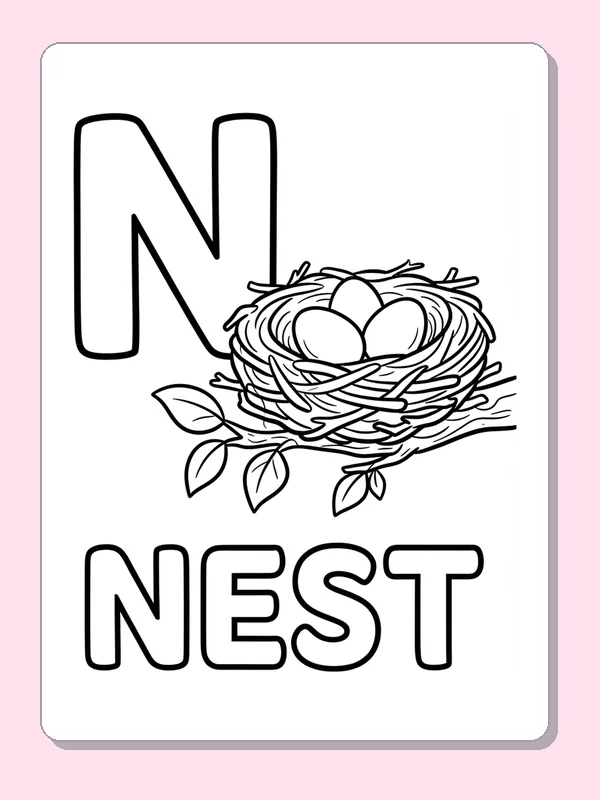
12 pagesAges 3–6Home and classroom
Skills: Letter recognition · Beginning sounds · Fine motor control
Try this: Count the eggs. Color the nest page and count the eggs before choosing a color for each one.

12 pagesAges 3–6Home and classroom
Skills: Hear O in owl, orange and oven · Find the round O in both the letter and objects · Compare an octopus picture with its second word card
Try this: Find round parts. Circle the O, orange and owl eyes with a finger before choosing crayon colors.

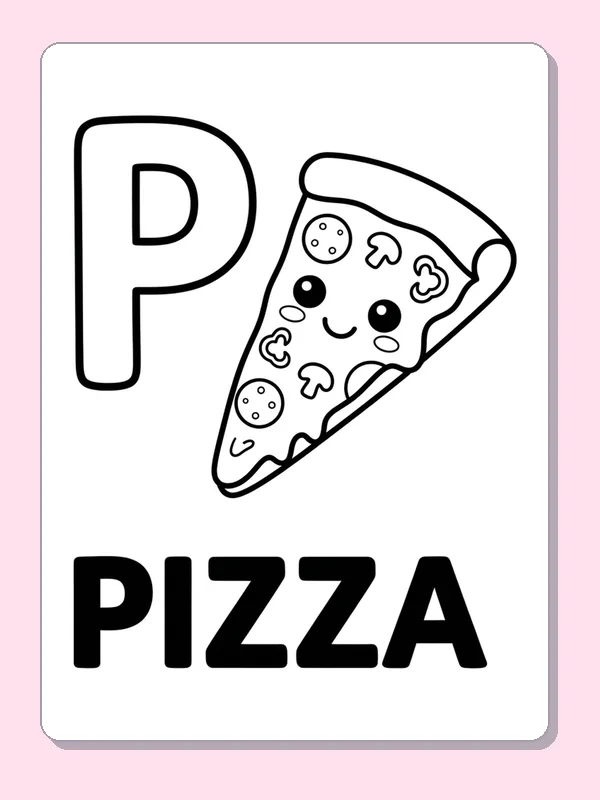
12 pagesAges 3–6Home and classroom
Skills: Hear P in panda, pizza and puppy · Point to the straight stem and round bowl of P · Compare the perched parrot with the simpler parrot card
Try this: Pop the P sound. Say puppy, pizza and pencil slowly, touching the printed P each time.

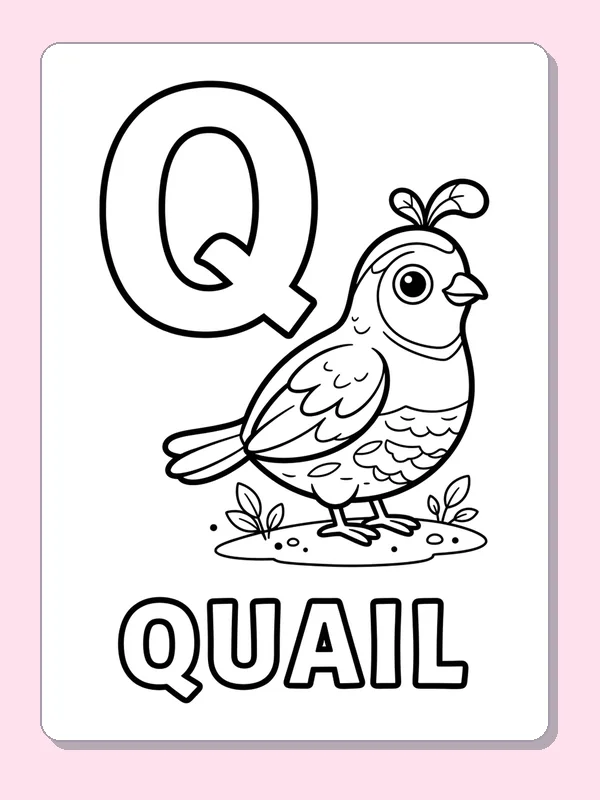
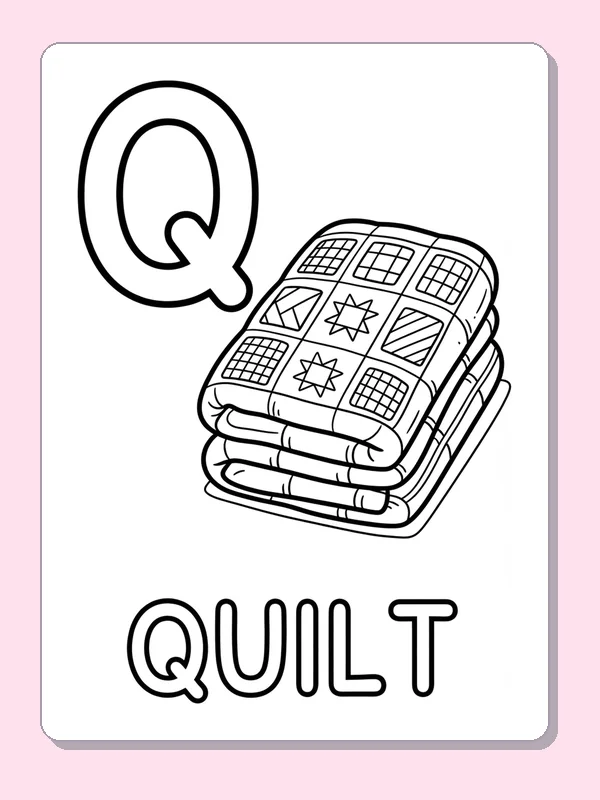
12 pagesAges 3–8Home and classroom
Skills: Hear the /kw/ start in queen and quail · Find the little tail that turns O into Q · Compare the quilt grid with the quail feathers
Try this: Find the Q and U pair. Point to the first two letters in QUEEN, QUILT and QUAIL, then say each word before coloring.

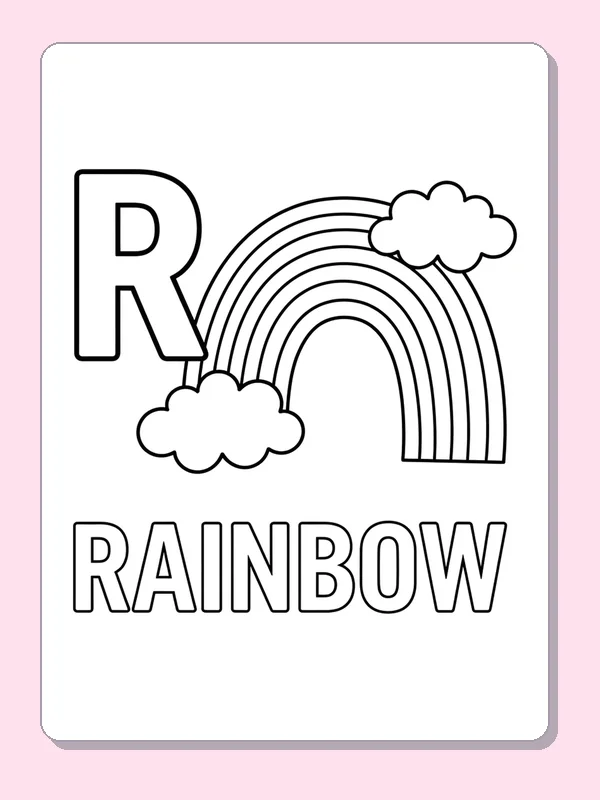
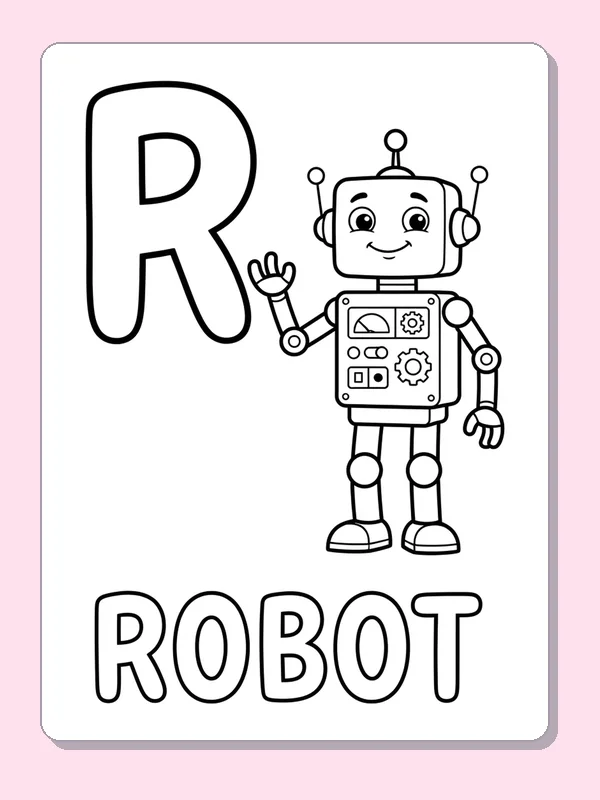
12 pagesAges 3–8Home and classroom
Skills: Hear R in rabbit, rose and robot · Follow the leg that distinguishes R from P · Give each rainbow band its own color
Try this: Sort R words. Put the rabbit, raccoon and rooster together, then ask what the robot and rocket have in common.

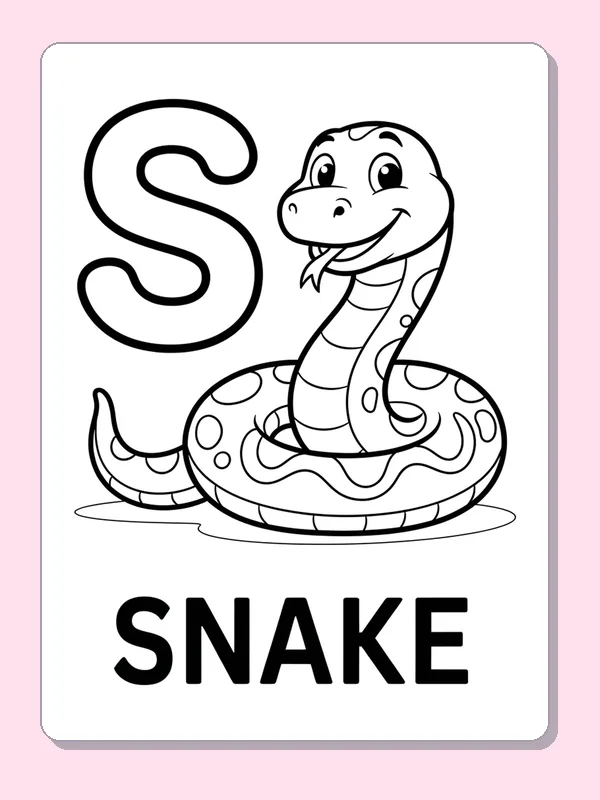
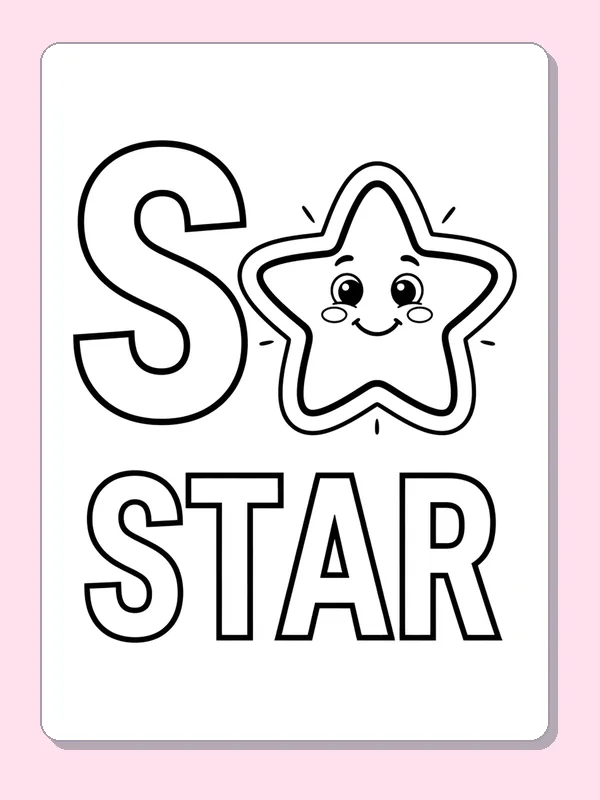
12 pagesAges 3–8Home and classroom
Skills: Hear S in sun, star and snake · Trace the winding S before coloring the picture · Compare the plain sun card with the smiling S friend
Try this: Make a soft S sound. Trace the curved S in the air and stretch the first sound in sun, snake and snail.

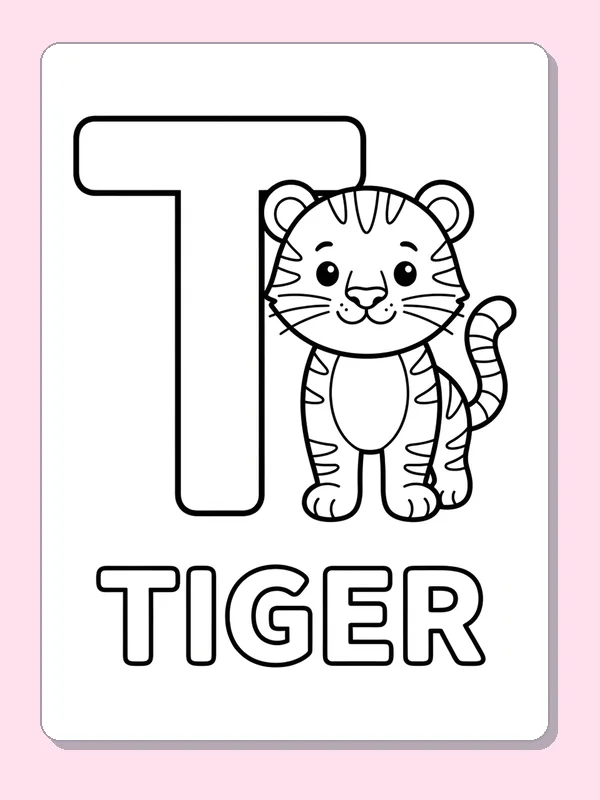
12 pagesAges 3–8Home and classroom
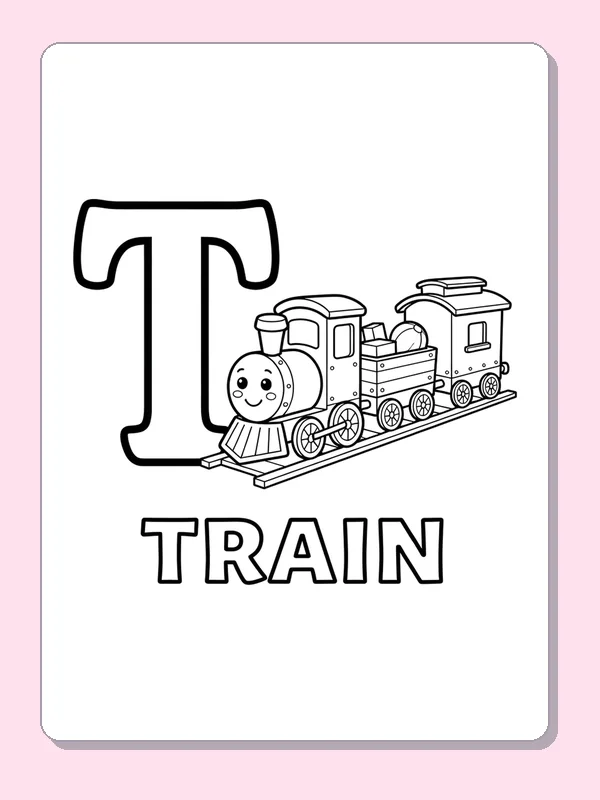
Skills: Hear T in turtle, train and teapot · Find the top bar and upright of T · Compare the leafy tree with the plain tree word card
Try this: Build a T with crayons. Lay one crayon across another to make the top and stem before finding the printed T.

12 pagesAges 3–8Home and classroom
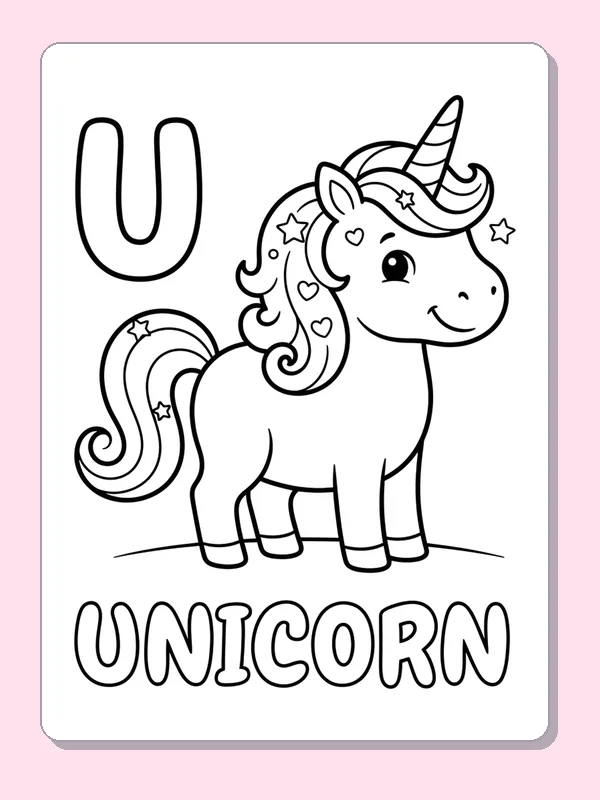
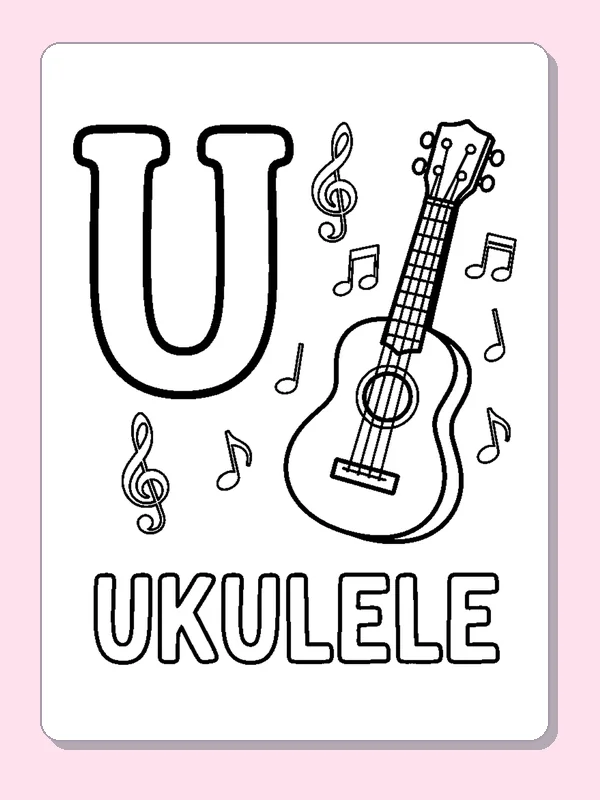
Skills: Hear U in umbrella and under · Follow the two upright sides and curved bottom of U · Compare the rainy umbrella with the clean word-picture umbrella
Try this: Try two U sounds. Say umbrella and unicorn slowly, then notice how their first sounds differ even though both begin with U.

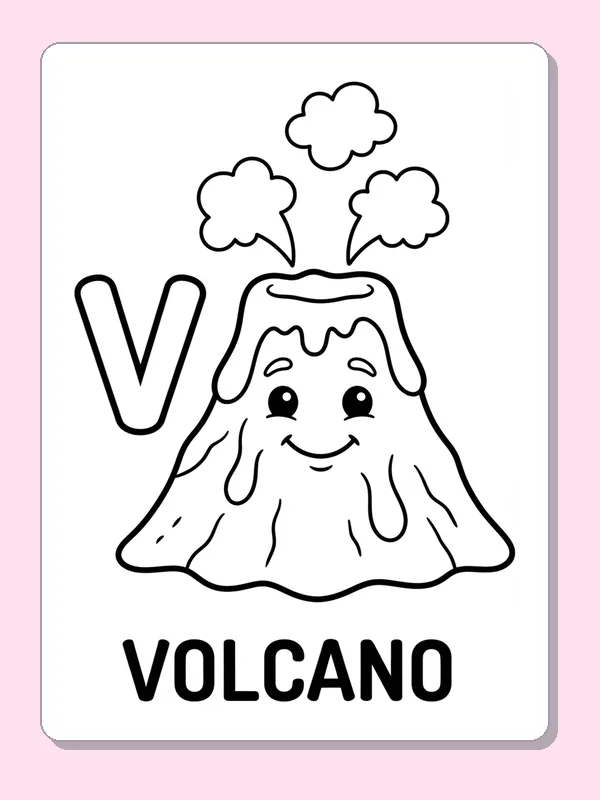
12 pagesAges 3–8Home and classroom
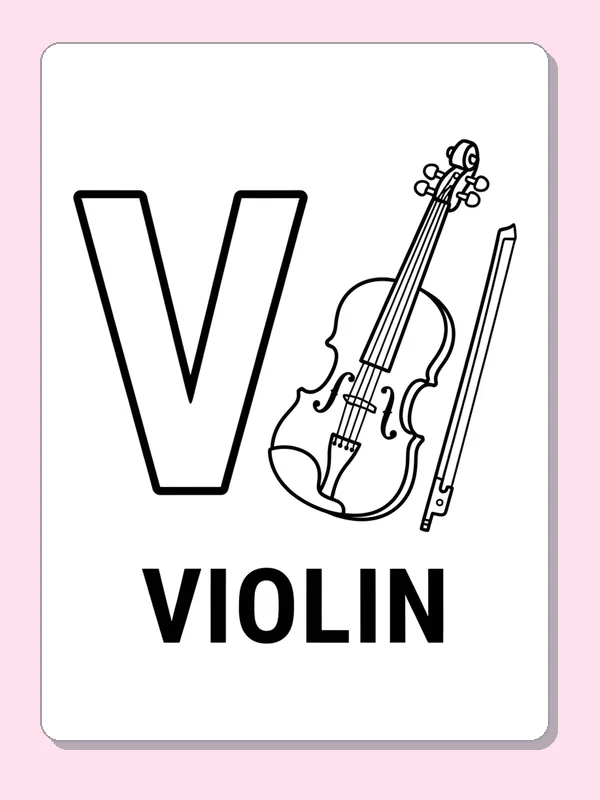
Skills: Hear V in van, vase and violin · Trace the two strokes meeting at the point of V · Compare the smiling volcano with the outline word card
Try this: Make a crayon V. Lay two crayons point to point and compare their angle with the printed letter.

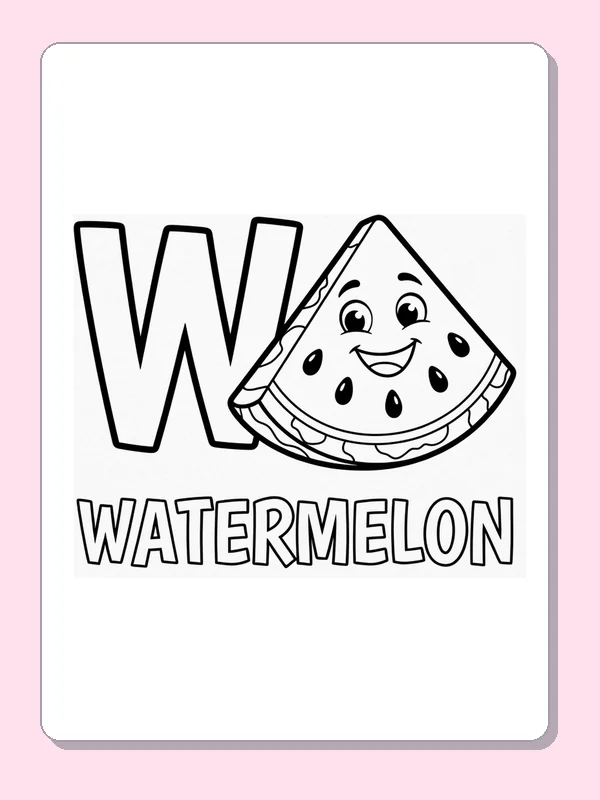
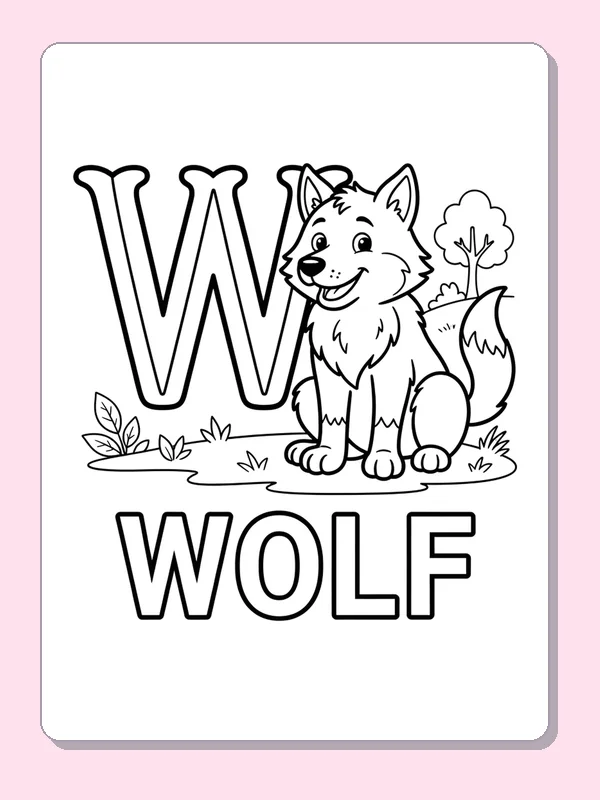
10 pagesEarly letter learnersHome or classroom word wall
Skills: Spotting uppercase W · Hearing the first sound in W words · Naming pictures and actions
Try this: Wave, then color. Wave hello together, find the W on the waving-child sheet, and color the letters in WAVE last.

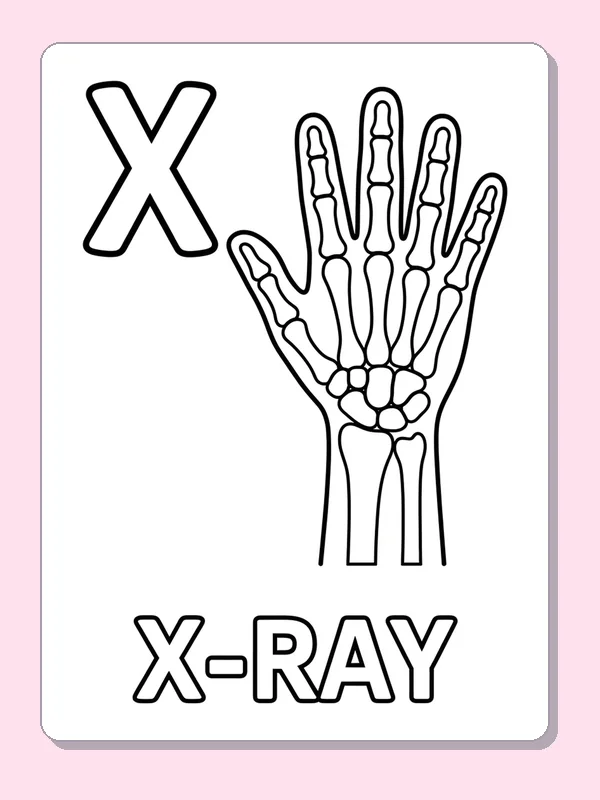
10 pagesChildren meeting letter XHome or classroom alphabet practice
Skills: Recognizing crossed X lines · Noticing print and sound differences · Describing a picture route
Try this: Two-stroke X. Trace the big letter with two finger strokes, then find the crossing shape in the cookie or kite.

12 pagesAges 3–8Children exploring Y picture words
Skills: recognizing uppercase Y in a picture word · naming familiar and unfamiliar objects · coloring both broad outlines and small details
Try this: Find Y twice. Point to the big Y and the first letter in the picture word before choosing crayons.

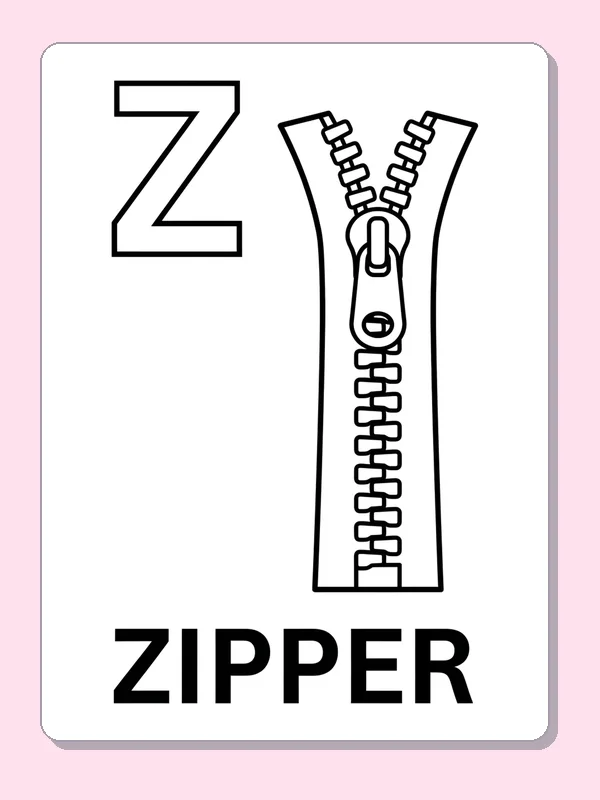
12 pagesAges 3–8Home and classroom
Skills: Hear the Z sound · Notice zigzag direction changes · Color inside small and large outlines
Try this: Invent zebra stripes. Color familiar black stripes or choose an imaginary two-color pattern.


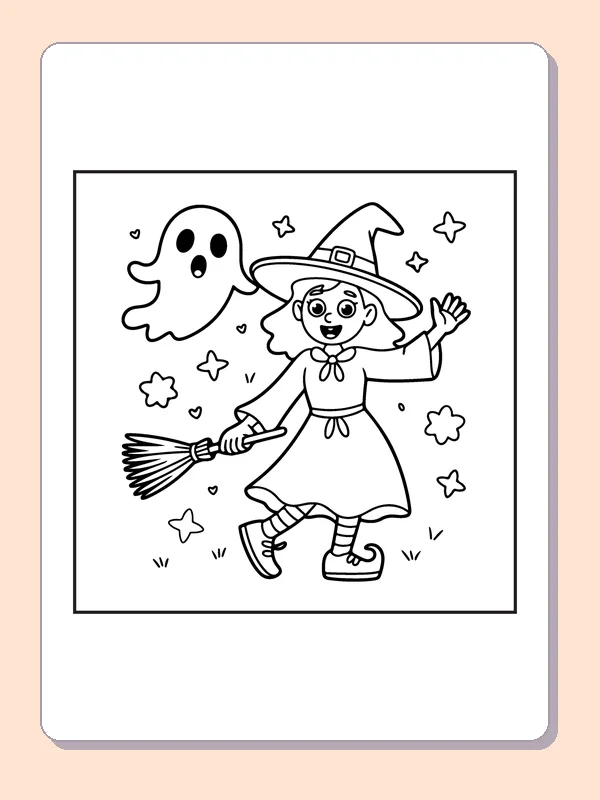
48 pagesHome and classroomFriendly Halloween stories
Skills: Story sequencing · Pattern noticing · Small-shape coloring
Try this: Plan a broom trip. Choose two flying scenes and ask where the witch stops between them.


36 pagesOlder children and patient colorersHome and classroom
Skills: Visual scanning · Color planning · Careful work in small spaces
Try this: Play ghost detective. Find a ghost, pumpkin and cat before coloring; some sheets hide them near roofs or gates.
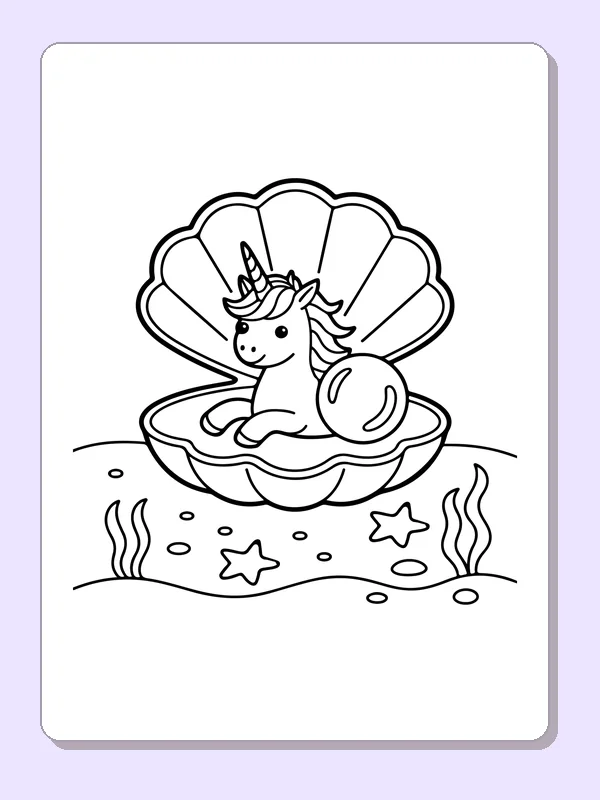

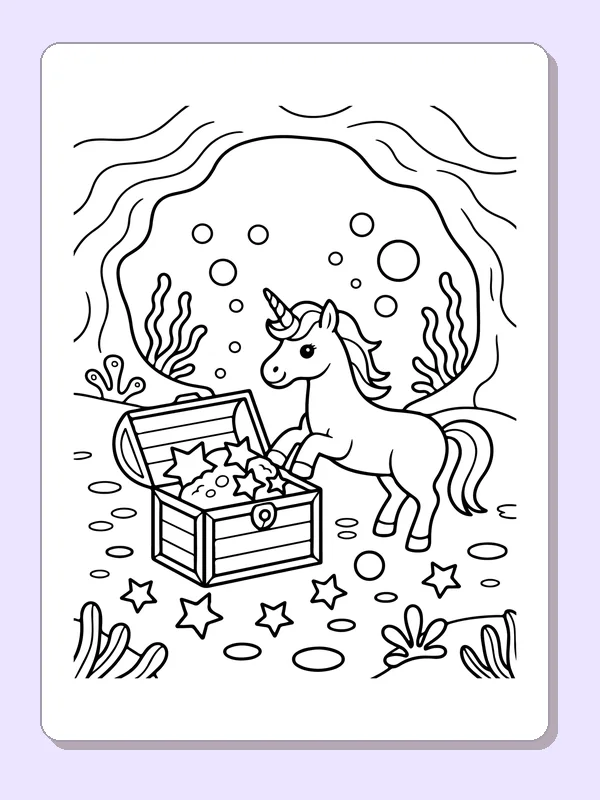
50 pagesChildren who enjoy friendly fantasy storiesFamilies choosing a short or long coloring session
Skills: Choosing colors for a scene and its main character · Following rainbow bands, tail scales and flower petals · Comparing land, ocean and sky settings
Try this: Make a unicorn journey. Pick one ocean, one sky and one forest page and tell how the unicorn travels between them.


20 pagesChildren choosing between broad wings and smaller patternsHome, library and classroom garden activities
Skills: Choosing and repeating colors across two wings · Noticing matching and different wing patterns · Following smaller flower and star outlines
Try this: Try two wing plans. Print two butterflies. Match colors across the first pair of wings, then give the second pair two different color schemes.


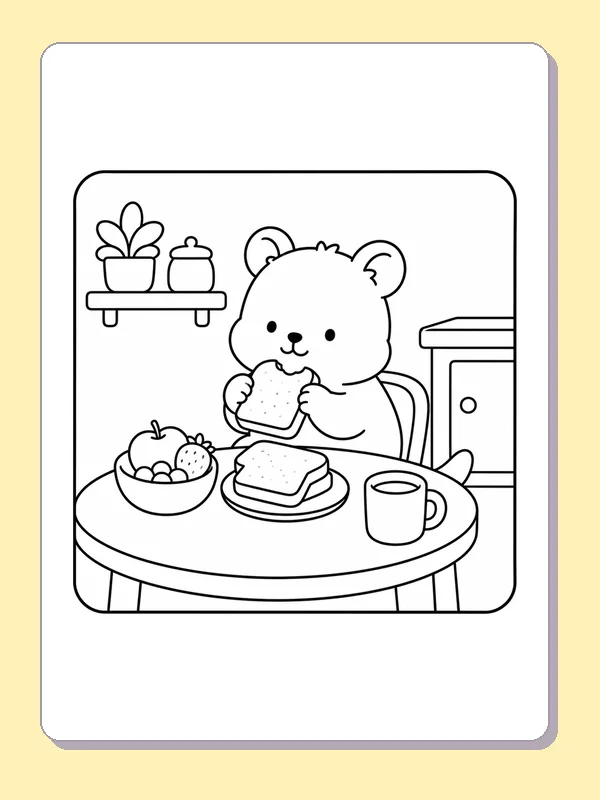
12 pagesChildren who like gentle animal stories and familiar routinesHome, library and classroom story tables
Skills: Sequencing morning, afternoon and evening scenes · Naming everyday objects and actions in the pictures · Choosing repeated colors for a character across different settings
Try this: Put the bear’s day in order. Print waking, breakfast, scooter and bedtime sheets, then ask the child to arrange and narrate them.

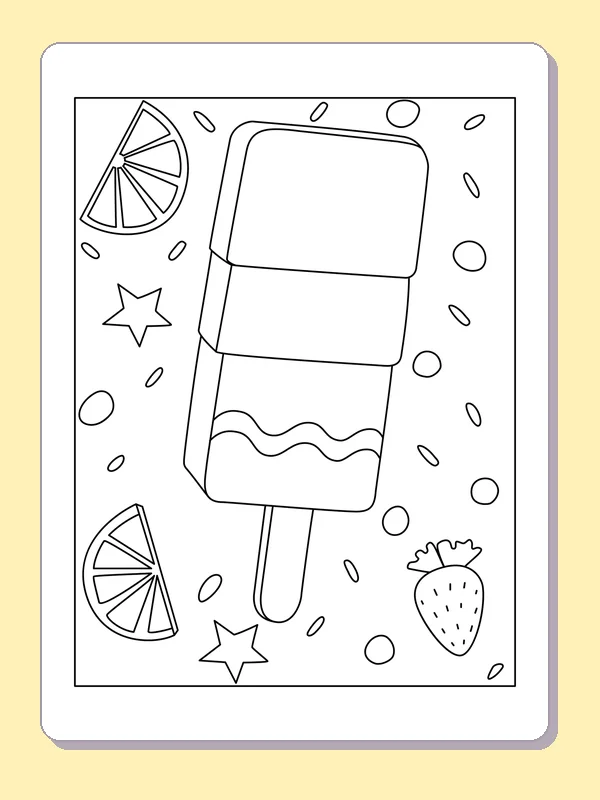
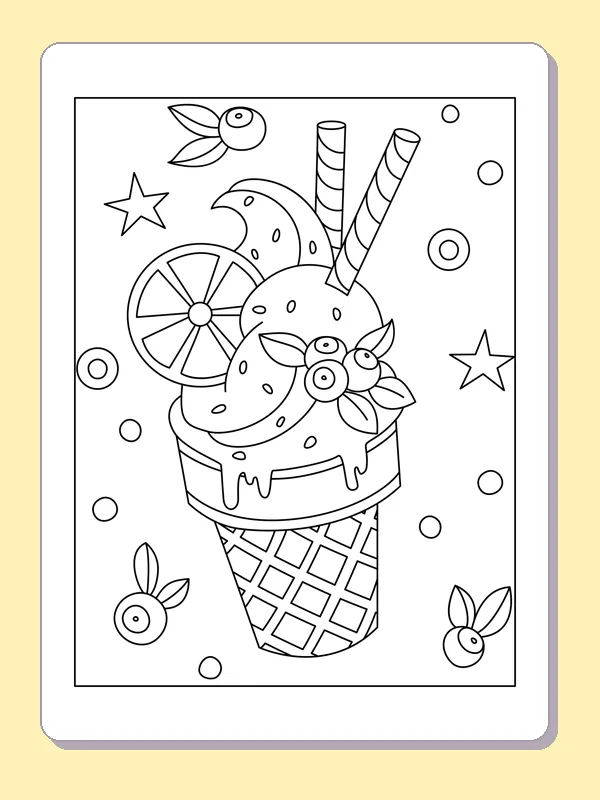
10 pagesAges 3–8Home and classroom
Skills: Color choice · Fine motor control · Creative storytelling
Try this: Choose by detail. Start with a roomy outline for younger children; give older children a scene with more small shapes.


27 pagesChildren who play or watch soccerFamilies planning a matchday activity
Skills: noticing different player movements · matching team colors across pages · following a ball across the pitch
Try this: Create a team kit. Choose two colors for the number 10 jersey, then repeat them on a player and scarf.


20 pagesAges 3–8Home and classroom
Skills: Comparing car shapes · Choosing a two-color pattern · Adding a simple setting
Try this: Compare two silhouettes. Print a tiny city car and a broad SUV; look at their roofs, windows and wheels.


28 pagesChildren making cardsFamilies sharing a quick coloring activity
Skills: comparing repeated patterns · choosing colors for a message · working from broad shapes to small sections
Try this: Make a card. Choose the plain heart or ribbon heart and write a short message in the open space.
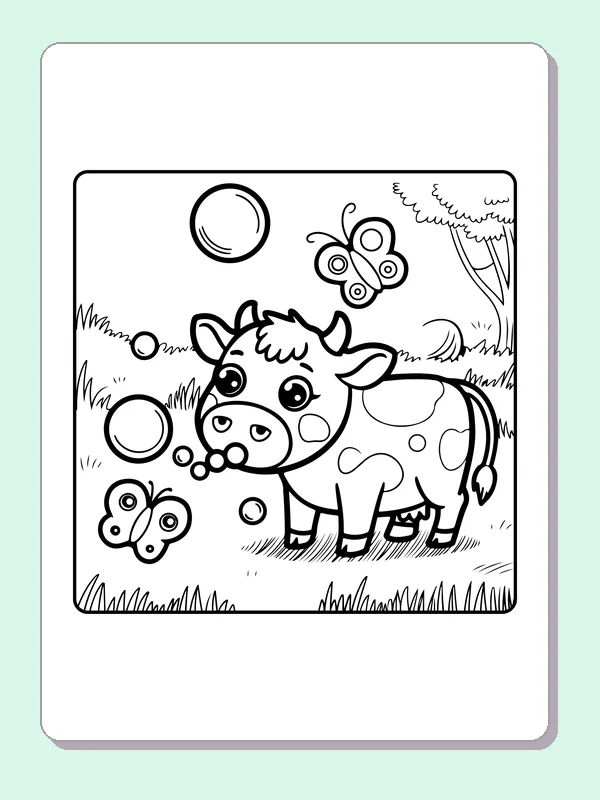
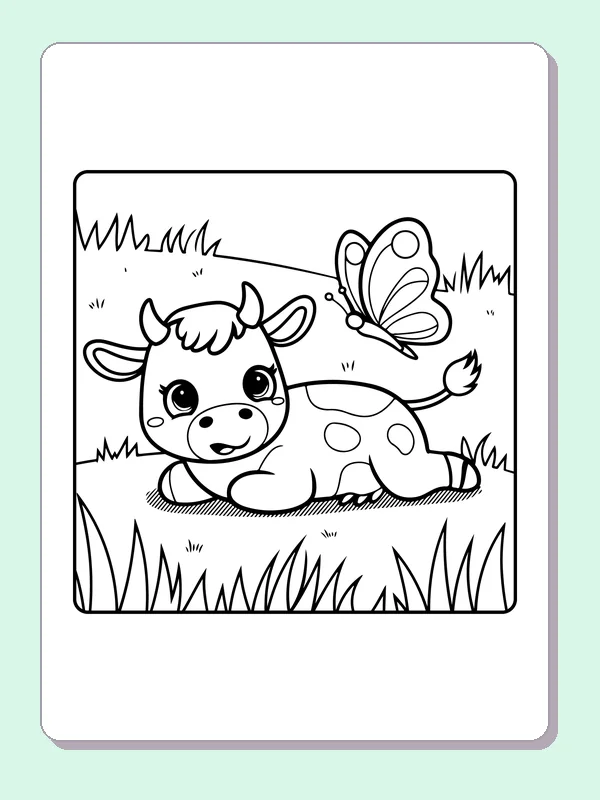
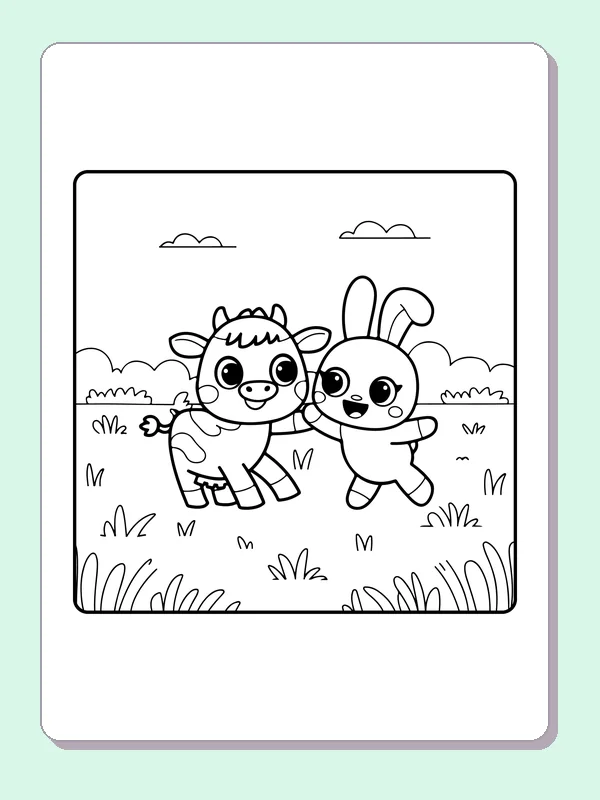
60 pagesAges 3+Home and classroom
Skills: Following one calf through a scene · Coloring spots and flower clusters · Comparing open fields with busy farm backgrounds
Try this: Choose a cow for the weather. Put the raincoat, sunglasses and moonlit calf pages side by side. Ask your child which sky each cow needs, then color the three different days.


13 pagesChildren choosing snow days picturesHome coloring tables
Skills: Matching winter clothes to activities · Repeating scarf stripe colors · Ordering outdoor and indoor scenes
Try this: Mitten partner. Draw a second mitten beside the plain one and give both matching dots or stripes.


12 pagesChildren choosing winter hearts picturesHome coloring tables
Skills: Finding repeated heart shapes · Comparing rainy and snowy windows · Describing a shared activity
Try this: Music for a friend. Color the child with the guitar and write who might be listening on the back.
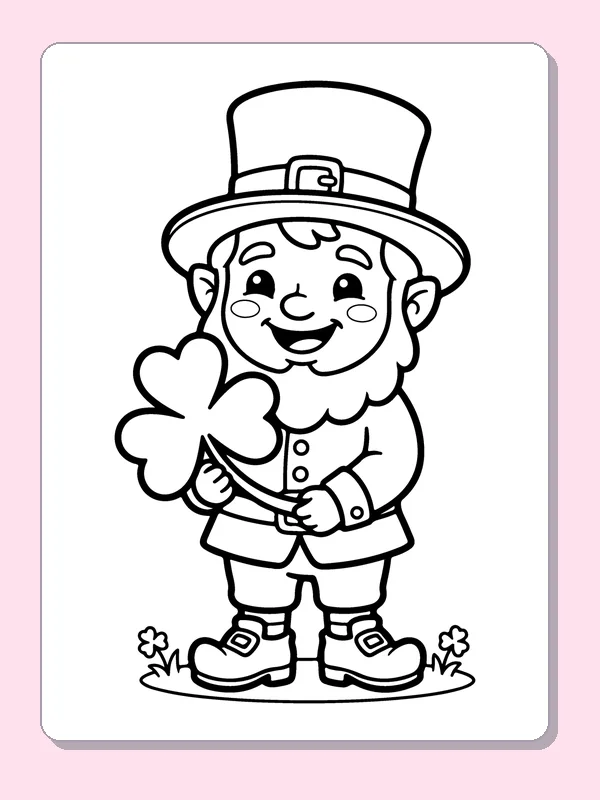


20 pagesChildren choosing a quick clover or a longer patternFamilies preparing a March craft table
Skills: Spotting repeated shamrock shapes · Planning colors across rainbow bands · Counting coins and small flowers
Try this: Find the hidden clovers. Count every clover among the boots or beside the leprechaun before adding green.


20 pagesChildren choosing spring wildlife picturesHome coloring tables
Skills: Comparing insect wing patterns · Sorting pictured land and water settings · Describing observations from outdoors
Try this: Leaf palette. Use the same two greens on the caterpillar and ladybug leaves, then choose different insect colors.


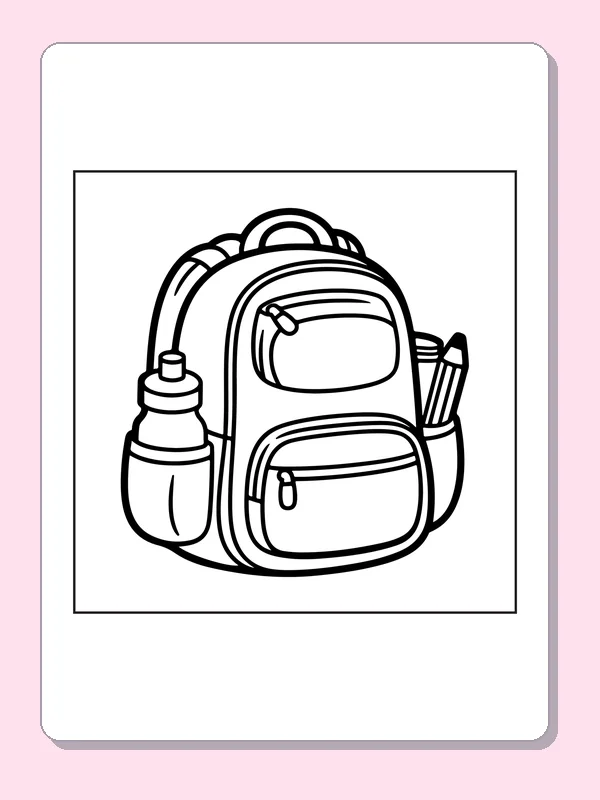
15 pagesChildren choosing school gear picturesHome coloring tables
Skills: Naming classroom objects · Planning colors across book stacks · Comparing buildings and bus scenes
Try this: Pack one thing. Color a backpack and write one useful item to put inside on the back.


15 pagesChildren making a November calendar or displayHome, library and classroom autumn activity tables
Skills: Reading and decorating the month name in large letters · Comparing leaves still on a tree with leaves falling or on the ground · Planning color changes across a woven basket or many small foods
Try this: Build a month header. Choose one HELLO NOVEMBER page and color the lettering before adding a tree or animal picture below it.

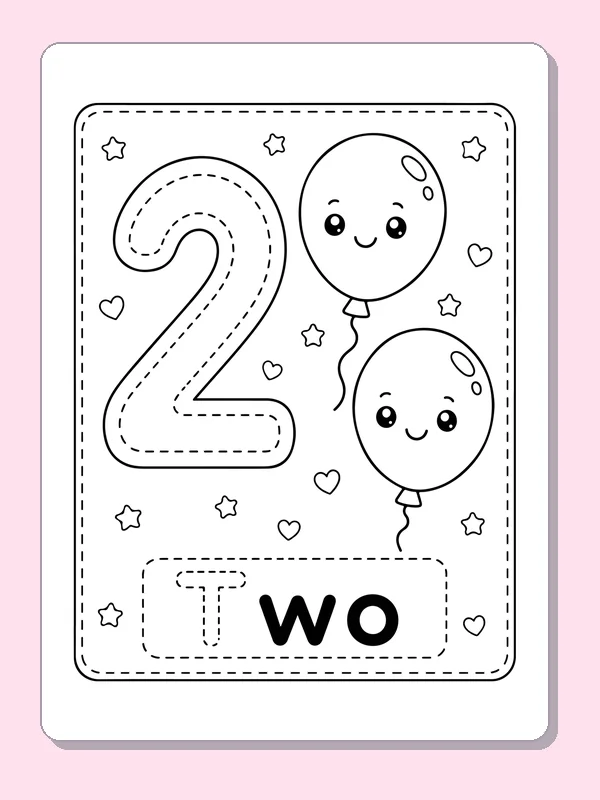
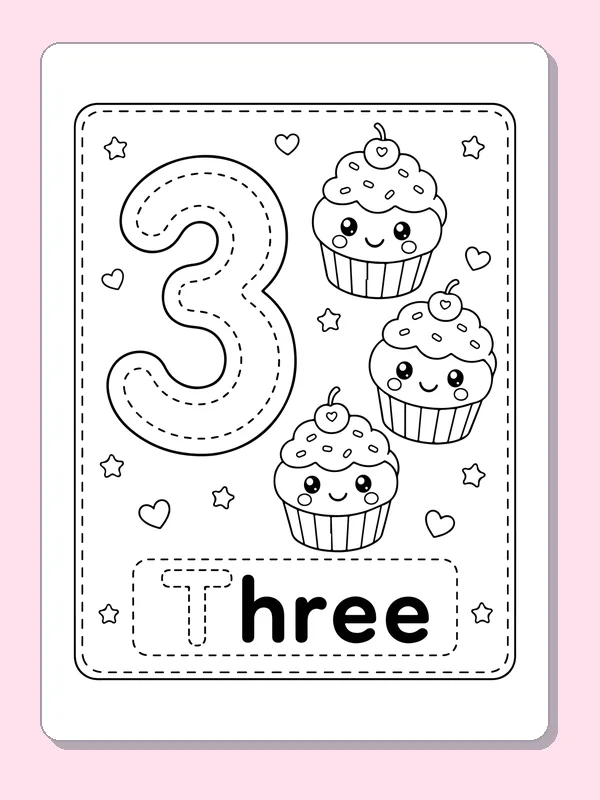
30 pagesAges 3–8Home and classroom
Skills: Number recognition · Tracing control · Number word familiarity
Try this: Trace before coloring. Follow a dotted numeral with a finger, then use a crayon on the same path.


32 pagesChildren exploring familiar circles, corners and starsHome, preschool and classroom activity tables
Skills: Noticing straight edges, curves and corners · Finding a shape repeated inside an illustrated object · Comparing an outline with a shape-built scene
Try this: Trace then color. Follow the dotted square or circle path first, then fill the larger outlined shape.


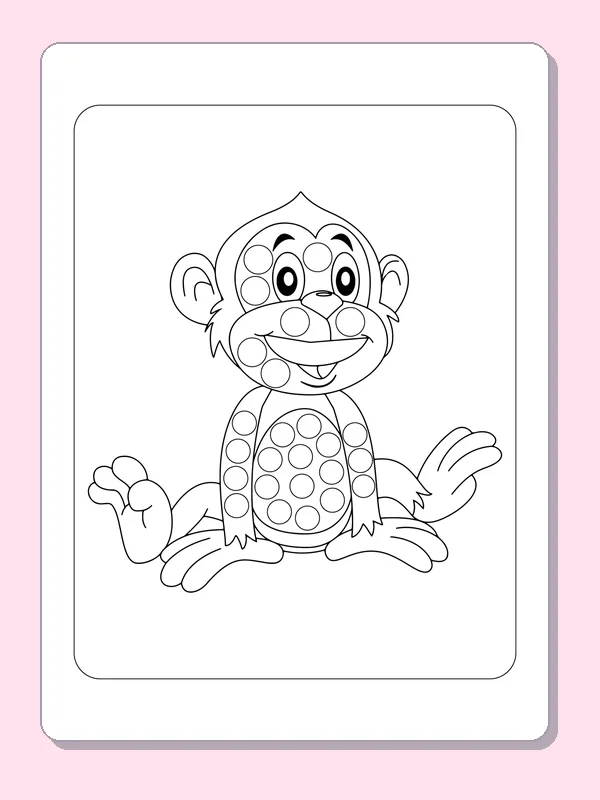
30 pagesPreschool and early elementaryHome and classroom
Skills: Aim for a circle · Choose a repeating color pattern · Name animal features
Try this: Fill one row at a time. Give each row of circles a different color on the elephant or rabbit, then notice the pattern together.


50 pagesAges 5–12Home and classroom
Skills: Color planning · Fine motor control · Story sequencing
Try this: Design the cape. Pick one color for the outside and another for the lining, then compare the cape across several scenes.


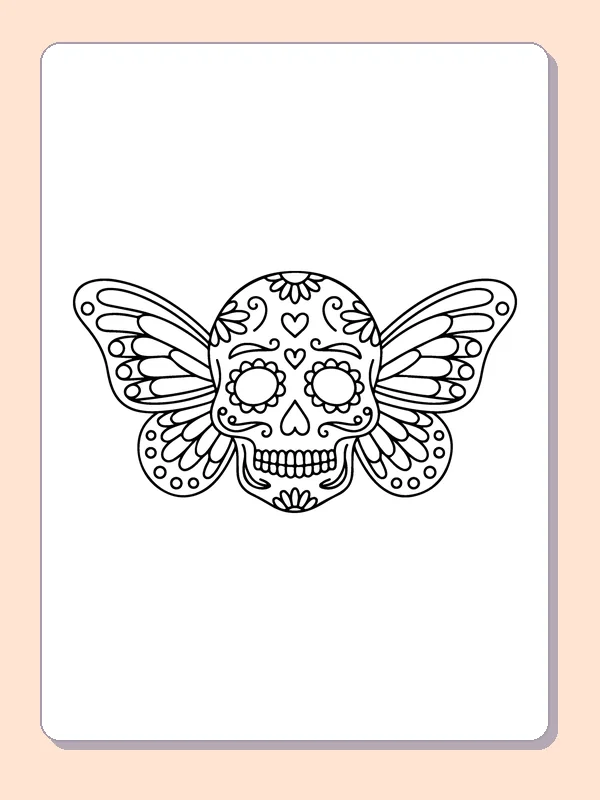
40 pagesAges 6+Home and classroom
Skills: Pattern recognition · Symmetry practice · Careful color choice
Try this: Match the flower eyes. Color one flower eye, then find the same petals on the other side. Let the second eye match exactly or change one color on purpose.


15 pagesAges 3–9Home and classroom
Skills: Color choices · Fine motor practice · Storytelling
Try this: Color a familiar cat. Choose fur colors from a pet you know, then invent a different costume or pumpkin color for the page.
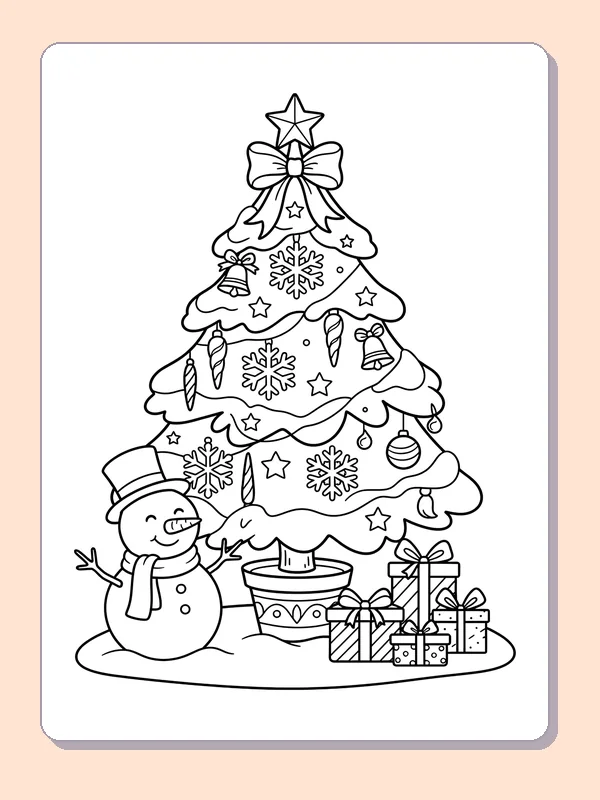

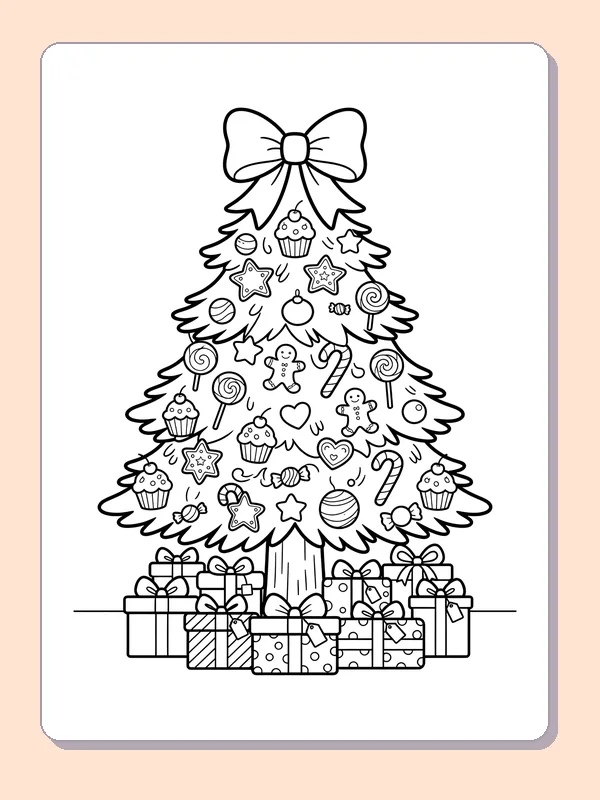
30 pagesAges 4–12Home and classroom
Skills: Color planning · Fine motor control · Pattern making
Try this: Invent a bauble pattern. Color one ornament with dots, the next with stripes, and repeat the pattern across the branches.


13 pagesChildren choosing peppermint lane picturesHome coloring tables
Skills: Continuing a stripe pattern around curves · Comparing repeated candy cane shapes · Ordering scenes into a village story
Try this: Two-color hooks. Choose two shades and alternate them all the way around the street lamp hook.


14 pagesChildren choosing snowy neighbors picturesHome coloring tables
Skills: Matching clothing colors across a figure · Comparing open portraits and busy landscapes · Describing a snowman character
Try this: Name the neighbor. Color a waving snowman and write its name and greeting in the white margin.


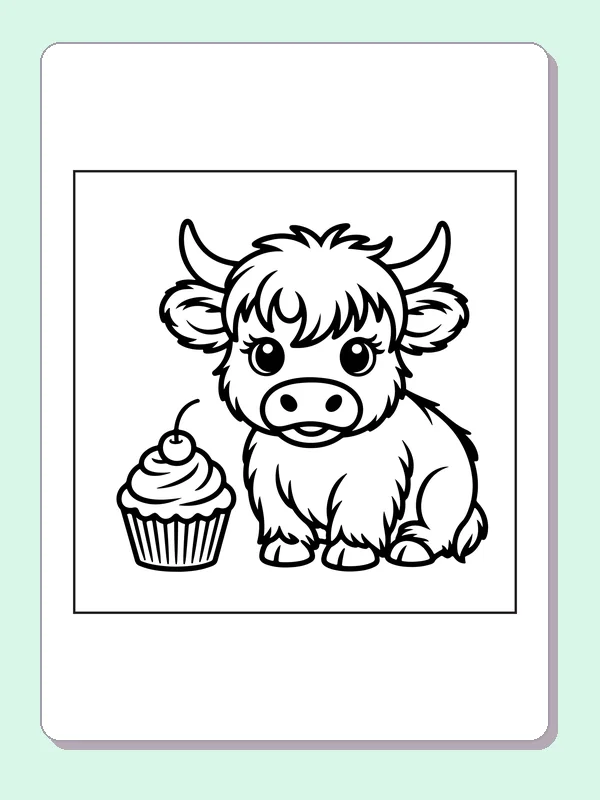
40 pagesAges 3–12Home and classroom
Skills: Color choice · Fine motor control · Story sequencing
Try this: Give each calf a coat. Print the two cows together and the calf beside a sheep. Let children choose coat colors, then name the features that make each animal different.
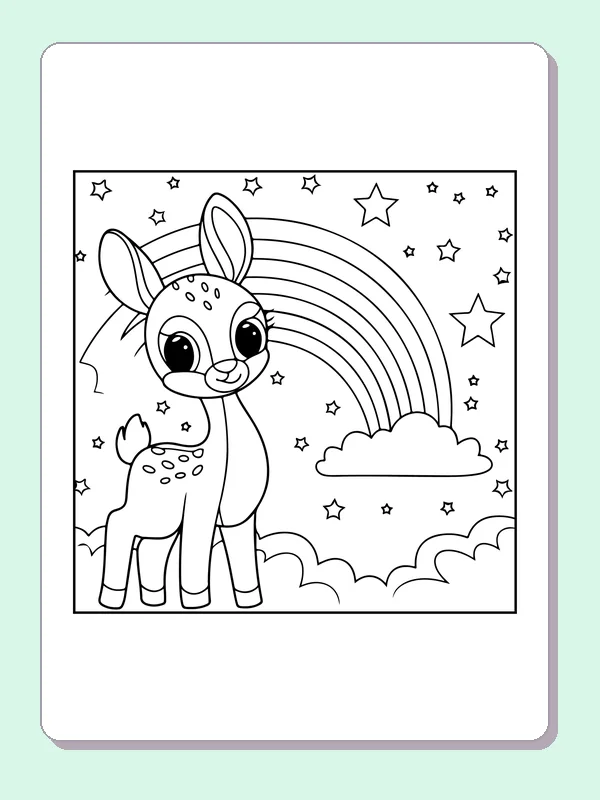

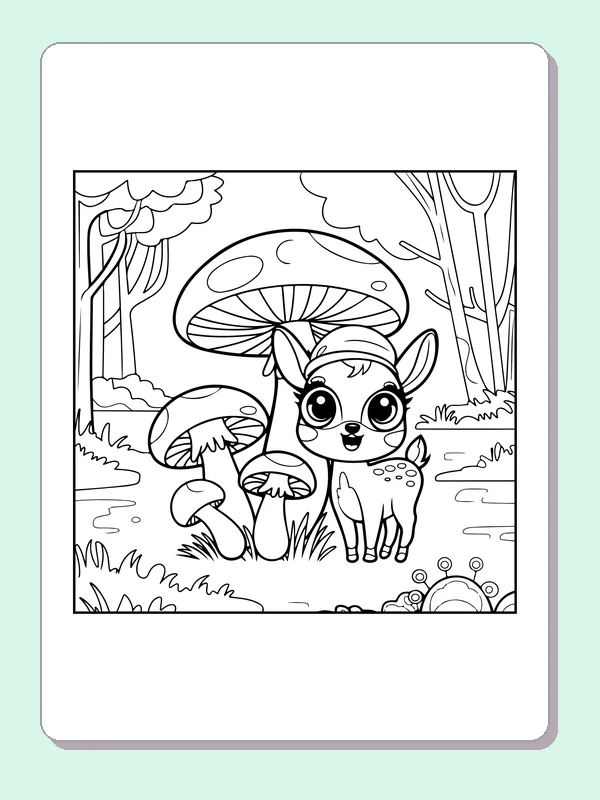
47 pagesAges 3–9Home and classroom
Skills: Animal vocabulary · Fine motor control · Story sequencing
Try this: Count a fawn's spots. Before coloring, count a few spots together. Ask an older child to compare the spotted coats on two different fawns.


40 pagesAges 4–10Children choosing a familiar hobby
Skills: ordering everyday picture events · matching wheels and hobby props · alternating ball and block patterns
Try this: Three duck routines. Choose a toothbrush, tricycle and kitchen sheet, then arrange them into a day.


32 pagesAges 4–9Home and classroom
Skills: Color planning · Fine motor control · Story order
Try this: Color a skyline together. Give each child a different city picture, then hang the completed pages in a row.


25 pagespreschool and early elementary childrenparents planning a short craft
Skills: counting wheels and rail ties · choosing repeating color patterns · describing a route or destination
Try this: Color the wheels in a pattern. Choose two colors and alternate them across the train wheels and rail ties.


55 pagesAges 4–12Home and classroom
Skills: Color choice · Pattern making · Story sequencing
Try this: Make a reef mural. Give each child a different shark, fish or reef page. Color them separately, then place the finished pages together as one long underwater display.
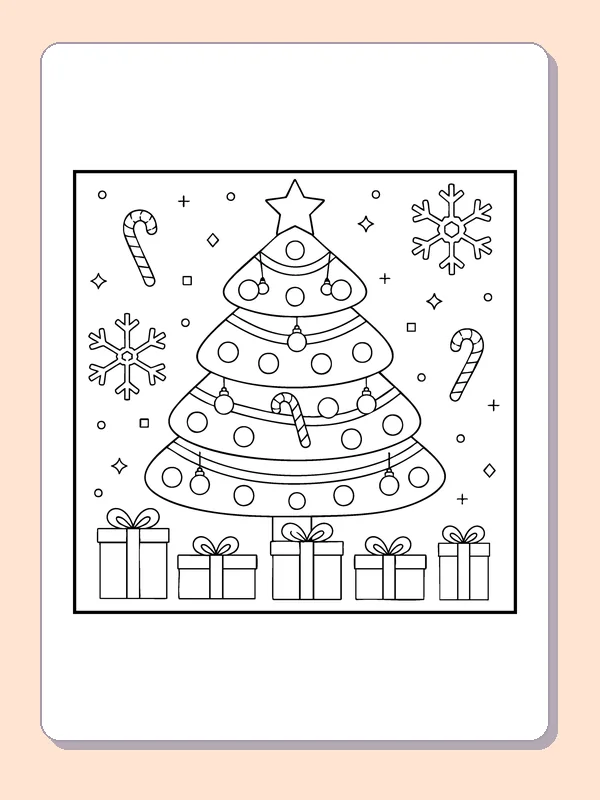

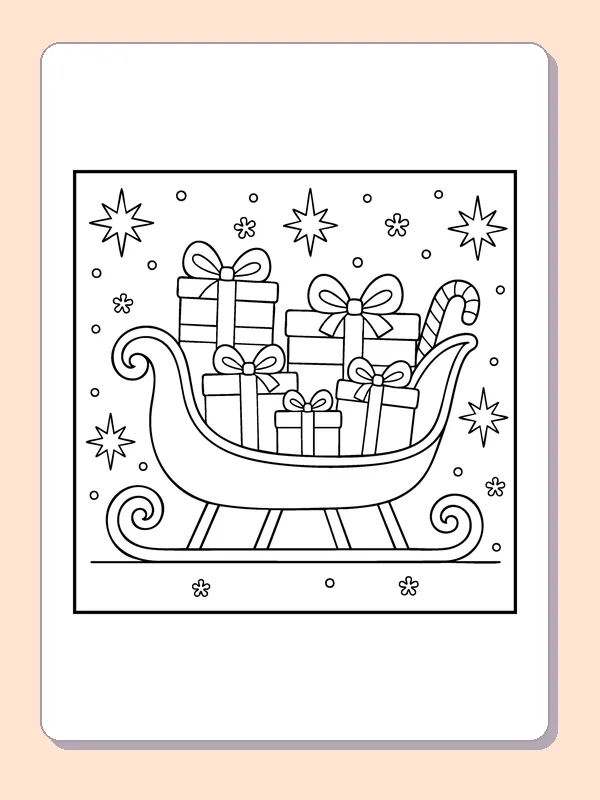
50 pagesAges 4–10Home and classroom
Skills: Color planning · Fine motor control · Pattern making
Try this: Choose a favorite five. Let each child pick an animal, gift, decoration, treat and home picture for a small personal book.


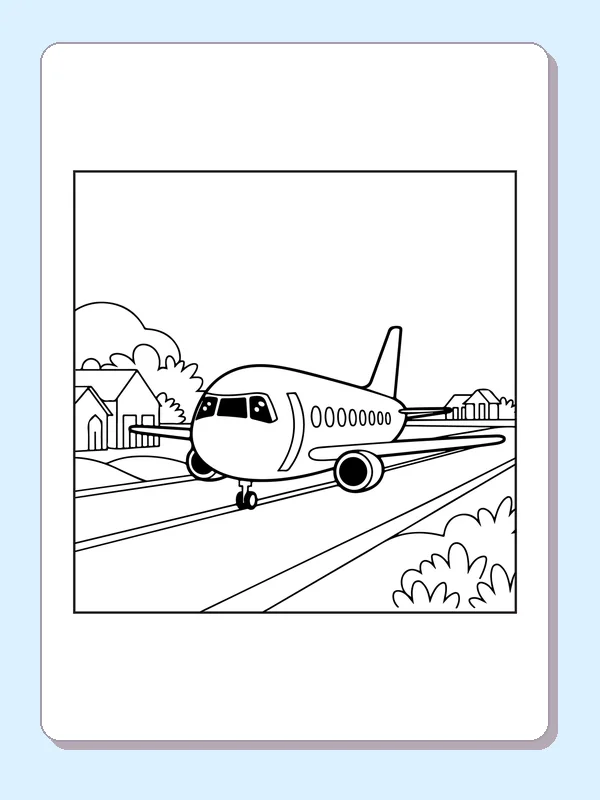
36 pagesAges 4–12Home and classroom
Skills: Shape comparison · Color choice · Story sequencing
Try this: Compare two wings. Give children a biplane and a passenger jet. Ask them to point to each aircraft’s wings, then color the wings in two different shades.


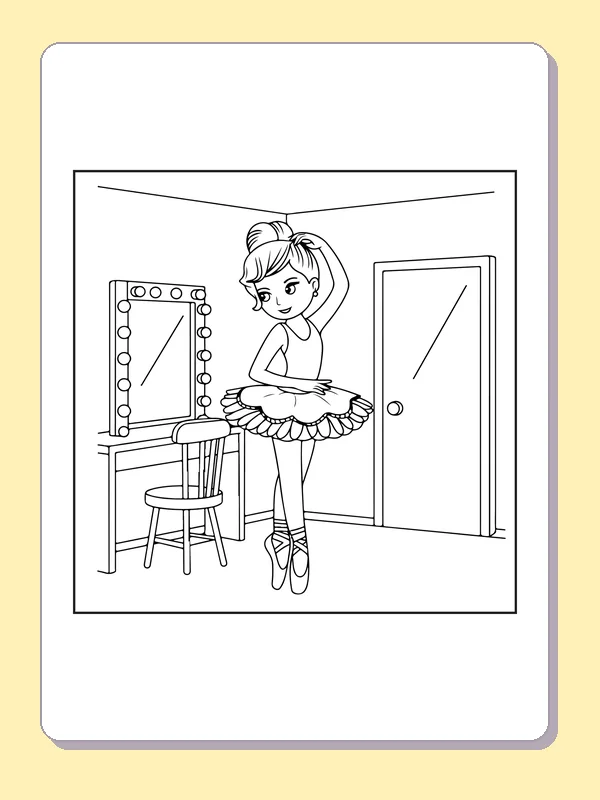
51 pageschildren who enjoy dance costumesfamilies preparing a recital activity
Skills: noticing poses and costume shapes · planning repeated colors · telling a beginning-to-end performance story
Try this: Color a rehearsal and a show. Pick one practice picture and one stage picture, then choose colors that connect them.


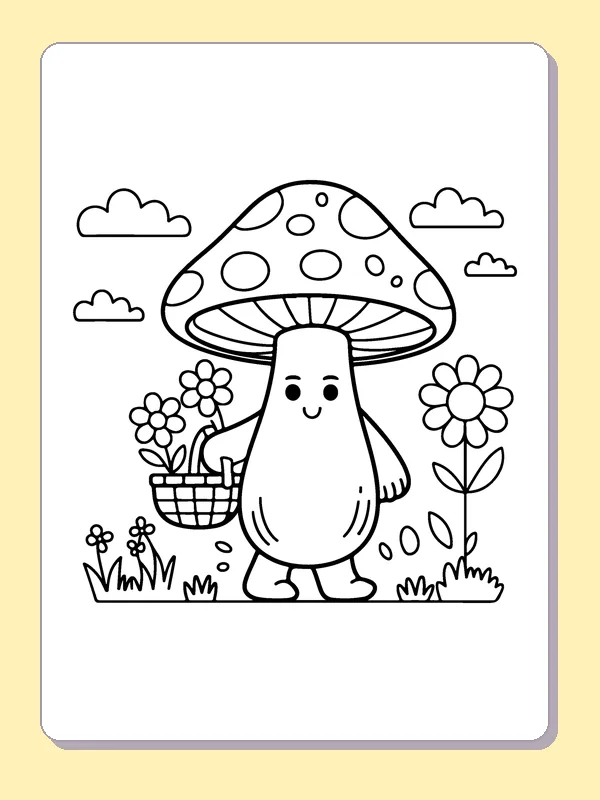
50 pagesAges 4–11Home and classroom
Skills: Pattern making · Fine motor control · Story order
Try this: Color cap patterns. Pick three pictures and try matching, alternating and rainbow dots on their mushroom caps.


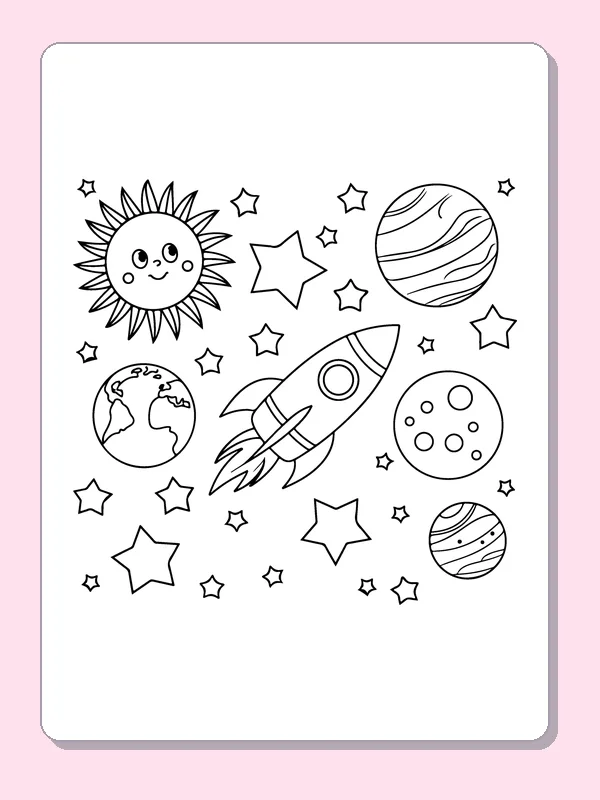
34 pagespreschool and elementary childrenparents planning a space-themed afternoon
Skills: spotting shape differences in rockets and planets · choosing color patterns for curved rings · telling a beginning, middle and end in a space story
Try this: Invent a moon flag. Print the plain-flag scene and let children draw a symbol before coloring it.


36 pagesAges 4–12Home and classroom
Skills: Animal features · Pattern making · Story sequencing
Try this: Find four pig parts. On a simple portrait, point to the snout, ears, hooves and curled tail before coloring each part.

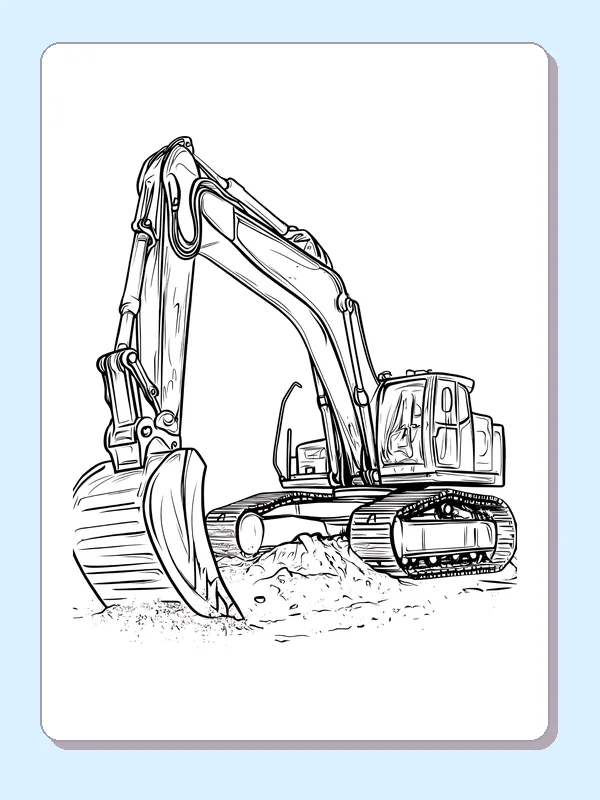
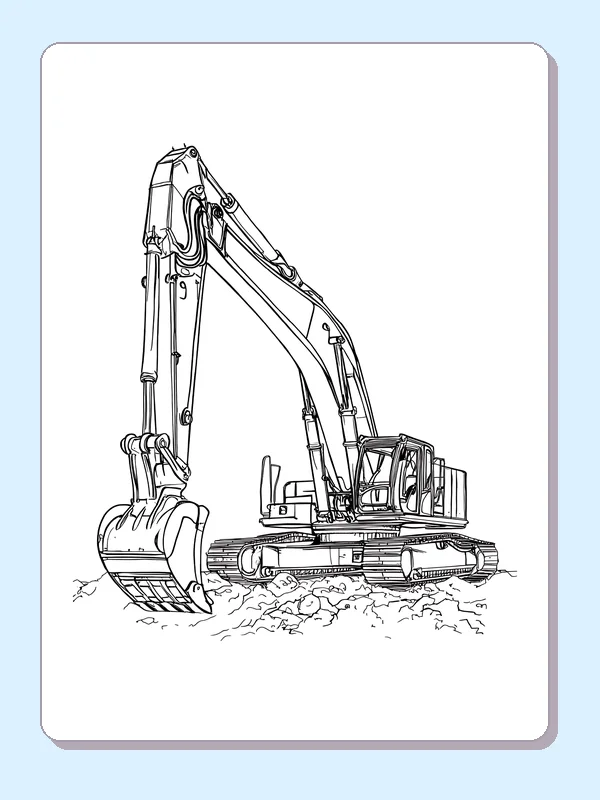
26 pageschildren who enjoy detailed construction machinesparents looking for a digger activity
Skills: naming cab, arm, bucket and tracks · noticing changes between construction scenes · telling a three-step work story
Try this: Follow the long arm. Trace the boom from the cab to the bucket, then color each joint a different shade.
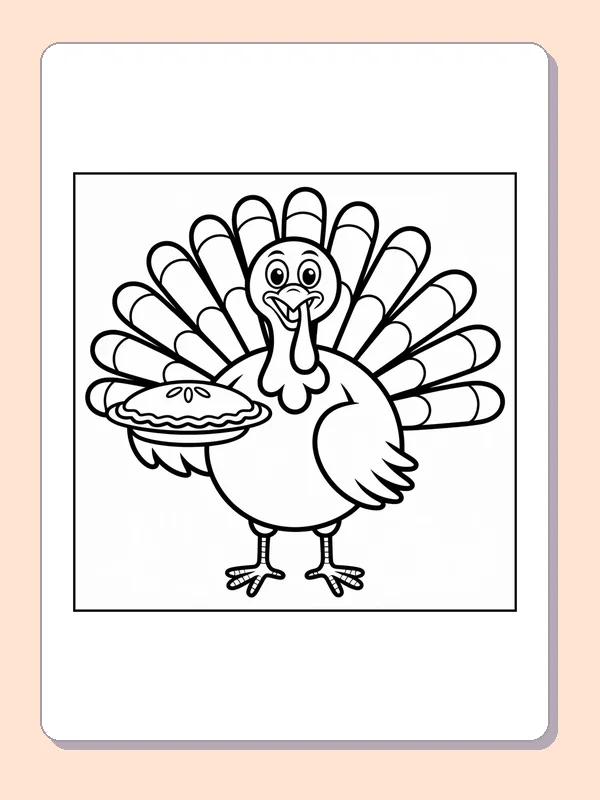
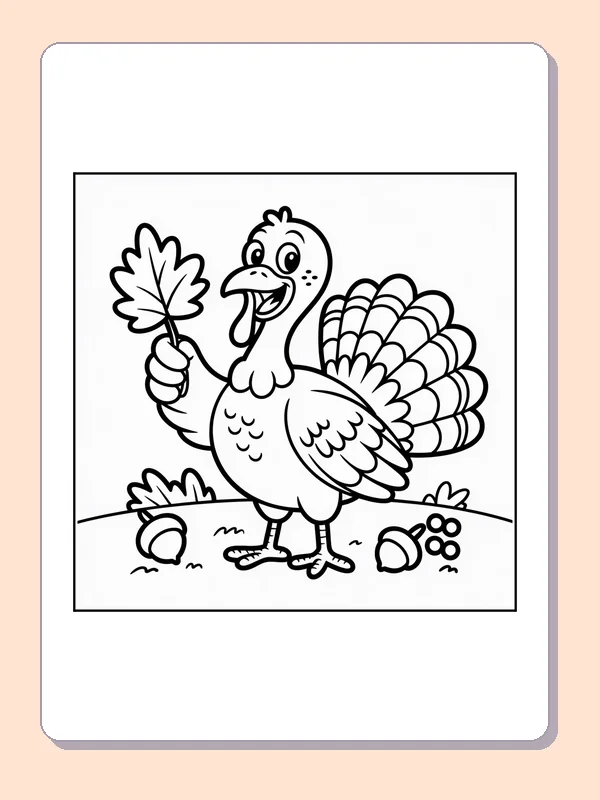
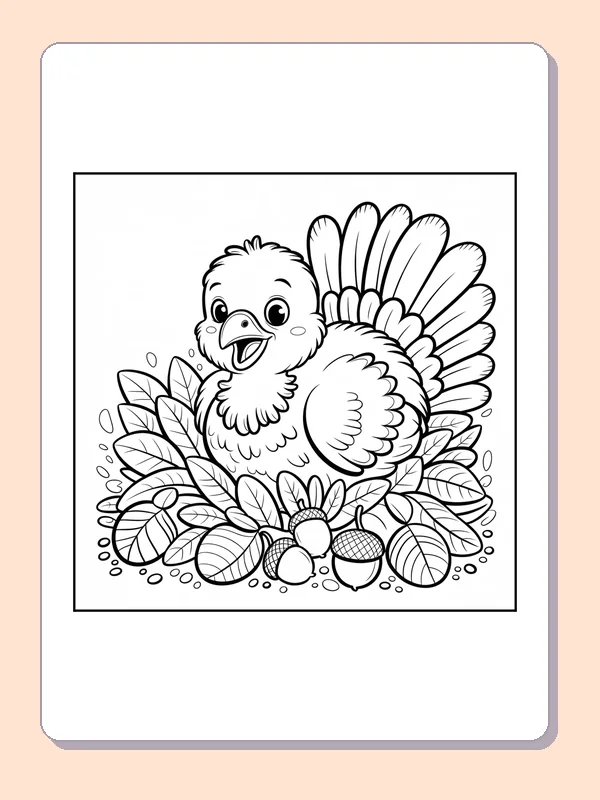
45 pageschildren who enjoy birds and fall scenesparents planning a holiday table activity
Skills: repeating colors across a feather fan · comparing young and grown bird shapes · telling a story with two turkey pictures
Try this: Color a feather pattern. Choose three colors and repeat them around the bird's wide tail fan.


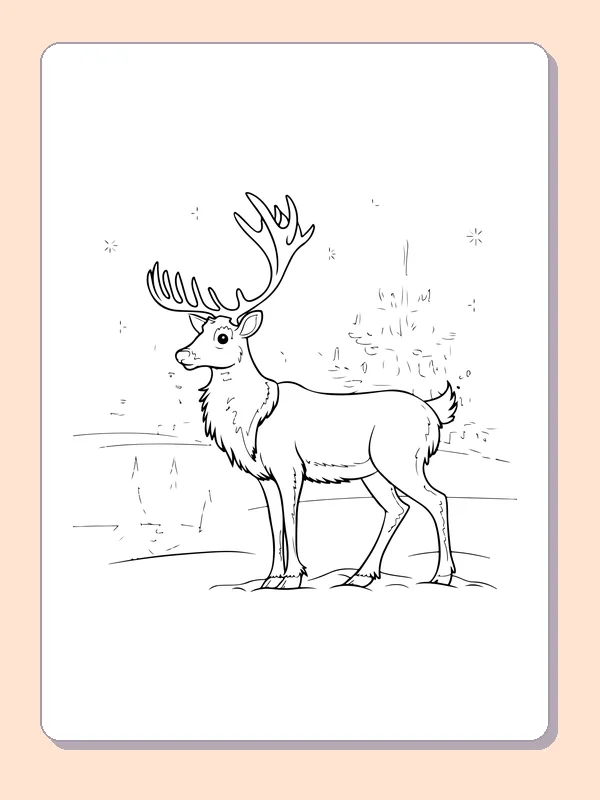
44 pagespreschool and elementary childrenparents planning winter crafts
Skills: spotting antlers and body markings · repeating colors in sweater patterns · ordering scenes into a winter story
Try this: Color a sweater pattern. Choose two colors and alternate them across a reindeer sweater or scarf.
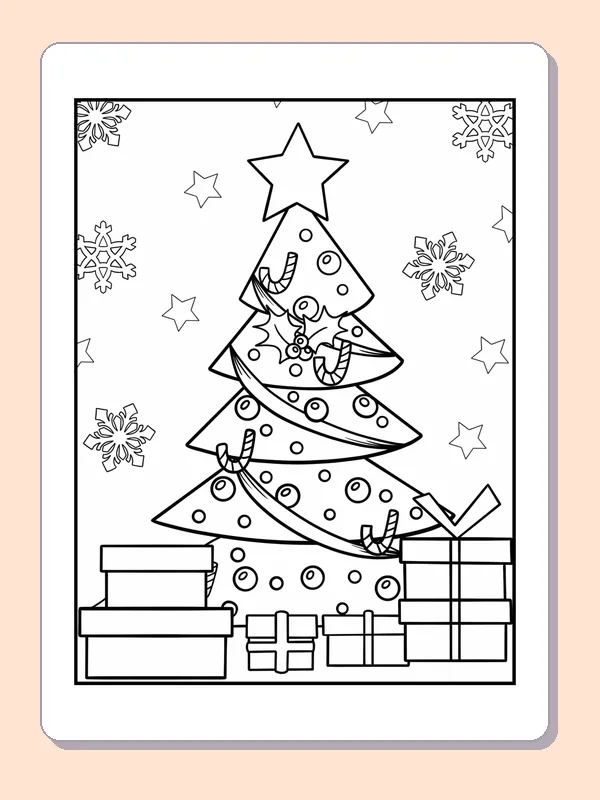


18 pageschildren who enjoy holiday gifts and patternsparents planning a Christmas activity
Skills: repeating colors across wrapping paper · comparing box sizes and bow shapes · telling a story from a holiday scene
Try this: Design the wrapping paper. Choose two colors and repeat them across the stars, dots or little trees on a present.


51 pagesAges 4–10Home and classroom
Skills: Repeating patterns · Color planning · Storytelling
Try this: Dress the cookie friends. Give two cookie figures different icing colors and describe how their outfits differ.


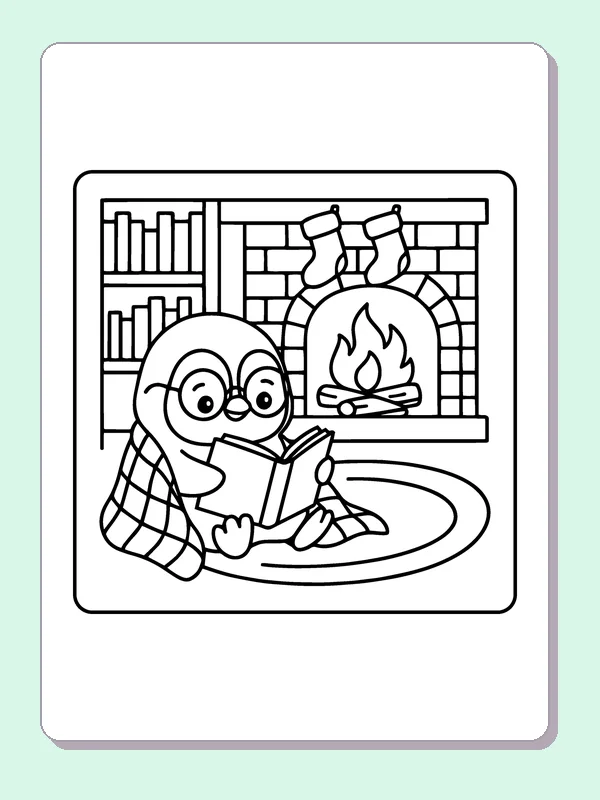
30 pagesAges 4–10Cozy winter activities
Skills: coloring repeating scarf and blanket patterns · comparing indoor and outdoor winter scenes · telling a story about two animal friends
Try this: Make a winter neighborhood. Color three different penguins, then draw a snowy path linking their homes and adventures.


24 pagesChildren choosing festive socks picturesHome coloring tables
Skills: Repeating colors through sock patterns · Comparing cuffs, heels and toes · Coloring narrow holiday borders
Try this: Three matching parts. Use one color on the cuff, heel and toe, then choose another for the stocking body.


20 pagesAges 4–10Desert picture fans
Skills: repeating saddle trim colors · following curved neck outlines · separating dunes and coat colors
Try this: Saddle color code. Choose three colors and assign one to circles, triangles and hanging saddle decorations.


35 pagesAges 4–12Home and classroom
Skills: Repeating patterns · Color planning · Storytelling
Try this: Name a woodland traveler. Choose an elf on a path, color the outfit and tell where the character is going.


20 pagesAges 4–10Garden character fans
Skills: leaving a clear tail stripe · coloring around small playtime props · adding scenery in blank margins
Try this: Stripe before scenery. Leave the tail stripe white, then draw grass below the skunk with the heart balloon.


19 pagesAges 4–10Treetop story makers
Skills: alternating picnic blanket squares · following ladder and plank lines · separating koalas from leafy trees
Try this: Paint the balcony. Choose roof and railing colors for one treehouse, then draw a tiny sign on separate paper.
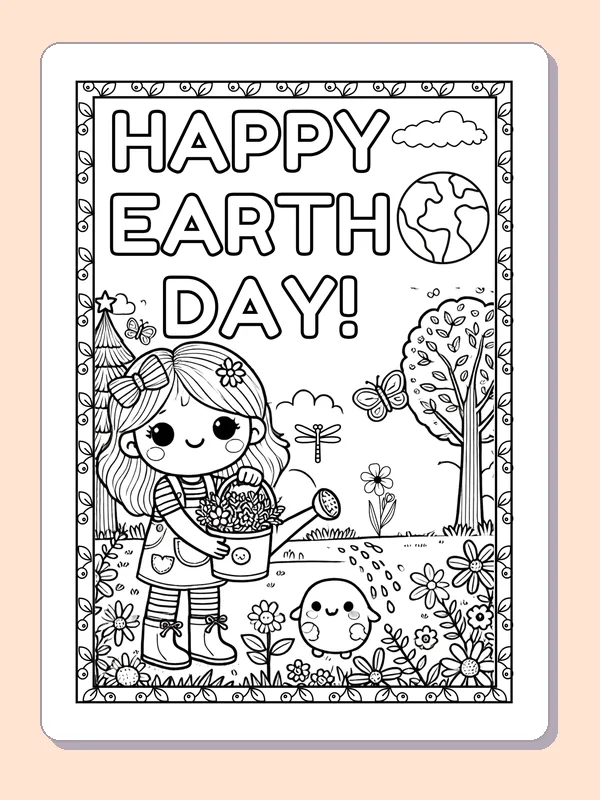


20 pagesChildren choosing planet posters picturesHome coloring tables
Skills: Coloring outlined poster lettering · Comparing care and recycling symbols · Connecting pictured tools with garden tasks
Try this: Poster color sequence. Repeat three colors through the letters of an Earth Day message and read it together.


20 pagesAges 5–12Social learning
Skills: noticing helpful actions · talking about feelings · telling what happens next
Try this: Name the helpful detail. Color the one object that shows the act of care, such as a scarf, book or watering can, before the rest of the page.


19 pagesAges 4–10Underwater scene fans
Skills: separating overlapping fin shapes · coloring small coral textures · finding fish in crowded plants
Try this: Treasure colors. Give chest wood and treasure metal different shades so the tiny pieces remain visible.
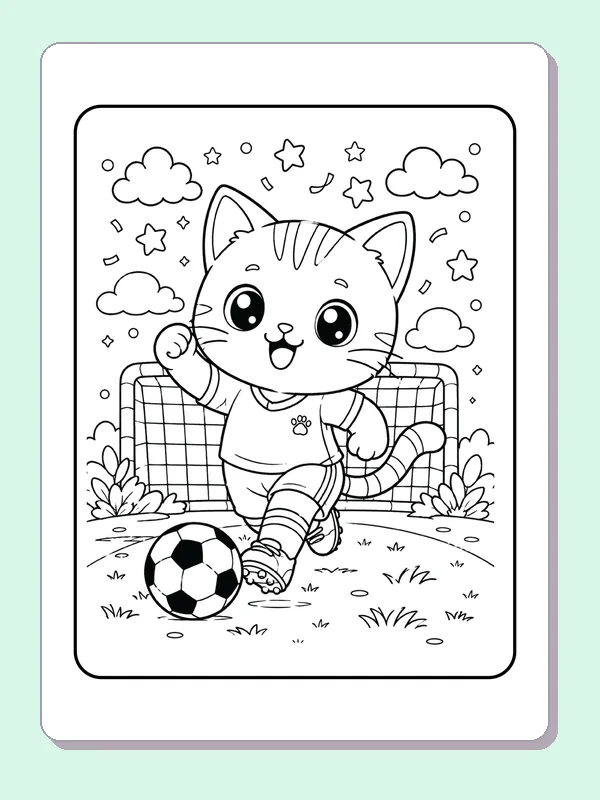


31 pagesCat-loving children and familiesShort or longer coloring sessions
Skills: Noticing cat poses and expressions · Coloring different fur patterns · Building a story from pictures
Try this: Give each cat a coat. Color two kitten pictures with different stripe or patch patterns and decide whether they are friends or siblings.


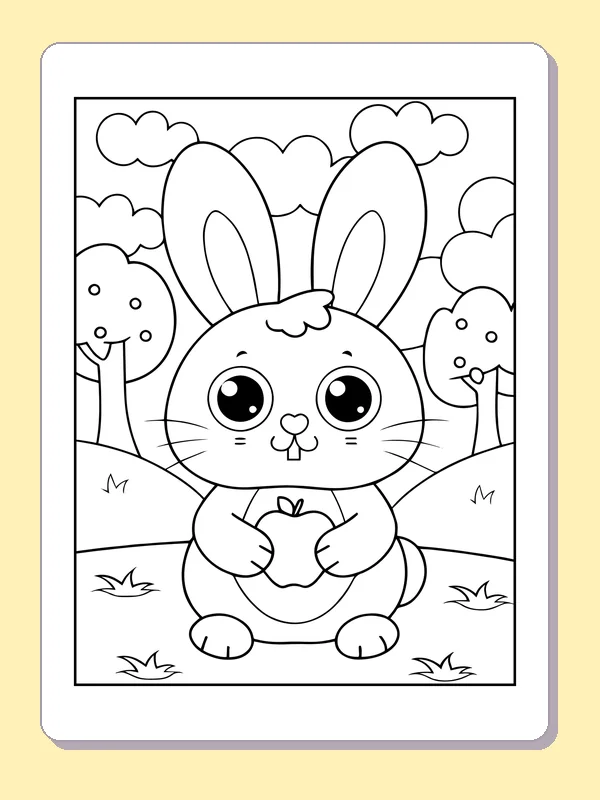
20 pagesAges 3–10Fall activities
Skills: following overlapping fruit outlines · ordering a harvest story · alternating colors along basket bands
Try this: Basket color code. Give apples at the top, middle and bottom of a basket three different colors.


12 pagesChildren who like gentle animal storiesGrown-ups planning a quiet indoor activity
Skills: distinguishing a main character from room details · choosing repeated colors across a short story · following small shapes in a puzzle or scarf
Try this: Color one afternoon. Choose the cocoa, book and cushion scenes, then decide the order of the fox’s quiet afternoon.


12 pagesChildren who enjoy gentle dog storiesFamilies looking for a quiet indoor activity
Skills: Following the same character across different scenes · Planning warm indoor and cool outdoor colors · Coloring large shapes before smaller room objects
Try this: Tell a corgi day. Choose three room scenes and put them in an order from morning reading to bedtime.


12 pagesChildren who like kittens and pretend bakery gamesFamilies looking for an indoor activity
Skills: Repeating icing colors across similar shapes · Following a simple order from display to box · Separating rounded pastries from straight shelves and cases
Try this: Build an order story. Arrange the display, box and cart sheets as a beginning, middle and ending.


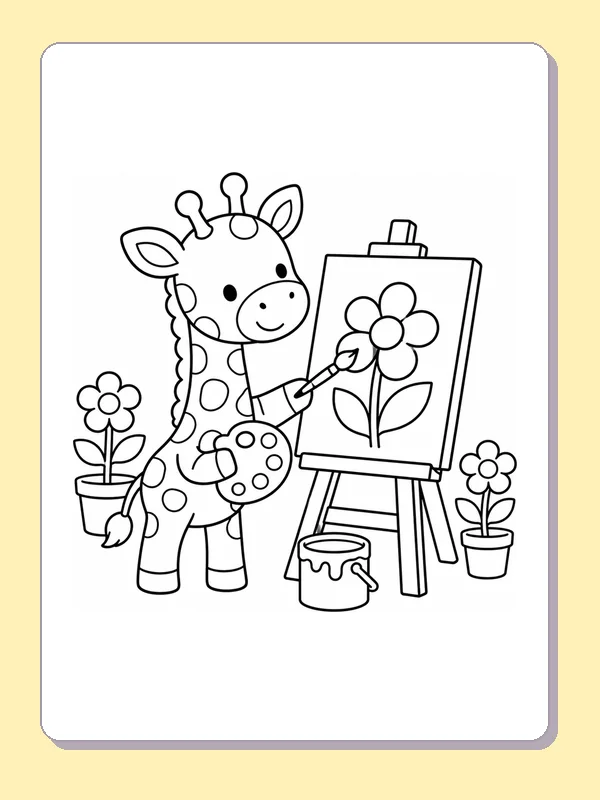
12 pagesChildren who like giraffes and making picturesFamilies planning a pretend art show
Skills: Noticing which art tool appears in each scene · Separating an artwork from the animal painting it · Choosing different colors for repeated spots and shapes
Try this: Make an art show. Color the framed landscape and two more giraffe pictures, then arrange them as a small gallery.


12 pagesChildren who like small pets and pretend housesGrown-ups choosing between quick and patient coloring
Skills: following a route through a pictured habitat · choosing colors for large and tiny regions · sequencing familiar daily activities
Try this: Trace the route. Follow the hamster from its bowl to the ladder, tunnel and wheel before coloring each stop.


12 pagesChildren who enjoy panda stories, books and outdoor playHome, library and classroom activity tables
Skills: Recognizing shapes on the easel and soccer ball · Choosing a color sequence for umbrella panels · Ordering pictures into a panda day story
Try this: Tell a panda day story. Arrange a book, tricycle, umbrella and hammock sheet, then ask what happened between each scene.


13 pagesChildren who like smiling sea creaturesFamilies planning a beach or summer activity
Skills: Separating the main sea stars from small shells · Repeating colors across ball and kite panels · Ordering pictures into a beginning-to-end beach story
Try this: Tell a shore story. Put the castle, shell search, picnic and towel sheets in a day-at-the-beach order.


20 pagesChildren who like funny farm birdsGrown-ups looking for short or longer coloring sessions
Skills: choosing colors for a large shape and a small prop · noticing changes between two pictures · telling a story from everyday objects
Try this: Finish the chicken’s day. Print the book and music scenes, then let a child put them in order and draw what the bird does next.


13 pagesChildren who like smiling lions and outdoor storiesGrown-ups choosing quick or patient coloring
Skills: finding a main animal in a busy background · choosing colors for repeating petals and insects · comparing weather across pictured scenes
Try this: Change the lion’s weather. Color the rainy umbrella and sunny rainbow pages, then talk about what the lion wears or carries in each.


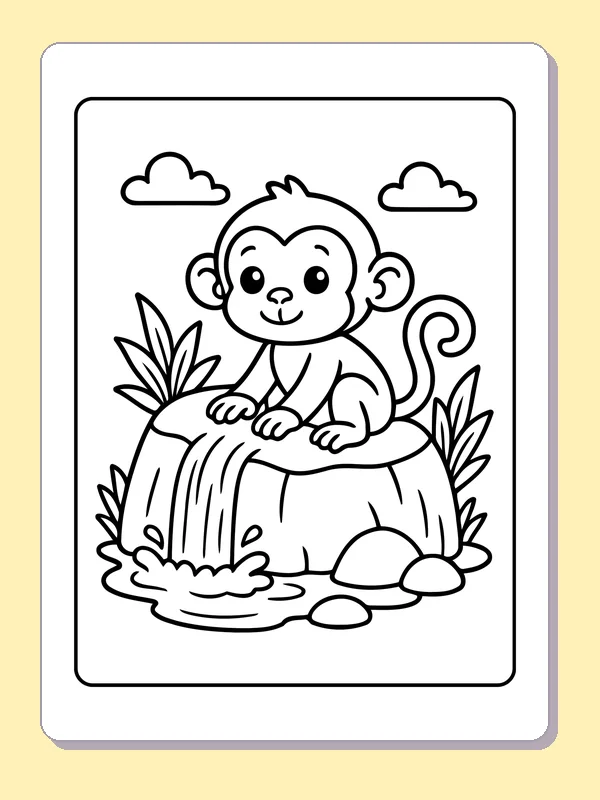
15 pagesChildren who enjoy playful monkey storiesGrown-ups choosing quick or patient coloring
Skills: following a curved tail through a scene · separating foreground animals from leafy backgrounds · building a short story from two pictures
Try this: Follow the monkey’s route. Put the branch, vine and waterfall pages in order and ask where the monkey goes next.


20 pagesChildren who like friendly animal charactersFamilies making short picture stories
Skills: Spotting the prop that defines an activity · Separating an otter from its setting · Ordering two scenes into a story
Try this: Name the activity. Point to a toothbrush, kite, easel or hose before coloring.


20 pagesChildren who enjoy sea stories and fantasy settingsHome, library and classroom activity tables
Skills: Separating a central mermaid from a fuller background · Choosing a color pattern for hair, tail and sea plants · Sequencing a map, wreck and treasure discovery
Try this: Make a treasure trail. Print the map, shipwreck and chest pictures; let a child put them in story order and point to each clue.


18 pagesChildren who like castle and princess storiesFamilies choosing a quick or detailed page
Skills: separating a character from a detailed setting · using one color across related scenes · inventing a story from a picture sequence
Try this: Plan a castle day. Put the candlelit hall, throne and window dance in order, then tell what happens between them.


12 pagesChildren learning to notice changes in the skyFamilies choosing a rainy-day or sunny-day activity
Skills: Comparing weather symbols with outdoor scenes · Noticing what coats, boots and umbrellas are for · Ordering pictures from rain to rainbow
Try this: Match the sky. Look out a window, choose the closest sheet and explain the clue that led to it.


17 pagesAges 4–12Dragon fans
Skills: Choosing contrasting colors · Telling a picture story · Noticing fantasy creature features
Try this: An egg-to-treasure story. Put the hatching dragon beside the treasure scene and invent what happened between them.


20 pagesChildren who enjoy garden and make-believe storiesHome, library and classroom activity tables
Skills: Choosing colors for a main figure and its setting · Following layered wings and small woodland details · Telling a story across two related pictures
Try this: Follow the fairy path. Print the woodland path and lantern village pages, then let a child decide which doorway the traveling fairy visits.


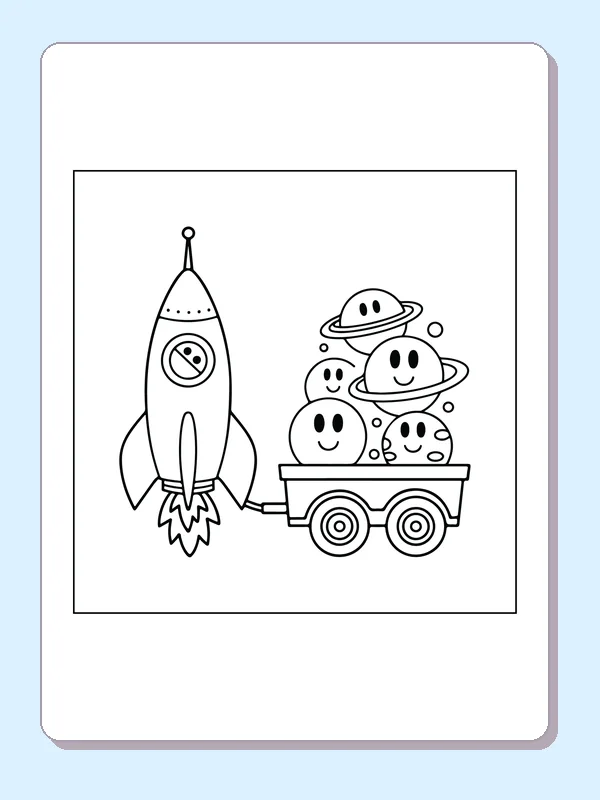
14 pagesChildren who like vehicles and make-believe space tripsHome, library and classroom activity tables
Skills: Recognizing repeated rocket parts across scenes · Planning color for ship, exhaust and background separately · Putting launch and destination pictures in order
Try this: Build a two-page flight. Choose one upright launch and one diagonal flight. Ask where the rocket started and what it passes next.


20 pagesChildren who like animal stories and outdoor playHome, library and classroom activity tables
Skills: Finding the kangaroo body and tail in a larger scene · Choosing colors for an animal and its setting · Putting two action pictures in story order
Try this: Make a hopping route. Print the forest path and fallen-log scenes, then draw a dotted path between the two kangaroos.


20 pagesChildren who enjoy friendly animal charactersFamilies looking for short coloring breaks
Skills: finding a character's action from its prop · coloring broad enclosed areas · ordering two pictures into a story
Try this: Find the sloth's prop. Point to the pancake plate, brush or paddle and name the activity before coloring.


20 pagesTiger fansFamilies and classrooms
Skills: noticing stripe patterns · planning color across a scene · telling a story from picture details
Try this: Compare two striped coats. Color the hammock cub and the wild tiger, then notice how their stripe shapes differ.


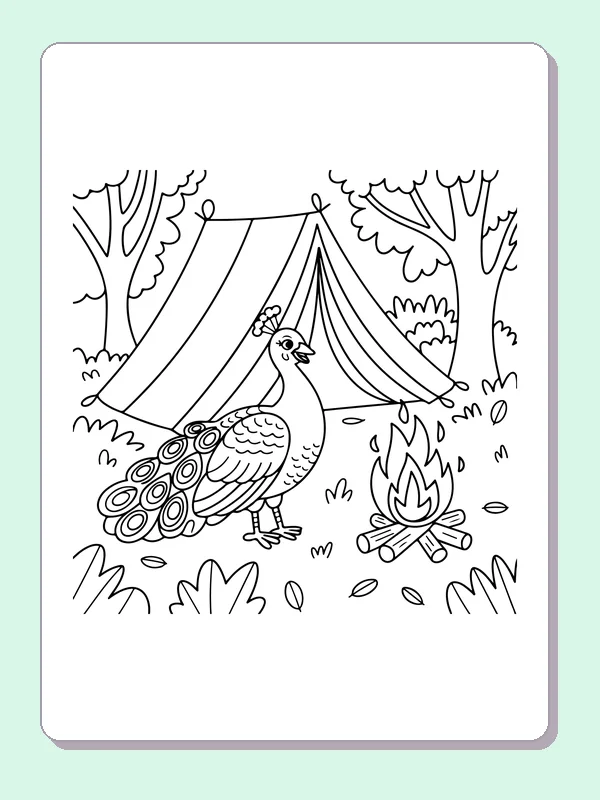
20 pagesChildren who enjoy patterned birds and pretend-play scenesColorers comfortable with repeating feather details
Skills: repeating a color pattern across feathers · separating the bird from activity props · telling a story through different settings
Try this: Choose a tail palette. Pick three colors and repeat them in feather-eye marks across two peacock scenes.


20 pagesAges 4–12Dolphin and sea-life fans
Skills: Following a curved outline · Comparing a simple and busy scene · Planning two colors for wave bands
Try this: Color the dolphin first. Find its nose, fins and tail before choosing colors for the water around it.


20 pagesChildren who like animal adventuresFamilies making picture stories
Skills: Naming the object that shows a pirate job · Separating an animal from its background · Putting three scenes in story order
Try this: Assign a crew job. Pick a lookout, map maker, steerer and deck cleaner from the pictures.


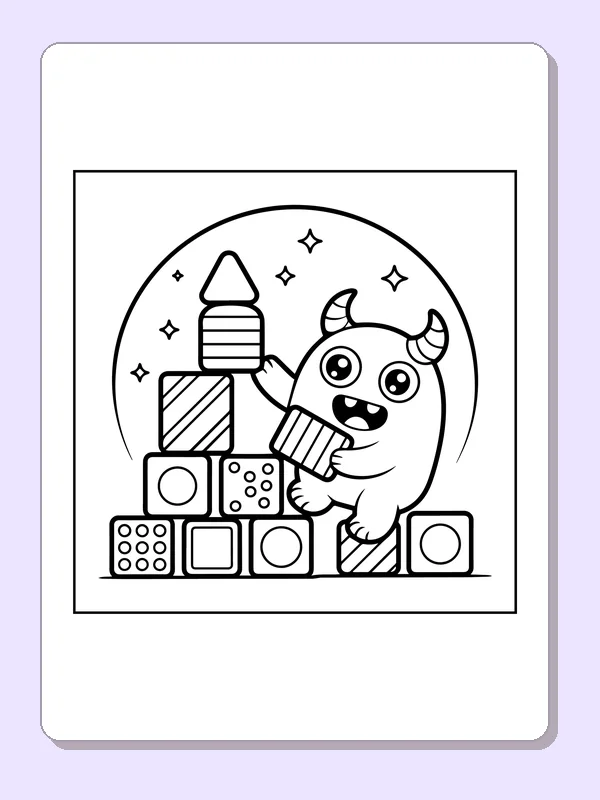
19 pagesAges 4–12, depending on the pictureChildren who enjoy friendly Halloween creatures
Skills: choosing whether to color the figure or words first · spotting small props within a busy scene · comparing two pictures with the same activity
Try this: Build a block pair. Print the two toy-block sheets and color the towers in matching shades while giving the monsters different coats.


20 pagesChildren who enjoy animal story charactersFamilies reading and coloring together
Skills: Spotting the setting around a character · Separating book covers in a stack · Ordering pictures into a short story
Try this: Name a book. Choose a pictured cover and invent a title for what the raccoon is reading.


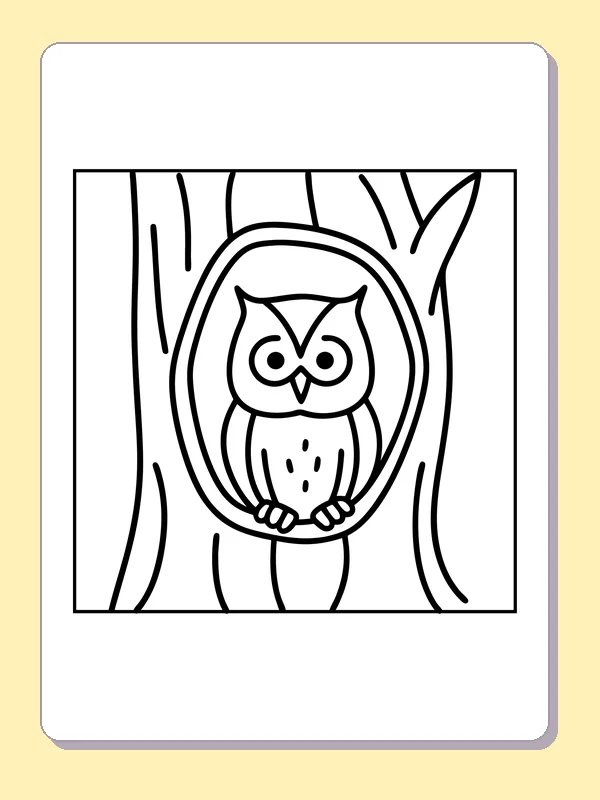
20 pagesAnimal-loving childrenFamilies and classrooms
Skills: noticing animal body parts · comparing habitats · telling a story across pictures
Try this: Sort by setting. Lay out a water animal, tree animal and mountain animal, then explain each choice.


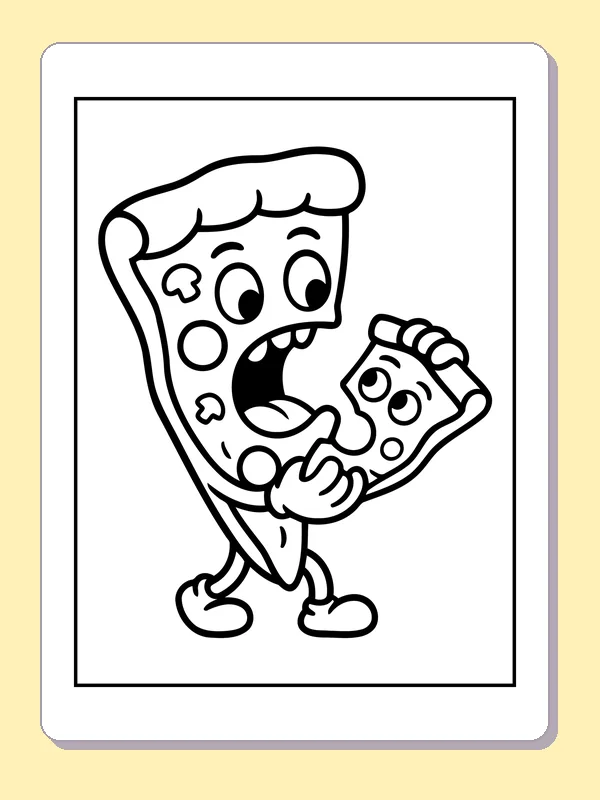
18 pagesChildren who like funny food charactersShort home or classroom coloring breaks
Skills: repeating topping colors across shapes · finding the prop that tells a story · comparing simple and fuller settings
Try this: Choose a topping palette. Pick two topping colors and repeat them across three different pizza characters.

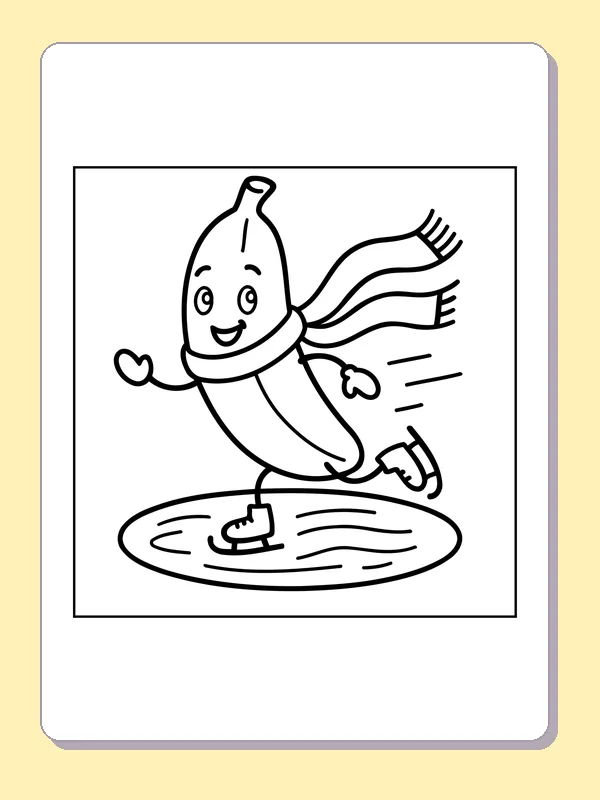

20 pagesChildren who enjoy silly fruit charactersHome or classroom activity time
Skills: choosing a clear color for the main banana shape · distinguishing large background panels from small props · telling a short story from visible objects
Try this: Choose the next stop. Print the balloon and bridge scenes. Ask which place the banana visits first, then color each setting differently.


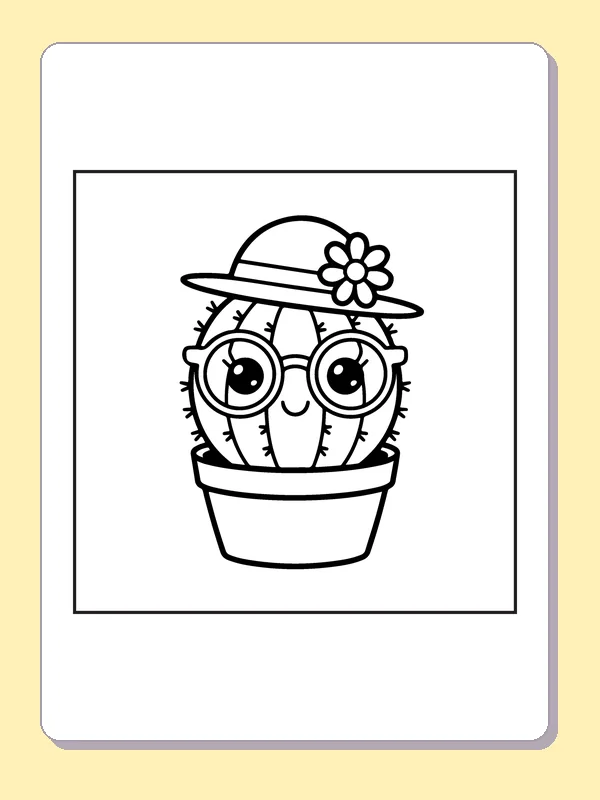
20 pagesAges 4–9Home and classroom
Skills: Comparing plant silhouettes · Repeating a pot or flower pattern · Finding props in a busy scene
Try this: Give every pot a pattern. Use the three-pot sheet to try stripes, dots and a plain color side by side.


20 pagesAges 4–12Garden and bug fans
Skills: Finding the main creature · Repeating a color across petals · Working around small web and leaf spaces
Try this: Pick a garden visitor. Let a child choose a bee, snail or ladybug before deciding on flower colors.


20 pagesChildren who like smiling sun charactersFamilies planning a summer activity
Skills: Separating rays from the sun face · Planning colors for waves, sand and sky · Following smaller petals and leaves patiently
Try this: Change the time of day. Color two sun scenes with a pale morning sky and a warm evening sky.


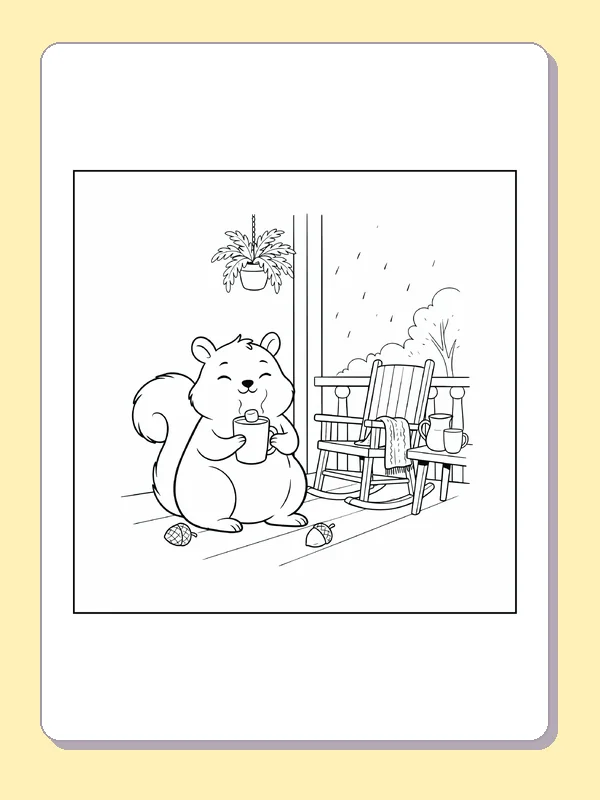
20 pagesChildren who enjoy gentle animal scenesHome or classroom rainy-day activities
Skills: finding weather clues in a drawing · contrasting indoor and outdoor colors · sequencing three pictures into a small story
Try this: Color the umbrella first. Give the umbrella or rain boots a bright color before the pale drops.


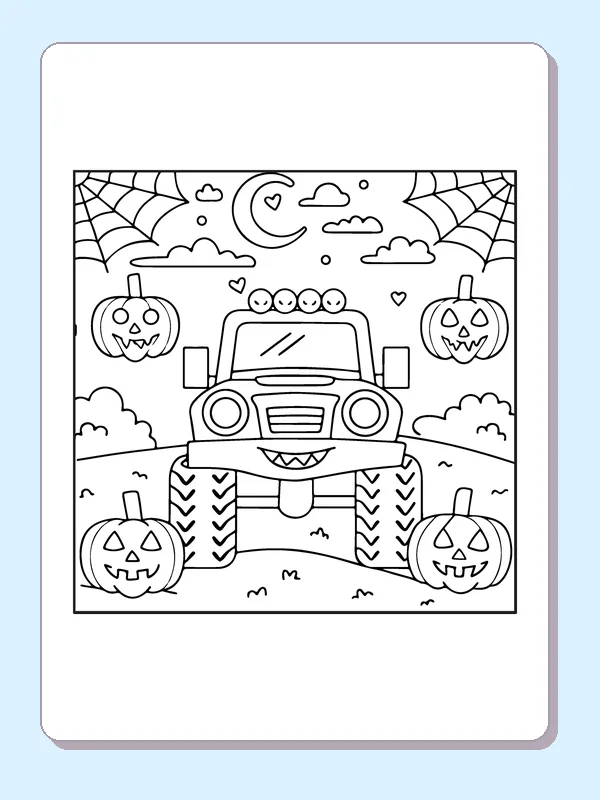
20 pagesAges 4–12Truck fans
Skills: Finding tire patterns · Comparing travel settings · Ordering scenes into a trip
Try this: Color the tire tread. Start with the oversized wheel circles, then add a bold body color.


20 pagesAges 4–12Dirt Bike fans
Skills: Comparing outdoor settings · Coloring repeated wheel details · Sequencing a picture story
Try this: Keep a helmet color. Use the same helmet shade on two routes to make the rider feel like one character.
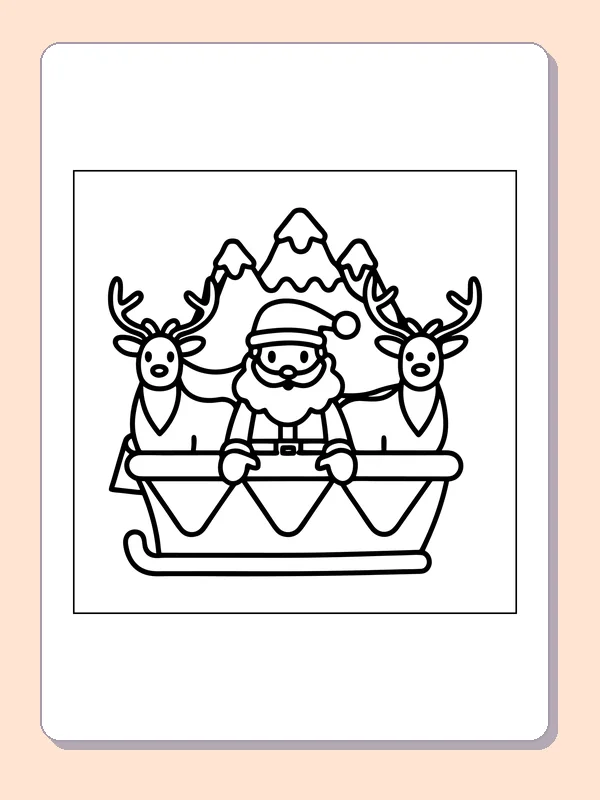


19 pagesFamilies choosing a Christmas coloring activityClassrooms using short winter story prompts
Skills: following a repeating character across settings · choosing contrast for Santa and snowy backgrounds · ordering scenes into a small story
Try this: Color a quick wave. Start with the open Santa-and-reindeer greeting before trying a fuller landscape.


20 pagesAges 5–12, depending on the sceneChildren who like leafy animal pictures
Skills: separating an animal from a leafy background with color · noticing differences between two scenes of the same animal · planning a small palette for repeated leaves
Try this: Color the bird first. Choose the first toucan sheet; finish its broad beak and body, then return to the leaves around it.


18 pagesAges 4–12, depending on the pictureSpring and flower activities
Skills: choosing a repeated or varied petal color pattern · working from broad wings toward smaller markings · comparing an open scene with a crowded flower field
Try this: Color a tulip row. On the butterfly-above-a-row page, color every other flower the same shade, then fill the gaps with a second shade.


18 pagesChildren choosing between broad shapes and small patternsFrozen-treat and character fans
Skills: keeping colors separate in layers and repeated patterns · noticing fruit cues such as pineapple leaves and watermelon seeds · inventing a character name or flavor from a picture
Try this: Make a flavor menu. Print the plain layered, pineapple and watermelon pops. Give each a flavor name and choose colors that match or surprise.


19 pagesAges 4–12Sneaker fans
Skills: Planning a color palette · Noticing shoe parts · Working with narrow panels
Try this: Two colorways. Print one smooth high-top twice and color it with two different three-color plans.
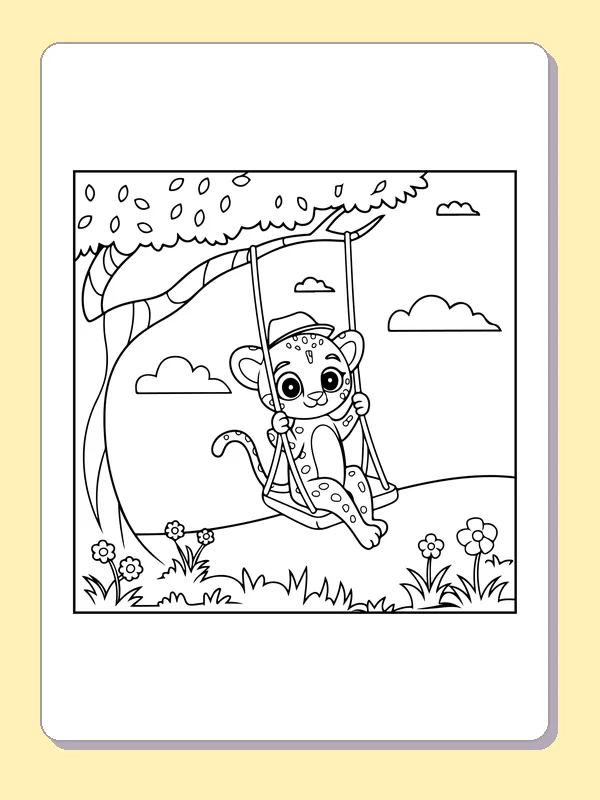


18 pagesChildren who enjoy spotted animalsHome or classroom story time
Skills: Noticing spots and tails · Comparing picture settings · Coloring within small coat markings
Try this: Find the tail. Compare two cubs and trace how each tail curves through the picture.


18 pagesAges 4–12Zebra fans
Skills: Noticing repeated patterns · Comparing animal movement · Planning a color sequence
Try this: Two kinds of stripes. Color one foal traditionally and a second with alternating bright stripes.


20 pagesChildren who like character birdsHome or classroom storytelling
Skills: Noticing bird shapes · Describing poses and props · Choosing colors for a character scene
Try this: Build a pretend band. Print the guitar player and DJ, then ask a child which song their birds would play.


17 pagesDog-loving childrenFamilies and classrooms
Skills: noticing facial shapes · planning background colors · comparing settings and weather
Try this: Pick a dog walk. Choose beach, river or mountain sheets and explain where the dog would visit first.


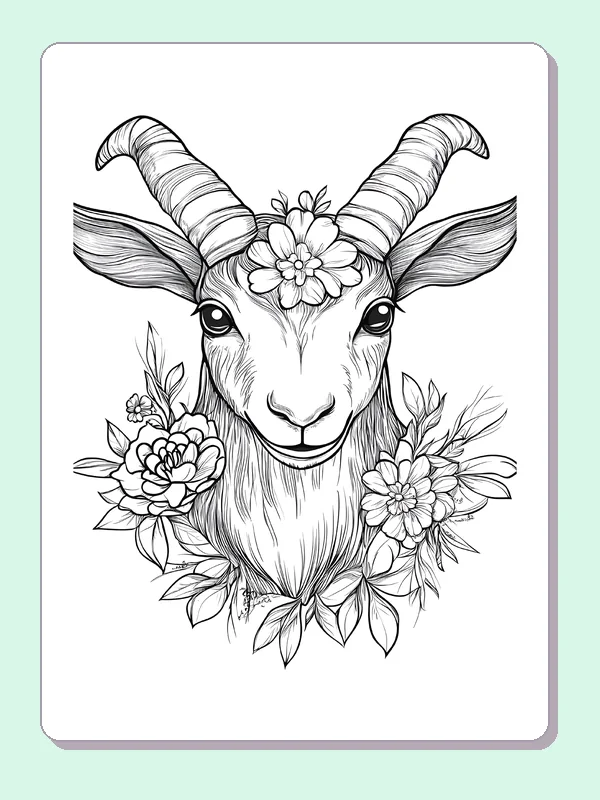
20 pagesChildren interested in farm animalsHome or classroom choice table
Skills: Comparing horns and ears · Choosing colors for textured coats · Noticing animal and decorative details
Try this: Compare two horns. Print one kid and one adult portrait; ask how their horn shapes and ears differ.


20 pagesAges 4–12, depending on the sceneChildren who like animal characters
Skills: finding a character's main prop · choosing colors for a fluffy body and its setting · sequencing two pictured activities into a short story
Try this: Color two dancers. Print the tutu and ballerina-stage pages; compare the curtains, lights and amount of background.


19 pagesChildren who like turtles and sea lifeFamilies comparing river and ocean scenes
Skills: Comparing turtle shells and flippers · Separating fish from water and coral · Working patiently through branching reef shapes
Try this: Compare two habitats. Color the riverbank turtle and one sea turtle, then name the plants or animals around each.


20 pagesChildren who like wolf pups and heartsFamilies making animal Valentine cards
Skills: Planning contrasting colors for two wolves · Following small petals and fur marks · Using repeated hearts as a color pattern
Try this: Make a wolf card. Color the heart-framed wolf and write a short message around the border.


20 pagesAges 5–10Home and classroom
Skills: Distinguishing leaf shapes · Following a path through a scene · Adding a subject to an open frame
Try this: Spot a hidden animal. Find the toucan, parrot, frog or monkey before coloring the surrounding leaves.
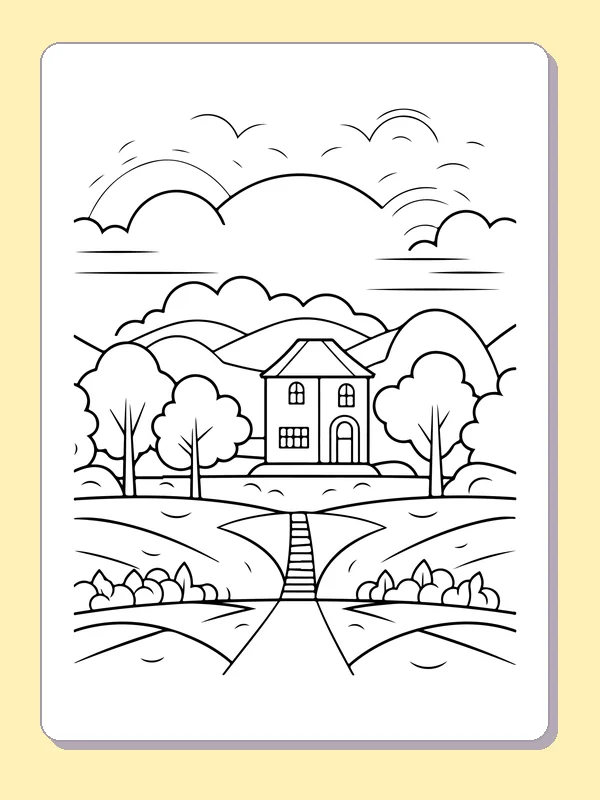


20 pagesAges 5–12, depending on the sceneChildren who like houses and scenery
Skills: following a path through foreground and distance · separating roof, hills and sky with color · comparing how sky and land change a repeated house scene
Try this: Trace the path. On the rolling-hill sheet, follow the curving path from the bottom edge to the door before coloring the land beside it.


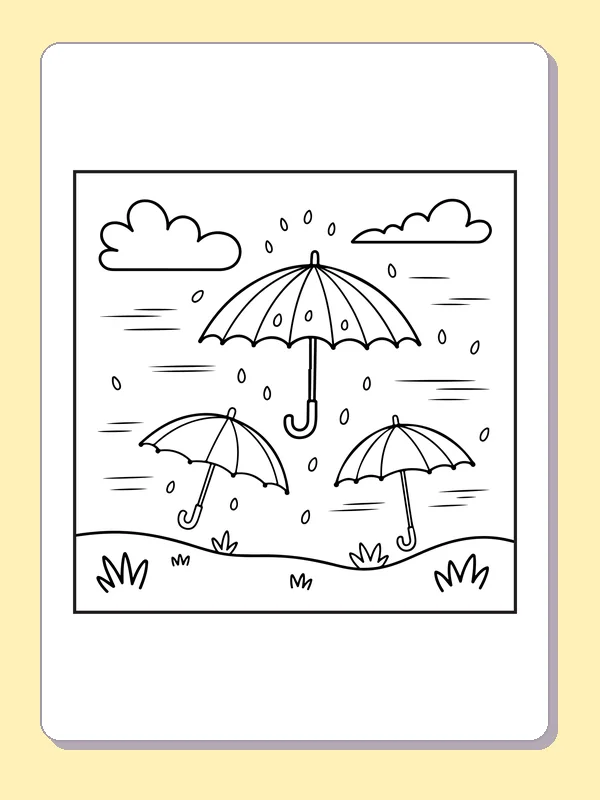
20 pagesAges 4–12Umbrella fans
Skills: Choosing a repeated canopy pattern · Comparing rainy and sunny scenes · Counting small objects
Try this: Color the panels. Alternate two colors across a single canopy, then choose a third shade for its handle.


20 pagesAges 4–9Home and classroom
Skills: Recognizing props in a picture · Choosing a two-color wing pattern · Comparing seasonal and everyday scenes
Try this: Choose by the prop. Let a child pick a trumpet, teddy, unicorn, bubbles or flowers before choosing colors.


16 pagesAges 5–10Home and classroom
Skills: Recognizing a picture silhouette · Repeating a tail color pattern · Adding a simple background
Try this: Find the kite frame. Look for a diamond, string or ribbon tail before choosing colors.
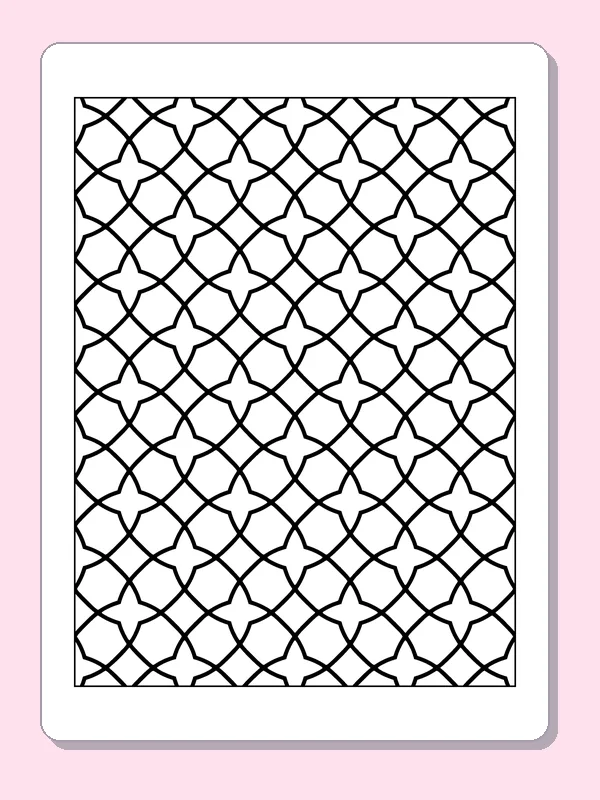
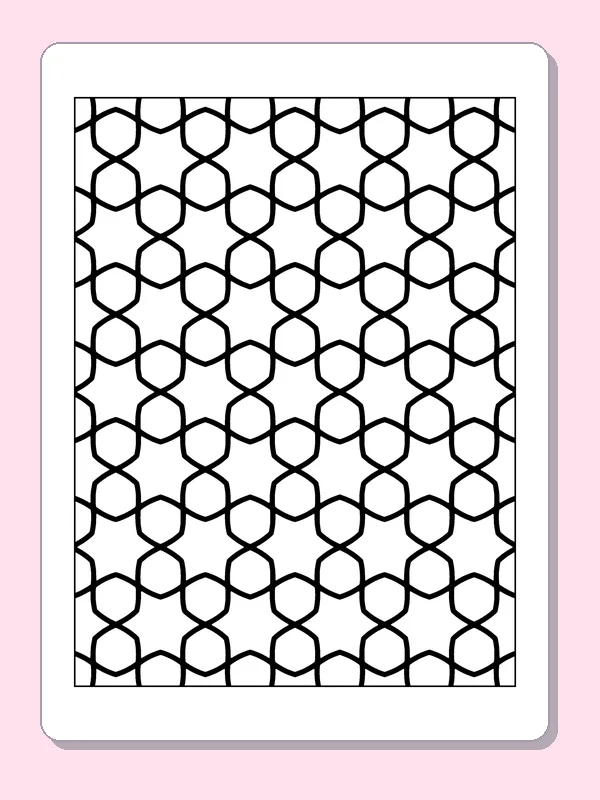
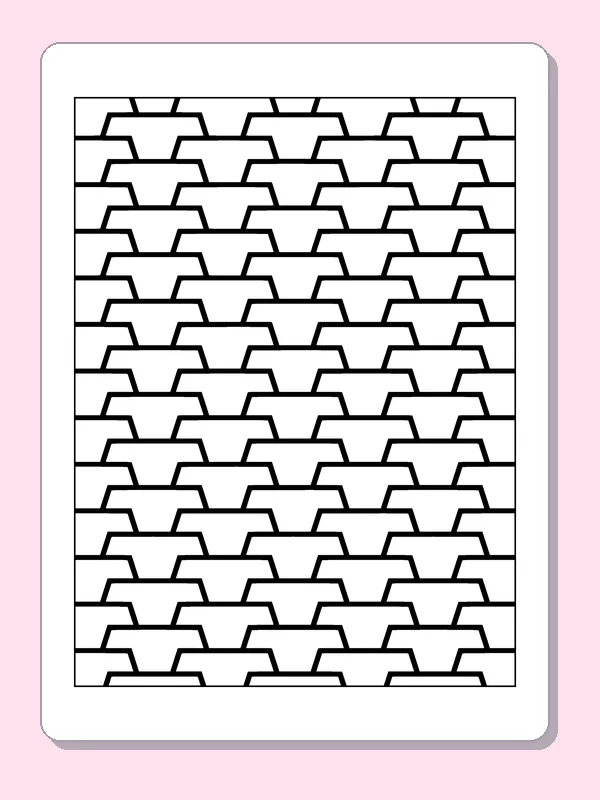
14 pagesOlder children and adults who enjoy repeated shapesClassroom pattern activities
Skills: noticing repeated tile shapes and exceptions · planning a row or column color sequence · keeping adjacent colors separate in narrow cells
Try this: Color a single strip. Use the arch or brick sheet and finish only one horizontal row. Continue the color order on another day.


20 pagesChildren comparing flower shapesFamilies making cards and color studies
Skills: Following layered petals from center outward · Comparing stem and leaf shapes · Testing light and dark shades on one flower
Try this: Try two shades. Use a darker center and lighter outer petals on one large bloom.


29 pagesChildren who invent space storiesFamilies looking for rocket activities
Skills: noticing different ship parts · sequencing a launch and landing story · coloring large panels and small details
Try this: Give the pilot a destination. Choose a bear, dog or owl pilot and draw a simple planet in the open sky.


12 pagesChildren who like naming outdoor objectsFamilies planning a simple camping-themed activity
Skills: Recognizing a tool from its outline · Sorting objects by how they are used · Choosing a repeated palette for a group of gear
Try this: Make a picture checklist. Place the tent, boots, flask and lantern sheets in the order you would pack them.
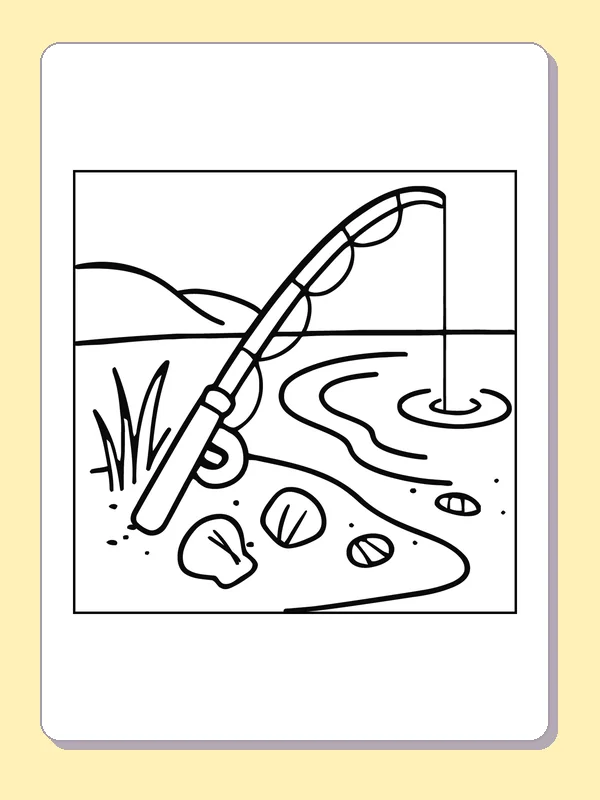


12 pagesAges 4–12Fishing fans
Skills: Naming trip equipment · Putting pictures in sequence · Separating foreground from water
Try this: Pack the trip. Color the rod and life vest first, then choose a boat for the imagined outing.


12 pagesChildren who like barns and farm animalsFamilies planning a farm-themed activity
Skills: Noticing barn doors, planks and roofs · Separating several animals in one scene · Ordering pictures into a farm-day story
Try this: Make a farm day. Put the sunrise barn, animal gathering and starry barn in order.


12 pagesAges 4–12Robot fans
Skills: Comparing body parts and tools · Putting a character story in order · Coloring large panels before fine details
Try this: Name the bot. Choose a robot and give it a name based on the job it is doing.


12 pagesChildren who enjoy fantasy charactersFamilies and classrooms
Skills: sharing one picture · finding small garden objects · planning different hat colors
Try this: Give each gnome a hat color. On a paired sheet, choose two different hat colors before filling the beards.


12 pagesChildren who enjoy smiling sea creatures and underwater scenesOcean-theme tables at home, library or class
Skills: Following one curved streamer without losing it among others · Comparing a single jellyfish with a three-jellyfish group · Choosing repeated colors for spots, bubbles and sea plants
Try this: Color three different bells. Use a new hue on each jellyfish in the group scene, then repeat those colors in nearby bubbles.


12 pagesAges 4–12Clown fans
Skills: Describing everyday actions · Planning costume colors · Working around overlapping lines
Try this: A clown’s day. Pick three activity scenes and tell a short story about the order they happen in.


12 pagesChildren who enjoy pretend bakery playFamilies choosing between broad and small coloring spaces
Skills: recognizing round, triangular and rectangular food shapes · working from broad areas toward small toppings · naming colors and flavors in pretend play
Try this: Build a three-treat menu. Pick a cake, cookie and frozen treat, then give each a flavor name in the blank margin.


12 pagesChildren who enjoy choosing outfit colorsFamilies making a quick accessory activity
Skills: repeating an accent color across different objects · finding large and small coloring regions · arranging separate icons into a coordinated paper set
Try this: Give every bow one color. Color the bows on shoes, socks, glasses and skirt alike, then choose a different color for each object.


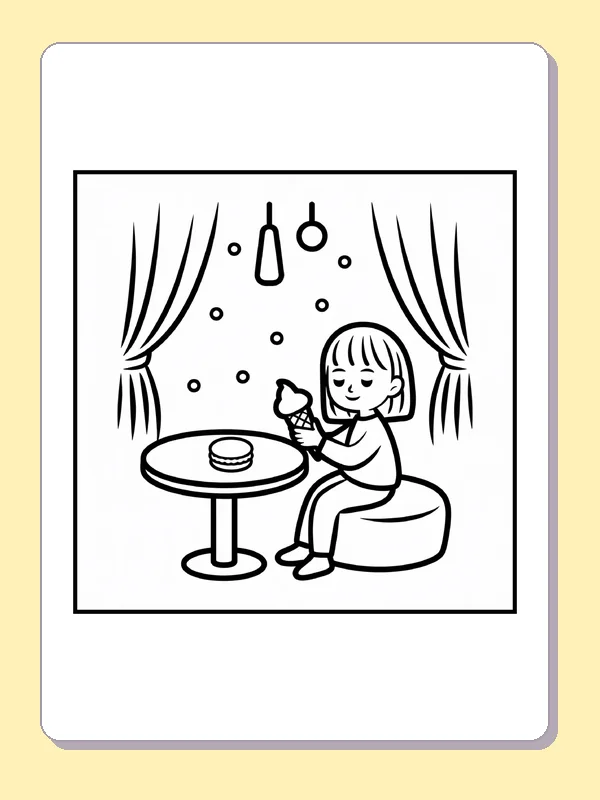
24 pagesChildren who enjoy everyday character storiesHome or classroom coloring sessions
Skills: noticing activities and settings · planning a small color palette for changing weather · telling a story across separate pictures
Try this: Pick a familiar activity. Let the child choose reading, music, baking or caring for a pet before choosing colors.


12 pagesChildren who like animal storiesFamilies making a printable bird book
Skills: Comparing long-legged bird shapes · Coloring foreground and background separately · Telling a sequence from three pictured activities
Try this: Plan an ostrich day. Put the mountain hike, pancake breakfast and guitar show in story order.


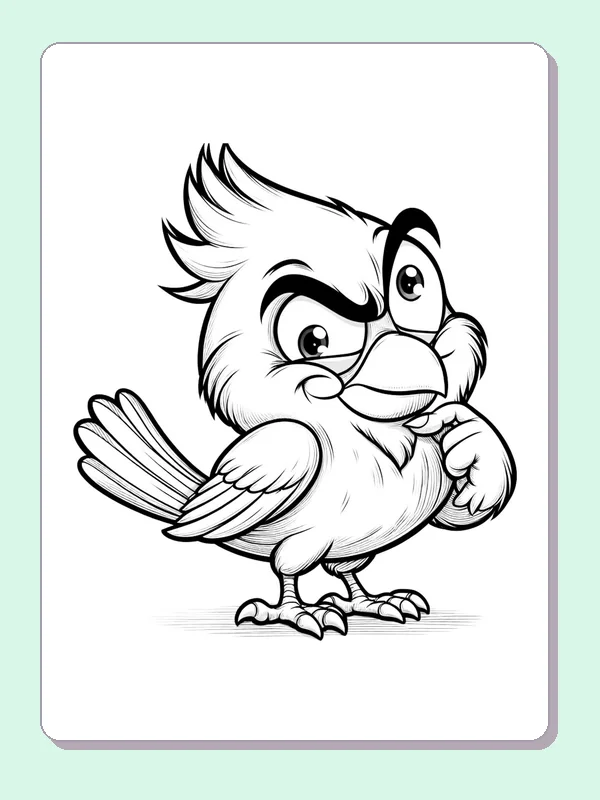
12 pagesChildren who enjoy expressive birdsFamilies and classrooms
Skills: reading facial expressions · comparing bird poses · adding a caption to a picture
Try this: Make a three-face comic. Choose three bird expressions, color them lightly and write one short caption beneath each.


12 pagesAges 4–12T-Rex fans
Skills: Separating foreground from hills · Comparing egg-hatching scenes · Adding pattern to broad shapes
Try this: Egg to explorer. Color a hatching baby and a standing dinosaur, then tell what happened between them.


12 pagesChildren making Valentine craftsFamilies sharing a handmade card
Skills: Following a tree branch into a heart shape · Choosing a small repeating color pattern · Separating foreground tree from background path or garden
Try this: Make a card. Color the meadow or bench tree, then add a personal note on the back.


12 pagesChildren who like sweet treatsFamilies and classrooms
Skills: comparing repeated patterns · planning icing and wrapper colors · inventing a menu and flavor names
Try this: Name a flavor. Choose an icing color and write a pretend flavor beside the finished cupcake.


30 pagesAges 5–10Hockey fans
Skills: Matching equipment across pictures · Keeping team colors consistent · Ordering a simple picture story
Try this: Find the gear. Print one equipment sheet and one skater; point to the same stick, puck, skates or helmet in both.
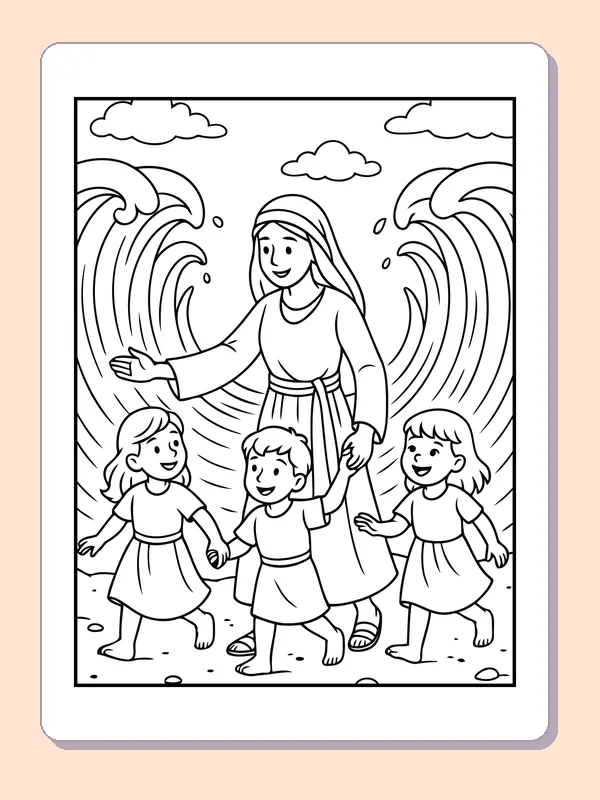


26 pagesAges 5–10Families and classrooms
Skills: Comparing near and far viewpoints · Following a picture sequence · Separating story elements from artistic additions
Try this: Find near and far. Place a close family scene beside a long procession and point to how the figures change size.


30 pagesAges 5–12Story-led beach coloring
Skills: Selecting a scene by detail level · Coloring several related picture elements · Ordering pictures into a simple story
Try this: Plan a two-page trip. Pair the beach arrival with surfing or a fruit picnic and ask what the animals do between the scenes.


30 pagesAges 4–10Home and classroom
Skills: Choosing between picture subjects · Finding repeated visual details · Coloring large and small regions
Try this: Pick a first subject. Offer a car, dog and officer portrait, then let the child choose the picture they want.
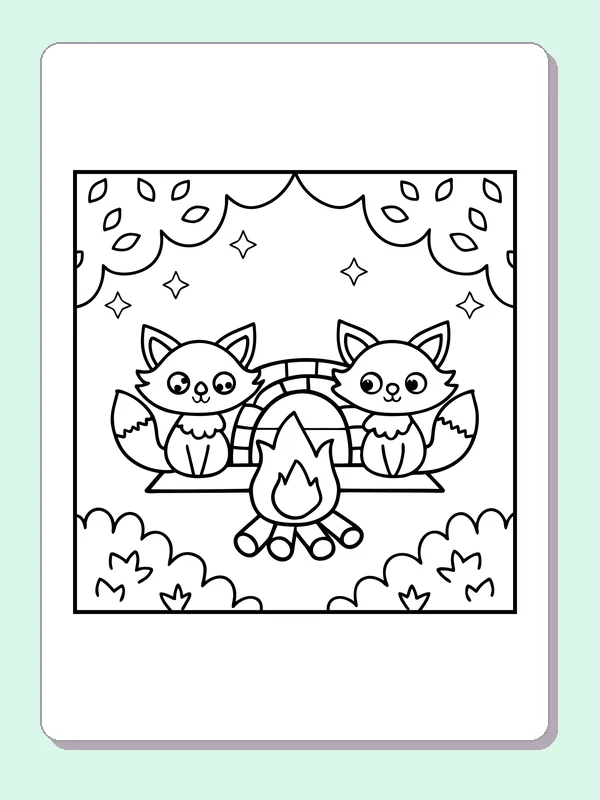

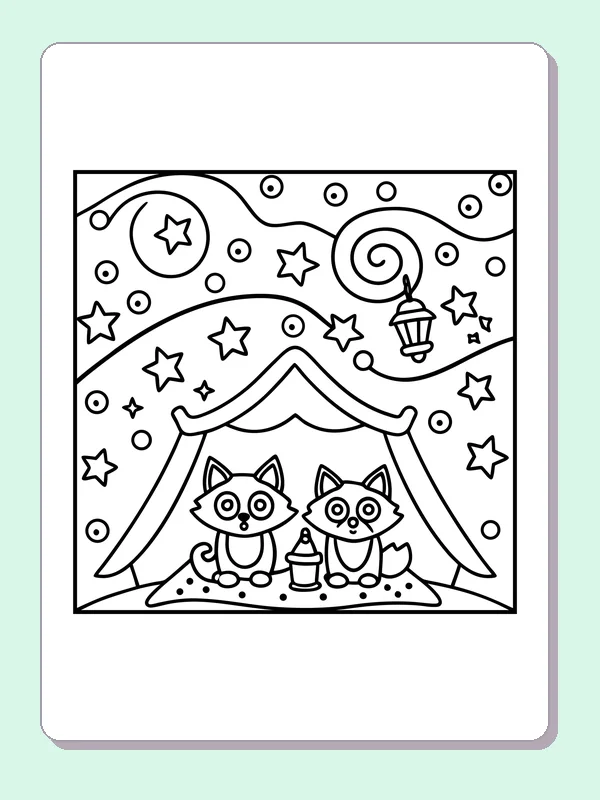
29 pagesChildren who enjoy stories about animals togetherFamily or classroom coloring time
Skills: noticing objects that tell where a scene takes place · choosing colors for two or more characters · telling a story without assigning fixed roles to the animals
Try this: Tell two sides of a day. Pair a fox campfire scene with a cat tea or meal scene. Ask what each animal might have done before or after the pictured moment.


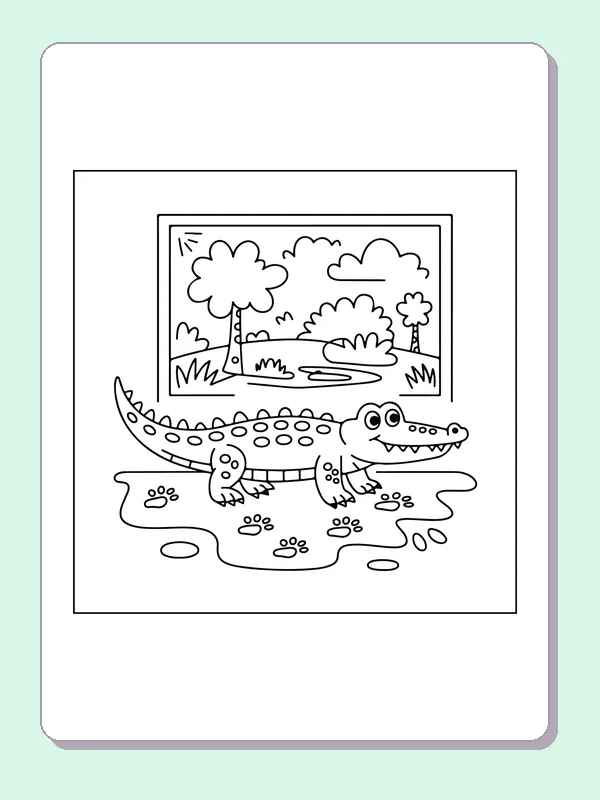
30 pagesChildren who enjoy silly animal storiesHome or classroom activity choice
Skills: Following a picture story · Spotting repeated animal features · Choosing colors for scene props
Try this: Choose the next stop. Pick two scenes, such as a banana boat and a waterfall, and ask where the crocodile goes between them.


30 pagesAges 4+ with a few open pagesHome and classroom
Skills: Noticing guitar parts · Planning repeated petal colors · Choosing a page by detail
Try this: Find the guitar parts. Point to the wide body, long neck, strings and round sound hole before choosing colors.


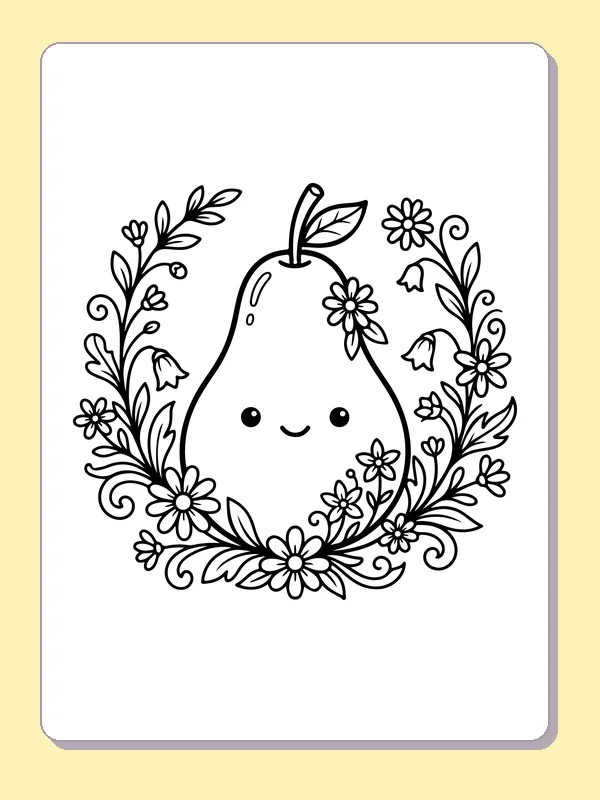
25 pagesChildren comfortable with small floral detailsFamily or classroom fruit activities
Skills: separating the fruit outline from overlapping leaves and petals · planning colors across repeated flowers · comparing a plain pear with a pear character
Try this: Make a plain pear into a character. Use Plain Pear with a Flower Garland and draw a face or a simple pattern in the open fruit before coloring its flowers.


30 pagesAges 4–12, depending on the pictureChildren who like silly creature designs
Skills: noticing a character's defining feature · choosing colors for large body shapes and smaller features · adding a simple setting in open space
Try this: Name by one feature. Color the television-head or three-eyed monster, then invent a name from the feature that stands out.


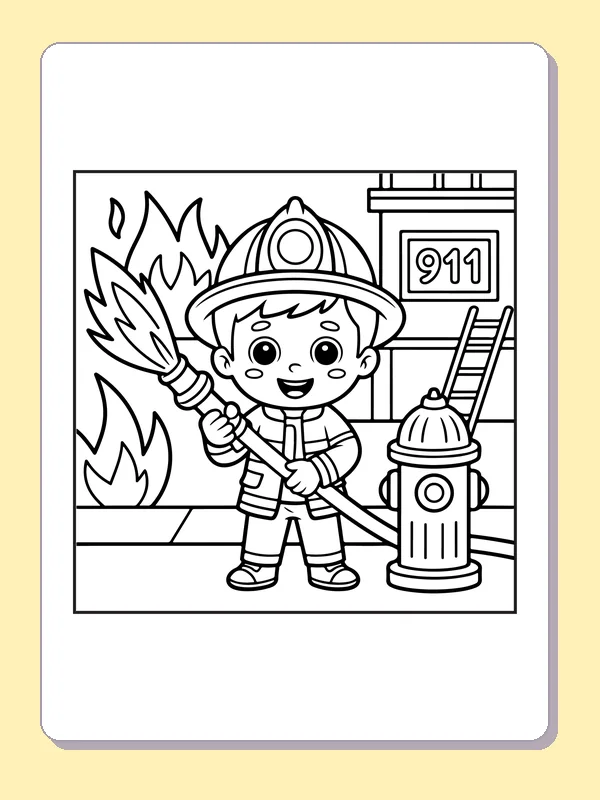
30 pagesAges 4–10Home and classroom
Skills: Choosing a focal object · Working from large to small shapes · Storytelling from a pictured action
Try this: Choose a quiet or active page. Offer the cozy blanket beside the scooter and let the child pick the mood.


29 pagesAges 4–12Christmas story at home or in class
Skills: Observing who appears in a scene · Choosing a page by visual detail · Describing a pictured moment
Try this: Choose a family portrait. Start with Mary holding the baby, then let a child name the people and objects they can actually see.


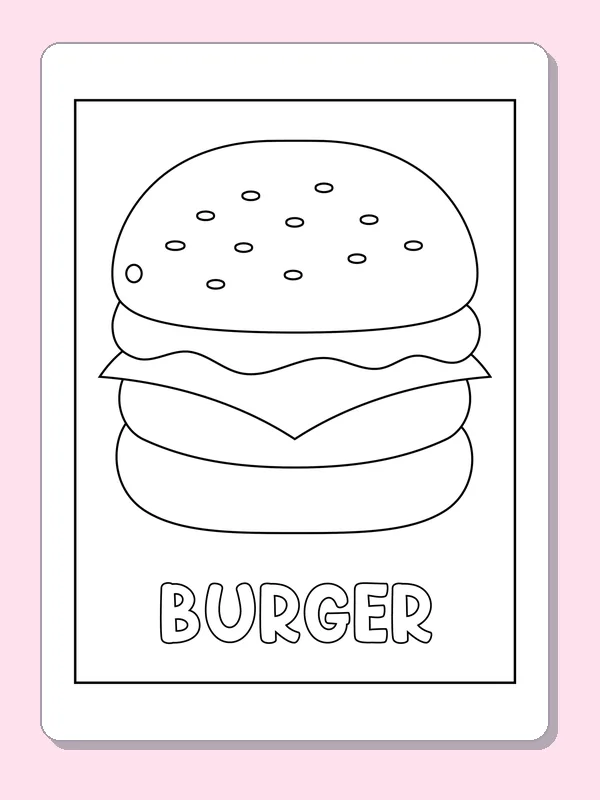
25 pagesAges 3–6 with adult supportHome and preschool
Skills: Naming pictured objects · Choosing colors for large shapes · Noticing a printed word
Try this: Name it before coloring. Point to the picture, say the word together and then choose the first crayon.


20 pagesAges 5–12Earth Day poster activities
Skills: Reading a short pictured message · Noticing details in a poster · Distinguishing a cartoon globe from a map
Try this: Read the poster. Choose one page with large outlined words; color the letters and ask what the message means in everyday terms.


19 pagesAges 4–10Home and classroom
Skills: Following curved outlines · Choosing contrast for a prop · Adding a simple imagined setting
Try this: Color the prop first. Choose a heart, star, hat or pot as the first bright shape.


25 pagesChildren who like character animalsHome or classroom story time
Skills: Noticing expressions · Choosing colors for small accessories · Telling a short picture story
Try this: Pick a mood. Choose a puzzled, sleepy or waving hippo and ask what expression the child notices first.


25 pagesChildren comfortable with repeated patternsOlder children and adults who enjoy fine detail
Skills: Repeating a color plan around a circle · Noticing symmetry and shape families · Working from center rings toward the edge
Try this: Two-color symmetry. Choose one branching ornament and alternate two colors around its six arms.


12 pagesOlder children and adults who enjoy patternsQuiet table activities
Skills: spotting a repeated tile in rows or diagonals · planning a small color key · controlling a pencil within narrow cells
Try this: Make a two-color grid. On the bold cross tile, alternate two colors across one row, then repeat the sequence below.


22 pagesChildren interested in community-helper charactersClassroom role and uniform activities
Skills: spotting visible props such as coats, stethoscopes and clipboards · comparing character styles and clothing · planning colors for broad panels before thin details
Try this: Compare two portraits. Print one bold cartoon and one fine line portrait. Point to the coat, glasses or stethoscope in each before choosing colors.


20 pagesChildren comfortable with framed scenes and thin detailsReptile fans
Skills: finding the curled tail and branch in a scene · separating body markings from background lines · comparing a close-up with a wider landscape
Try this: Spot the curled tails. Choose two sheets and trace each tail from the body to its spiral before coloring the reptile.


20 pagesChildren who enjoy nutcracker toys and ballet picturesFamilies preparing a winter craft table
Skills: Repeating uniform colors across several figures · Coloring small buttons and snowflake points · Separating foreground toys from winter backgrounds
Try this: Design a toy regiment. Give the three forest nutcrackers matching coats, then change one hat band so each guard is recognizable.


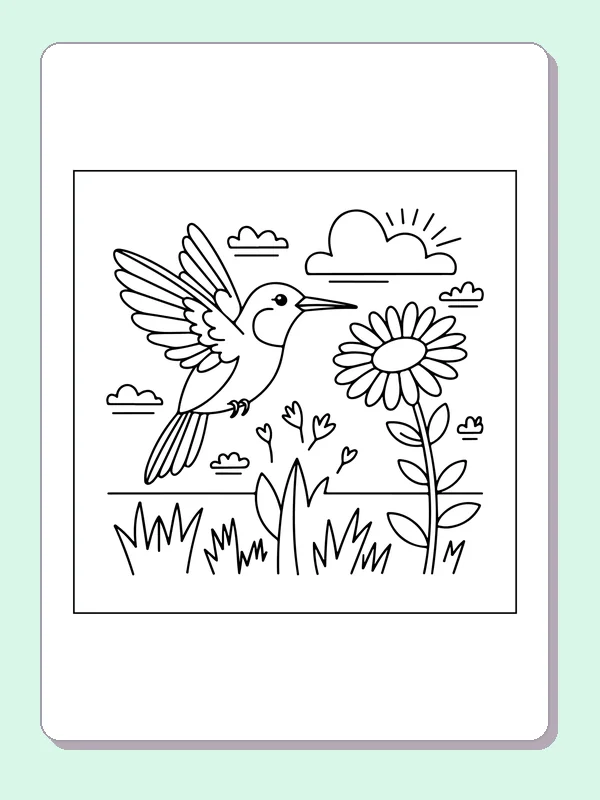
20 pagesChildren who like garden birdsFamilies choosing a short or longer coloring session
Skills: Working inside long feather shapes · Repeating a color between bird and flower · Comparing one-bird and two-bird compositions
Try this: Two birds, two palettes. On the meeting-at-sunset page, give each hummingbird its own colors and repeat one shade in the flowers between them.
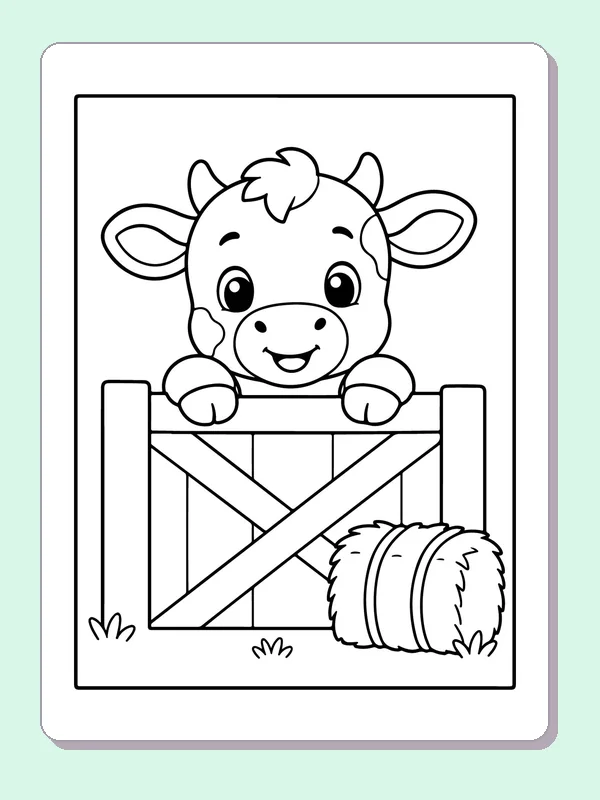


25 pagesAges 4–12Farm Animal fans
Skills: Comparing farm animal features · Choosing colors for fur, feathers and fields · Naming objects beside each animal
Try this: Pair two farm animal scenes. Print two farm animal pictures and compare what changes in the surroundings.
24 pagesFamilies planning birthday activitiesChildren choosing imaginary flavors
Skills: Counting visible candles · Choosing colors for cake layers · Coloring repeating icing details
Try this: Invent three flavors. Give each cake tier a different flavor color, then tell someone what the finished cake tastes like.


20 pagesAges 4–12Flower fans
Skills: Comparing petals, stems and leaves · Coloring mixed bouquets in layers · Noticing how containers frame blooms
Try this: Pair two flower scenes. Print two flower pictures and compare what changes in the surroundings.


20 pagesChildren who enjoy toy-like trucksFamilies choosing a vehicle coloring activity
Skills: Finding wheels, cab, ladder and warning light · Distinguishing front and side views · Repeating colors across hearts or flower petals
Try this: Match truck parts. Pick a side-view page and point to the cab, wheels, ladder and light before coloring each part.
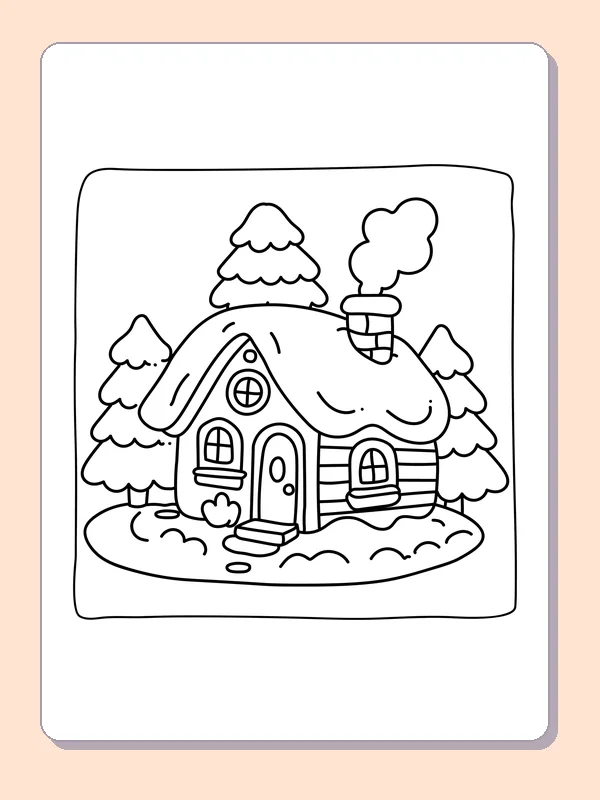

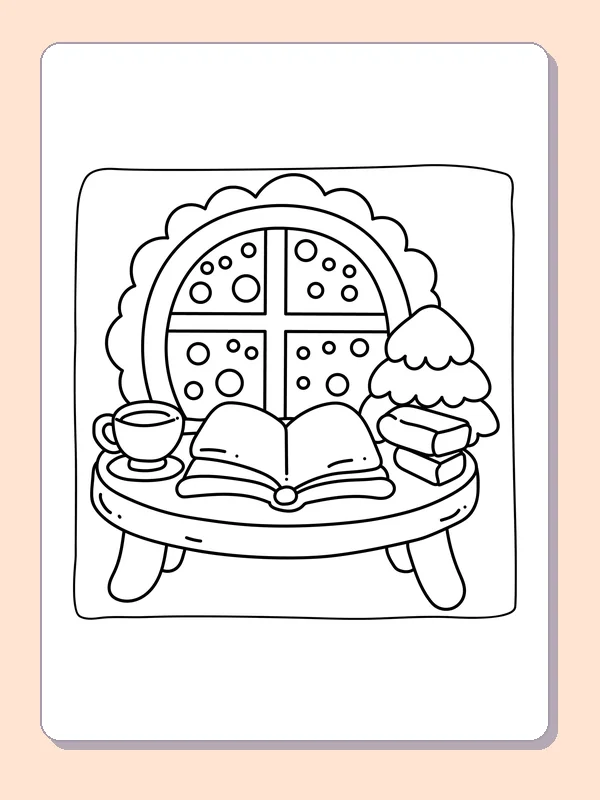
25 pagesChildren who enjoy snow, winter animals and cozy indoor scenesHome, library and classroom winter activity tables
Skills: Noticing the change between snowy outdoors and warm indoor settings · Comparing a single winter object with a fuller scene · Following repeated shapes in snowflakes, knitted clothes and fir branches
Try this: Outside and inside pair. Print one snow scene and one room scene; color the outdoor snow first and then choose warmer colors for the inside objects.


19 pagesChildren comparing fruit shapes and cut surfacesHome, library and classroom market or food activities
Skills: recognizing fruit by silhouette and cut surface · comparing seed and rind patterns · controlling color in narrow repeated spaces
Try this: Compare outside and inside. Place the whole papaya beside the cut kiwi and lychee. Ask which drawing reveals seeds and which shows only the skin.
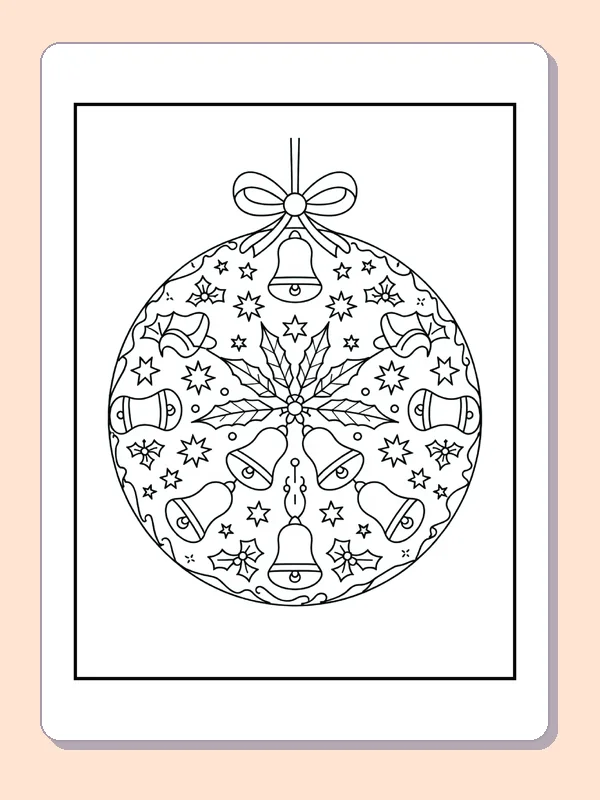


12 pagesOlder children and adults who enjoy detailed holiday motifsCalm winter craft tables with pencils or fine markers
Skills: Keeping a limited palette consistent through repeated motifs · Following symmetry around a round ornament · Switching between wide bands and very small leaves, dots or stars
Try this: Color one ring at a time. Start at the center of a bauble and work outward through its next band of repeated motifs.

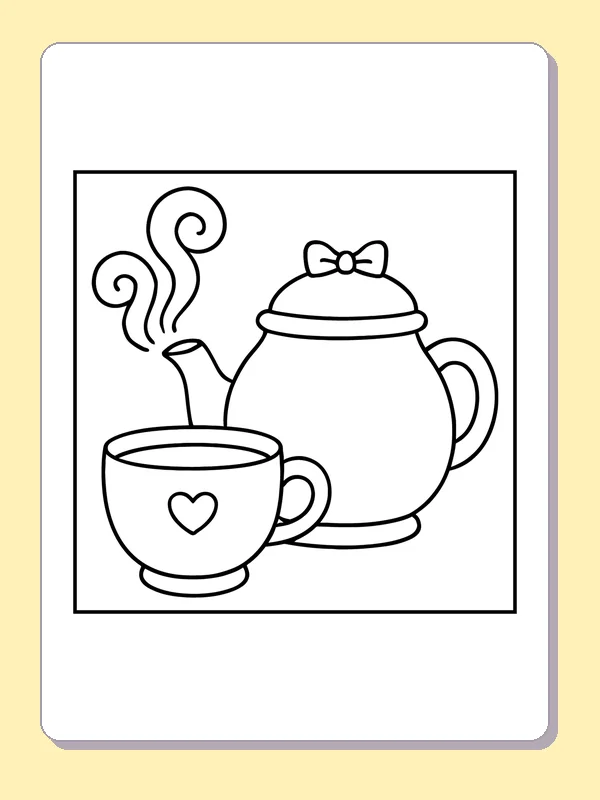

19 pagesChildren who like food drawings, pretend menus and café playHome, library and classroom art tables
Skills: Separating a main dish from its smaller toppings · Describing visible food shapes without guessing every ingredient · Grouping a drink, savory food and dessert into a pretend menu
Try this: Make a three-course paper menu. Print a drink, savory snack and dessert, then write a playful name under each colored drawing.


13 pagesChildren making a card or noteFamily and friendship activities
Skills: Noticing symbols and caring actions · Choosing color for a gift or bouquet · Putting a personal message with a picture
Try this: Find the hearts. Color one big heart, then look around the scene for smaller heart shapes and decorations.


27 pagesChildren who enjoy scenes about familiar people and activitiesHome, library and classroom story and art tables
Skills: Naming objects and actions visible in everyday scenes · Comparing active and quiet settings without judging the people · Sequencing pictures into a simple day story
Try this: Make an active-and-quiet pair. Print a dancer and a seated figure, then choose colors that make each scene feel different.


23 pagesChildren curious about wild mountain animalsFamilies looking for bighorn ram art
Skills: Noticing horn shape and animal age · Separating animal outline from rocky background · Repeating colors across horn ridges or patterned cells
Try this: Compare the horns. Place an adult bighorn portrait beside the young sheep and trace how the horn shapes differ.

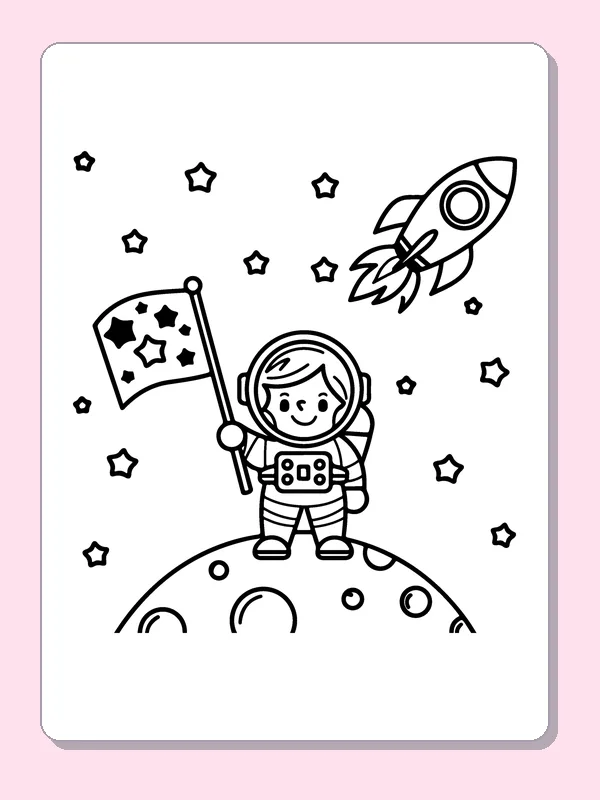
12 pagesChildren who enjoy pretend astronaut trips and spacecraftHome, library or classroom space-theme tables
Skills: Sequencing a launch, flight and landing story · Comparing rocket, winged craft and round saucer silhouettes · Repeating colors on a helmet, vehicle and mission flag
Try this: Tell a three-page mission. Print the ground launch, floating astronaut and flag-planting scenes, then put the events in order.

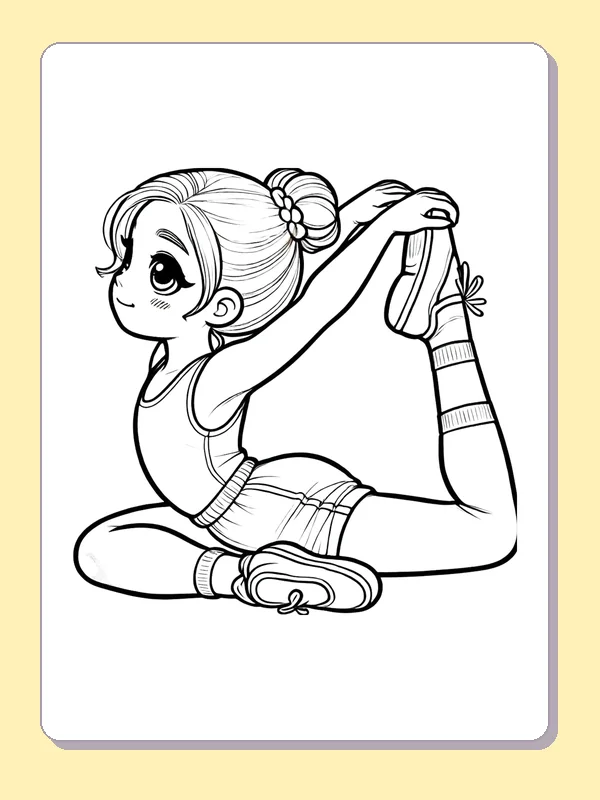

24 pagesChildren interested in gymnasticsHome and classroom sport activities
Skills: Noticing poses and equipment · Following lines of movement · Building a picture sequence
Try this: Practice-day story. Put a warm-up, apparatus and celebration picture in order and tell what happens between them.


24 pagesChildren who like plush bearsFamilies choosing an outdoor-themed craft
Skills: Sequencing a scene from main bear to background · Comparing outdoor settings · Repeating colors across flowers and fruit
Try this: Plan a teddy outing. Color one beach, one garden and one campsite sheet, then tell a three-stop story.


30 pagesAges 4–12Mandala fans
Skills: Choosing a repeating color sequence · Following petal and spiral outlines · Spotting symmetry around a center
Try this: Pair two mandala scenes. Print two mandala pictures and compare what changes in the surroundings.


30 pagesChildren who like putting outfits and accessories togetherHome, library and classroom design tables
Skills: Coordinating a small color palette across separate pieces · Noticing the difference between a displayed outfit and clothes in use · Comparing clothing choices for sun, rain and indoor time
Try this: Dress for three moments. Print a garden dress, raincoat and pajamas, then color each for a different part of the day.


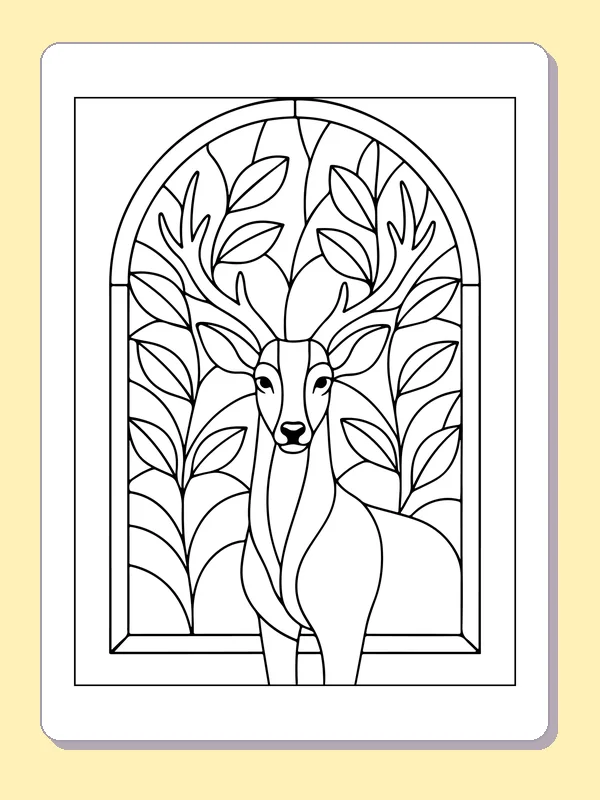
23 pagesOlder children and adults who enjoy section-by-section coloringHome and classroom projects about color patterns and symmetry
Skills: Planning a limited palette across repeated panes · Following symmetry in paired petals and butterfly wings · Separating a subject from its segmented background with contrast
Try this: Choose a three-color window. Try three colors on the mountain or whale design and repeat them across panes without filling adjacent shapes alike.

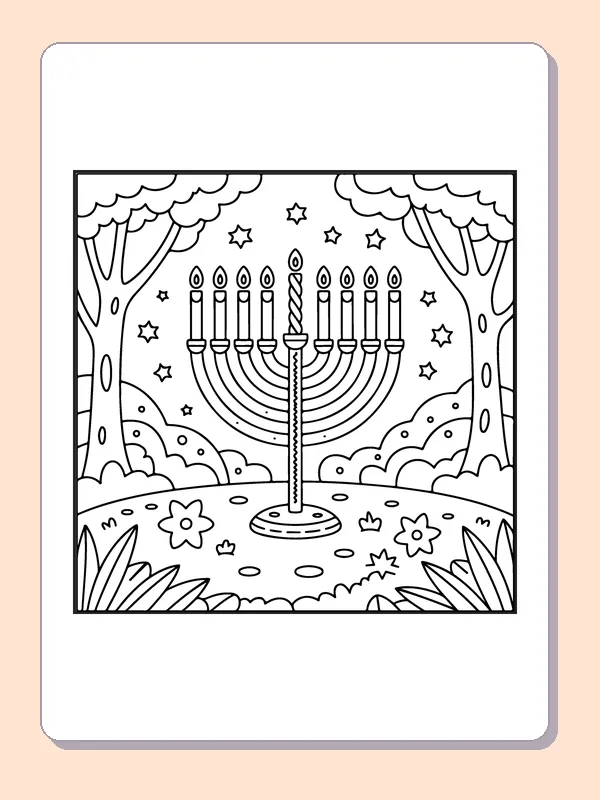
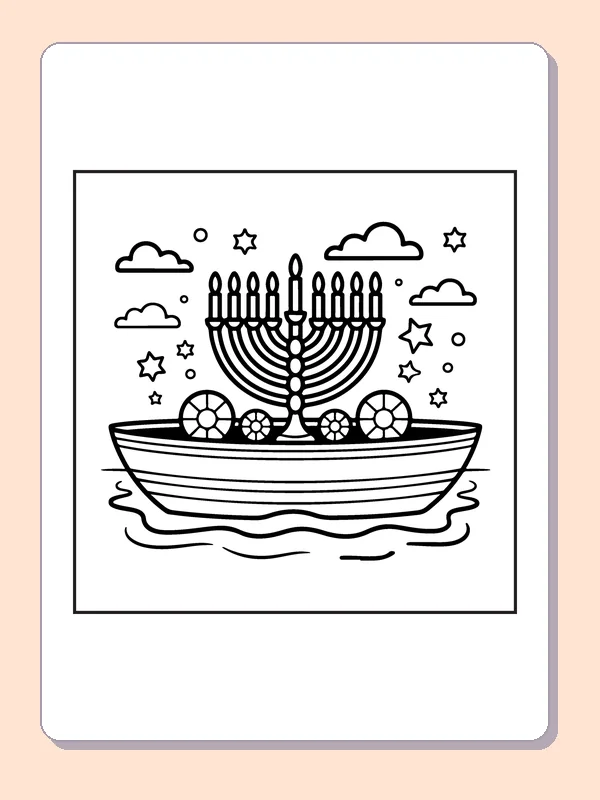
22 pagesFamilies choosing holiday art togetherClassrooms selecting culturally relevant symbols
Skills: Comparing repeated candle shapes · Following six-point star geometry · Planning a palette across a scene and border
Try this: Compare menorah settings. Color a plain menorah and a window scene, then point out what changed around the same central shape.


14 pagesChildren who enjoy puppy storiesFamilies choosing a short or longer coloring session
Skills: Following overlapping yarn or basket lines · Repeating a color across coat patterns and paw prints · Describing a dog's pose and what its prop suggests
Try this: Play, then rest. Color the ball-chasing puppy and the basket puppy as a pair, then tell what happened between the two scenes.


12 pagesChildren who like round storybook birdsFamilies looking for a quick branch or bicycle picture
Skills: Separating wings, chest and tail into color areas · Choosing colors for a pair of similar characters · Coloring small props after broad body shapes
Try this: Give the two birds different outfits. On a paired-bird sheet, choose a shared branch color and a separate hat or glasses color for each character.


18 pagesChildren who enjoy small pet characters and gentle camp storiesHome, library and classroom picture-story tables
Skills: Comparing the same tent shape across different scenes · Sequencing a pretend camp day from reading to bedtime · Noticing weather and seasonal marks around a repeated character
Try this: Tell one camp day. Put the reading, star-decorating, music and sleepy pictures in an order, then narrate what happens.


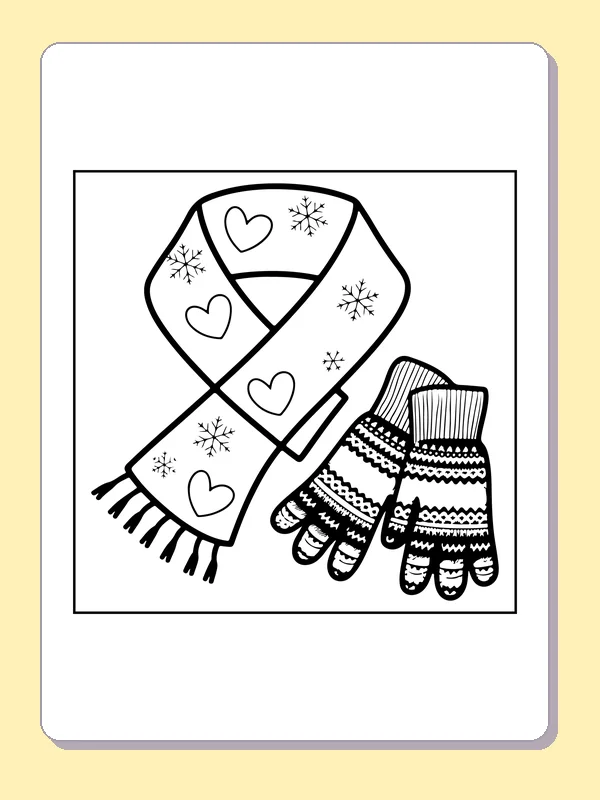
14 pagesAnyone who enjoys heart motifs, accessories or cozy objectsHome and classroom choice tables with several styles to pick from
Skills: Choosing a palette for one object and its small decorations · Comparing repeated heart, star and flower shapes across pictures · Switching from broad regions to narrow petals, cuffs or snowflakes
Try this: Design a matching pair. Color the sunglasses and purse with one shared color, then let their small hearts and sparkles differ.


15 pagesChildren who like cartoon space artFamilies discussing planets informally
Skills: Following curved bands without crossing lines · Noticing Earth’s land shapes · Tracing a maze path before coloring
Try this: Name an invented world. Choose an unlabeled striped planet, color its bands and give the character a made-up name.


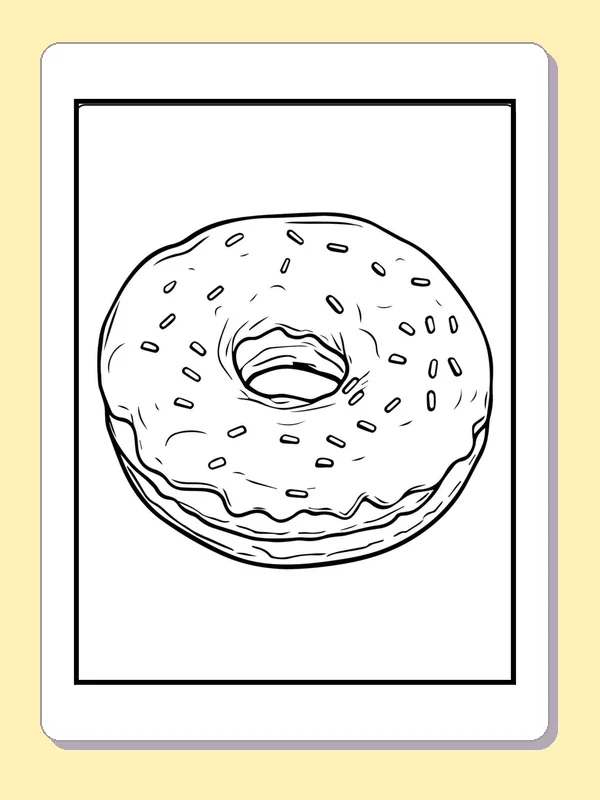
12 pagesChildren choosing between one quick donut and a longer dessert sceneHome or classroom pretend bakery displays
Skills: Separating icing from the donut ring by following an uneven edge · Finding front and back layers in overlapping stacks · Using light colors beside built-in dark shading for contrast
Try this: Invent an icing color. Color the plain sprinkle donut and give its topping a made-up flavor name after the page is finished.


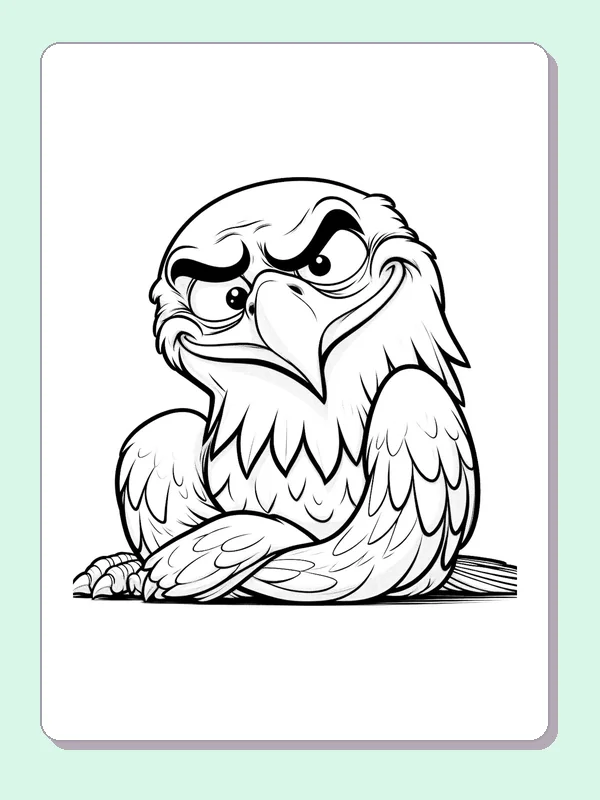
12 pagesChildren who like comic bird facesFamilies comparing expression and pose
Skills: Reading a mood from eyes and beak shape · Following layers of wing and chest feathers · Choosing broad areas around fine hatching
Try this: Two bird voices. Choose the surprised open-beak bird and the thinking bird, then give each one sentence that matches its face.


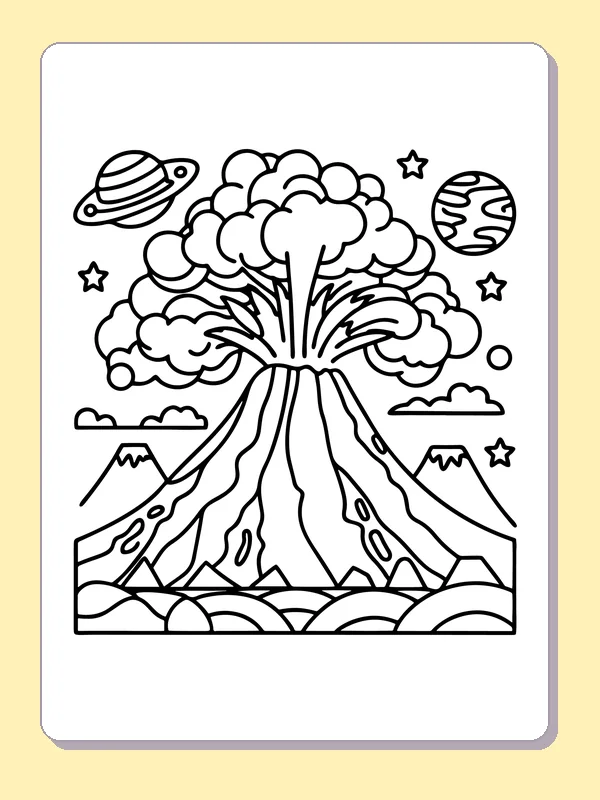
12 pagesAges 6–12Children who like fantasy mountains and space
Skills: following winding lava paths · separating foreground mountains from background sky · planning colors for warm and cool regions
Try this: Trace a lava route. Follow one lava stream with a finger from the crater to the bottom before coloring it.


12 pagesAges 5–10Children practicing number matching
Skills: matching a printed number to a color key · scanning a picture for repeated numbers · coloring within irregular regions
Try this: Hunt for one number. Point to a key number and find every matching region before taking out that crayon.
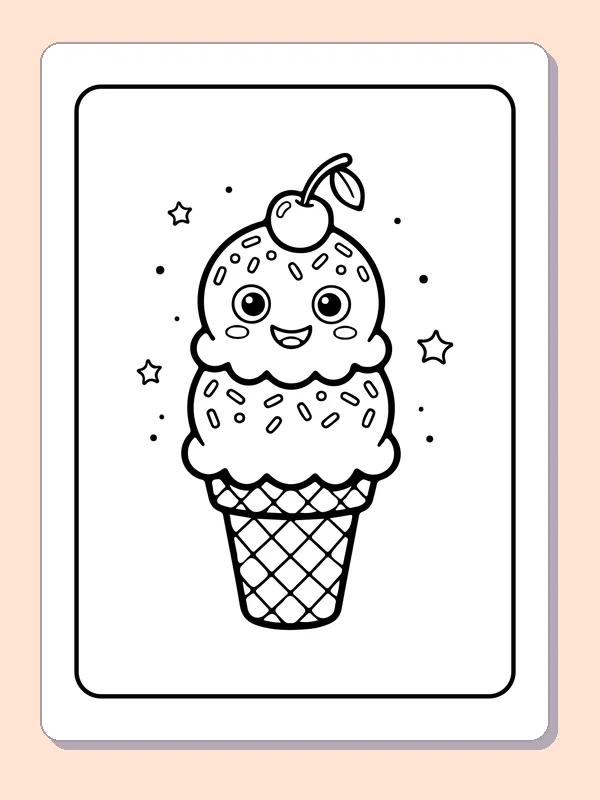


20 pagesChildren choosing quick summer picturesBeach and picnic activities
Skills: Repeating color across panels or petals · Finding details within a larger scene · Sequencing summer pictures into a story
Try this: Choose a flavor. Color three frozen pops as different invented flavors and name each one.
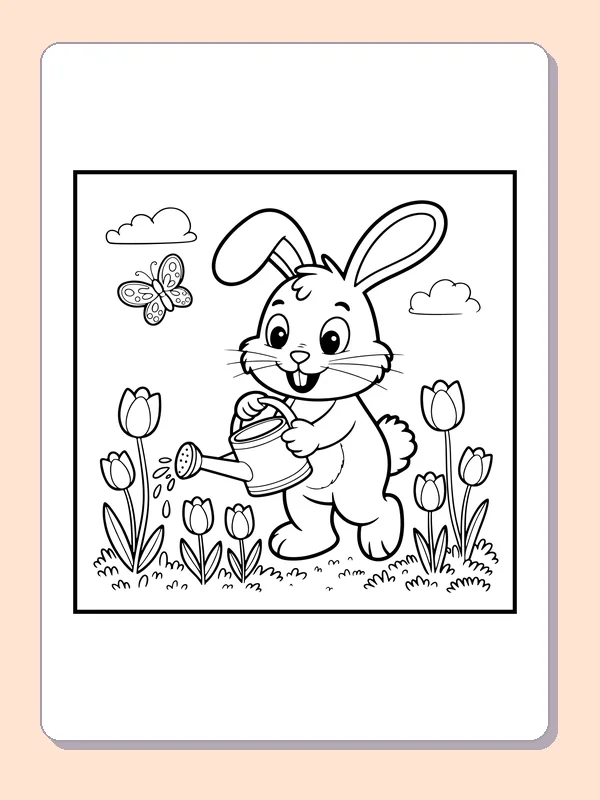


18 pagesChildren exploring spring scenesGarden and animal coloring tables
Skills: Noticing weather and plant details · Repeating color across flower petals · Separating an animal from a water or garden setting
Try this: Rain and sunshine pair. Color the umbrella lamb and the bunny watering tulips as two different kinds of spring day.


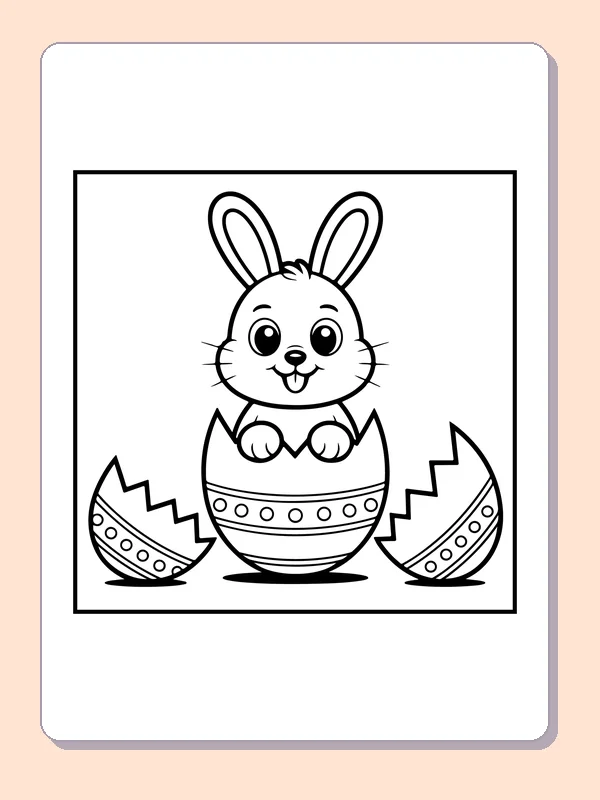
14 pagesFamilies preparing Easter craftsChildren choosing a card or egg pattern
Skills: Repeating a small palette across egg patterns · Separating lettering from decoration · Choosing a holiday subject for a card
Try this: Two egg patterns. Color a basket egg with stripes, then repeat one shade in a flower-pattern egg.


20 pagesFamilies looking for a printable Independence Day activityClassroom or library tables discussing holiday imagery
Skills: Identifying different holiday symbols without treating decorative art as a flag diagram · Comparing a single icon with a busy parade or picnic scene · Sequencing parade, picnic and evening sky pictures into a story
Try this: Build a three-scene celebration. Place a marching child, picnic basket and fireworks drawing in order, then describe what happens between them.


15 pagesChildren who like masks and dress-up charactersFamilies planning a playful celebration activity
Skills: Separating bead strands from a character outline · Repeating a chosen color pattern across jewels and beads · Using a fine tip around feather and mask details
Try this: Repeat a bead pattern. Choose two or three colors and repeat them along the crab or pineapple bead strands.


13 pagesChildren decorating egg patternsFamilies making Easter table activities
Skills: Following a repeated band around an egg · Alternating colors in circles or zigzags · Separating a bow, chick or basket from its patterned shell
Try this: One egg, two palettes. Print the same broad-band egg twice and reverse the order of two chosen colors on the second copy.


18 pagesChildren who enjoy chicks and decorated eggsFamilies planning a spring craft table
Skills: Coloring repeating egg bands and spots · Using contrast between chick and basket · Following thin bicycle spokes and flower petals
Try this: Give the chick a journey. Put the hatching, basket and bicycle pictures in order, then tell what the little bird does next.
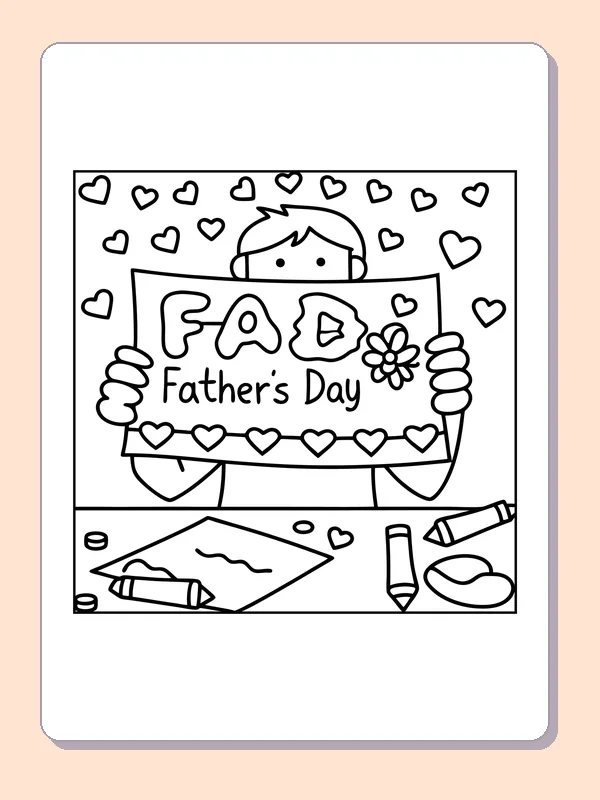

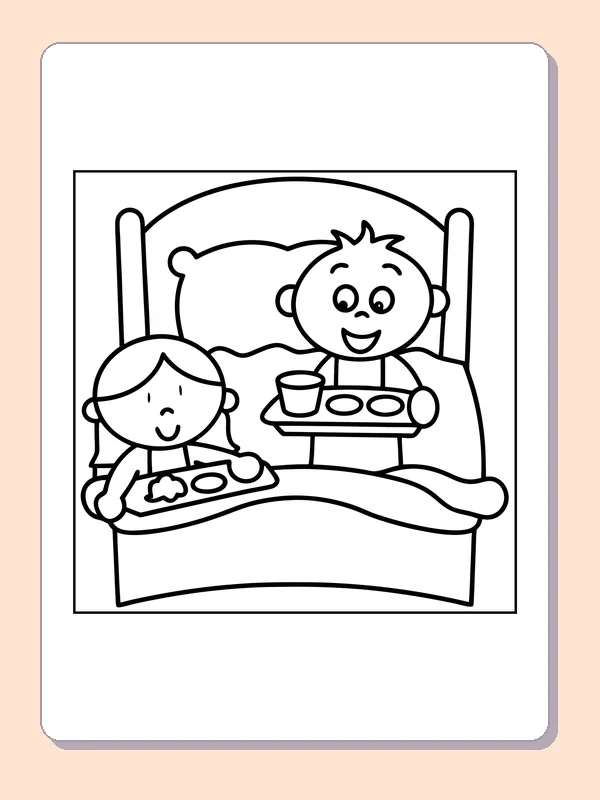
16 pagesChildren making a Father’s Day cardFamily and classroom activities
Skills: Matching a message to a recipient · Keeping lettering readable while coloring · Adding a short personal memory
Try this: Add one true sentence. After coloring a greeting, ask the child for one specific thing they like doing with the recipient.

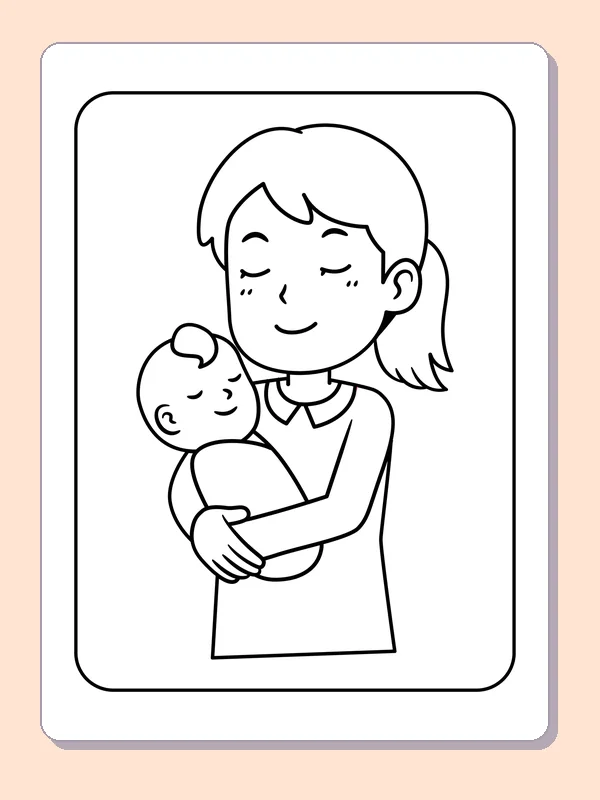

16 pagesChildren making a Mother's Day picture for someone they care aboutHome, library and classroom card-making tables
Skills: Choosing a picture that connects to a real shared memory · Noticing expressions and gestures in family portraits · Adding a specific handwritten message to finished art
Try this: Write one true sentence. After coloring, help a child add one sentence about something they enjoy doing with the person receiving it.


16 pagesChildren interested in community helpersFamilies looking for a printable truck or uniform activity
Skills: Spotting a helmet, hose, ladder and hydrant in pictures · Separating a helper’s uniform from a truck background · Choosing colors for broad shapes and small gear details
Try this: Build a three-picture story. Put the station, truck and ladder pictures in an order and ask what might happen between each scene.


12 pagesChildren celebrating a school milestoneFamilies making a personal keepsake page
Skills: Coloring large gown shapes before small tassels · Tracing outlined letters and book labels · Using a repeated color across balloons, stars and confetti
Try this: Add a name and date. Use the white area around the bear or smiling diploma to write who is celebrating and when.


16 pagesChildren who enjoy balloon animalsPuppy and party activities
Skills: Following joined balloon sections · Separating toy and puppy colors · Noticing which shapes are balloons
Try this: One balloon, one color. Choose a bold color for a twisted animal and leave its little oval highlight marks white.
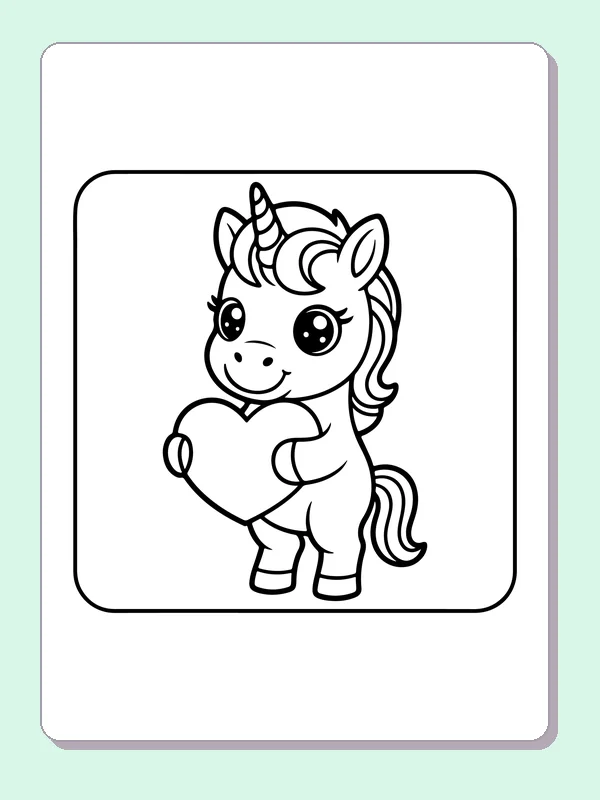


20 pagesFamilies and classroomsChildren ages 4–12
Skills: Coloring repeated hearts and rose petals · Telling apart ponies, unicorns and winged ponies · Making a Valentine card from a finished page
Try this: Pick a quick page. Start with a horse design that has broad open shapes for a short coloring break.


20 pagesChildren preparing for a library visitReading corners at home or school
Skills: Noticing reading and shelving actions · Repeating colors across book spines · Connecting a picture to a real book
Try this: Find the chosen book. Give the book in the reader’s hands a cover color that differs from the shelf.


20 pagesChildren who like odd combinations, music and colorful patternsHome, library and classroom doodle tables
Skills: Repeating a color across mirrored wings or matching objects · Finding a main subject in a page of surrounding small marks · Choosing a shared palette across unrelated doodle motifs
Try this: Make a paper concert set. Color a disco ball, crossed guitars and dancing robots with two repeated stage colors.


20 pagesPreschool and early elementaryKitchen and garden activities
Skills: comparing produce silhouettes · counting small food groups · following leaf veins and pod ribs
Try this: Long and round sort. Put the leek, cucumbers and carrots beside the rounder onions and peppers.


12 pagesReptile fansNature study activities
Skills: following long curved outlines · noticing scale patterns · observing how animals use their habitat
Try this: Trace the tail. Follow the long tail before choosing a color for the body.


16 pagesWildlife-loving childrenWoodland classroom themes
Skills: following branching antlers · separating animal from background · using color to suggest a setting
Try this: Color the antlers first. Choose a shade for the wide antlers, then decide whether the fur should match.


20 pagesChildren who like baby elephantsBirthday and animal activities
Skills: Reading an animal’s facial expression · Separating a prop from the elephant · Working through repeated petals or cake tiers
Try this: Match a mood. Choose the shy, laughing or silly face and explain what in the eyes or trunk gives that impression.


16 pagesYoung baseball fansSports themed classroom days
Skills: recognizing sports equipment · comparing action poses · designing a team palette
Try this: Invent a team. Give the cap and shirt two matching colors and write a team name below.


12 pagesAges 4–10Cartoon reptile fans
Skills: alternating belly band colors · comparing three ball patterns · following small motorcycle parts
Try this: Belly bands. Alternate two pale colors down an alligator belly and compare the result with its darker back.


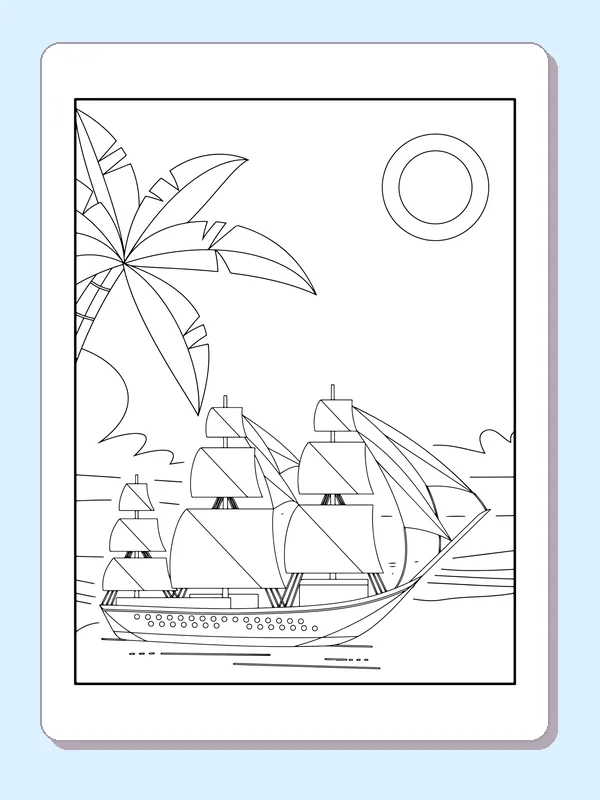
12 pagesChildren comparing watercraftTransportation-themed activity tables
Skills: Distinguishing hull, cabin, deck and sail shapes · Alternating colors across repeated windows · Separating a vessel from mountains, lighthouse or water
Try this: Name the vessel. Write a made-up name beside the finished hull and add a small flag in the open sky.


16 pagesAges 4–10Garden activity tables
Skills: repeating flower palette choices · following narrow wing veins · finding small garden visitors
Try this: Tulip resting place. Color the broad tulip petals first and leave a pale space around the little bee.


12 pagesAges 5–12Pattern lovers
Skills: Comparing circle sizes · Following overlapping lines · Planning a small color palette
Try this: Color by size. Give large bubbles one color and tiny rings another before trying the crowded pages.


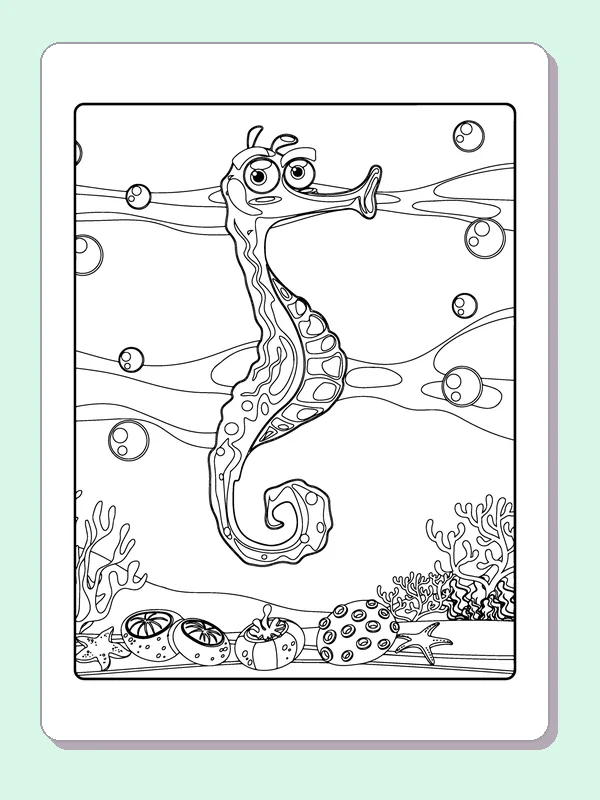
13 pagesChildren who like comparing sea-creature shapes and patternsHome, library or classroom ocean-theme coloring tables
Skills: Comparing spots, stripes and plate-like patterns across one animal shape · Following a curved tail through turns and loops · Choosing when to color foreground coral separately from a main figure
Try this: Make a three-pattern row. Print a spotted, striped and scale-covered seahorse; use one shared background color and different body colors.


18 pagesAges 3–9Garden and bug fans
Skills: Noticing insect body shapes · Comparing spots and segments · Matching colors across wings
Try this: Sort the garden visitors. Choose one flyer, one crawler and one spotted bug, then talk about how they move.


20 pagesChildren ages 4–12Pug and dog lovers
Skills: noticing animal expressions · choosing colors for accessories · telling a story from a pose
Try this: Pick a pug mood. Compare the sleepy, excited and serious faces before choosing a favorite to color.


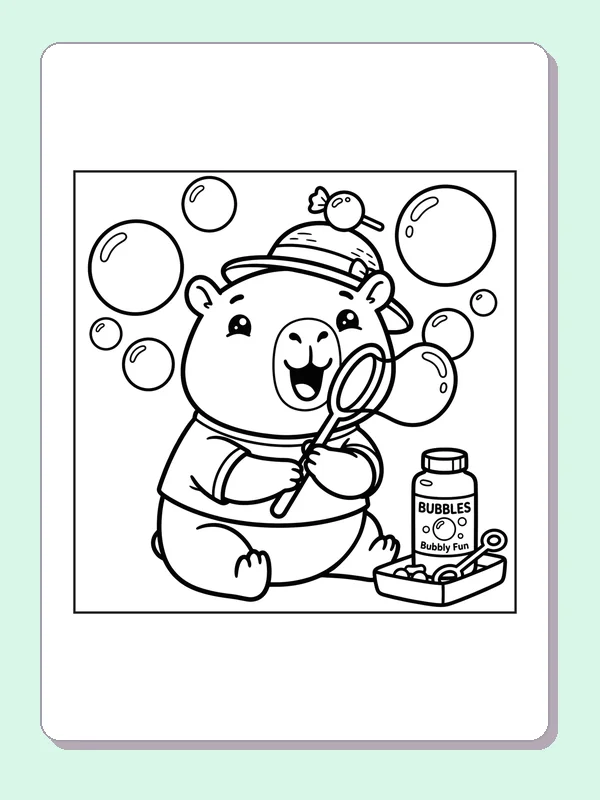
22 pagesYoung animal fansCozy coloring activities
Skills: recognizing everyday activities · choosing colors for scene props · sequencing pictures into a story
Try this: Make a day in pictures. Put three capybara pages in morning-to-night order and add a caption to each.


18 pagesAges 4–10Children who like funny animal faces
Skills: following curved outlines · repeating a color pattern · describing a character expression
Try this: Match a mood. Choose a snake whose face matches a feeling, then color the body to show that mood.


12 pagesYoung colorers who want roomy fruit outlinesFamilies planning a summer or food activity
Skills: Noticing seeds, rind and cut edges · Choosing a color order for small spaces · Telling a sequence from three pictures
Try this: Two-rind challenge. Put the plain wedge beside the patterned-rind slice and use two greens to show the border on each.


20 pagespreschool and elementary childrenparents planning an animal craft
Skills: noticing long arms and broad shoulders · choosing light and dark fur shades · telling stories from animal expressions
Try this: Compare big and small. Print one baby and one adult gorilla, then color their shared features.


24 pagesAges 3–9Children who enjoy friendly prehistoric animals
Skills: filling broad shapes · separating foreground and background · telling a short picture story
Try this: Sort by silhouette. Put long-necks, horned dinosaurs, and prehistoric flyers into small picture groups.


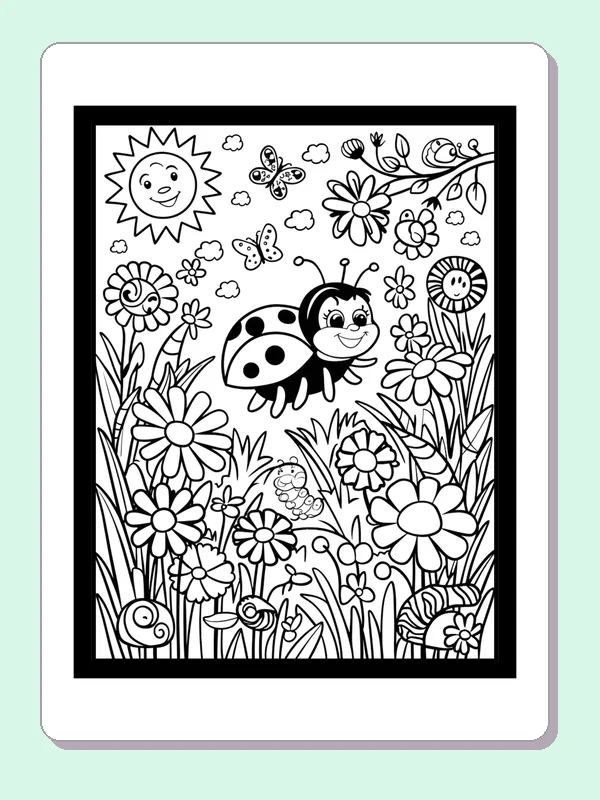
12 pagesAges 6–12Children who enjoy small petals
Skills: distinguishing open and filled spots · repeating colors across dense petals · finding individual bugs in a group
Try this: Shell first. Finish the broad spotted shell before choosing a quieter palette for the surrounding flowers.


16 pagesAges 6–12Character and expression fans
Skills: using light color over gray texture · noticing facial expressions · coloring around small instruments
Try this: Expression match. Choose a winking portrait and a singing frog, then describe each face before coloring.


13 pagesAges 6–12Patient woodland colorists
Skills: layering pencil over fur texture · separating forest and coat shades · following hat and glasses details
Try this: Hat palette. Repeat a bouquet color in the flowers decorating a squirrel hat.


24 pagesAges 3–10Children who enjoy cute animal characters
Skills: filling broad outlines · repeating color on gill shapes · telling a story from a small prop
Try this: Give the gills a pattern. Alternate two colors across the frilly gill branches on either side of the face.

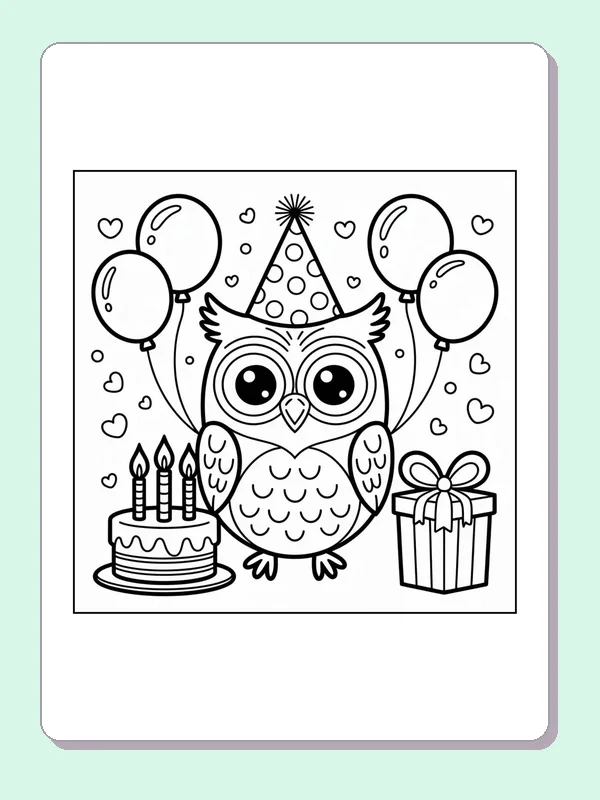

20 pagesAges 3–10Children who like wide-eyed woodland birds
Skills: repeating feather colors · separating night sky from the owl · describing a picture sequence
Try this: Night sky palette. Choose one shade for the moon, one for stars, and another for the owl's wings.


20 pagesFamilies exploring placesChildren ages 4–10
Skills: counting windows by rows · comparing roofs and entrances · coloring narrow architectural details
Try this: Window detective. Find a square window, an arched window and an attic window across three sheets.


19 pagesFamilies planning quiet activitiesChildren ages 5–12
Skills: distinguishing hull and reflection · following sail and plank edges · selecting small floral details
Try this: Reflection match. Repeat one hull color softly in the water outline beneath the vessel.


20 pagesFamilies with young designersChildren ages 4–11
Skills: planning a footwear palette · matching paired decorations · coloring straps and lace spaces
Try this: Sole signature. Repeat one special color along every visible sole on a chosen sheet.


20 pagesChildren who enjoy friendly science fictionFamilies making up stories from pictures
Skills: Separating a character from its setting · Planning colors for repeated alien characters · Building a story from visible props
Try this: One visitor, three days. Color the same skin tone on a party, school and tea sheet, then tell what happened on each day.


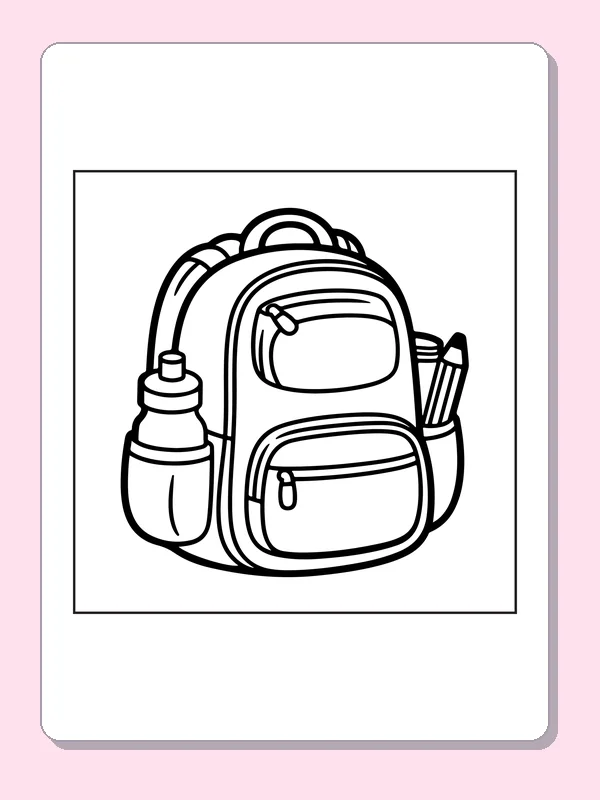
20 pagesFamilies and teachersChildren ages 4–9
Skills: grouping familiar school supplies · following small book and pocket outlines · sequencing a school arrival
Try this: Pack on paper. Find the bottle, pencils and pockets on a backpack sheet and name what each holds.


20 pagesSports clubs and familiesChildren ages 4–10
Skills: recognizing curved ball panels · comparing playful action poses · following repeated net squares
Try this: Team introductions. Give the elephant, puppy and astronaut names for an imaginary volleyball team.


15 pagesAges 4–10Fruit and dessert fans
Skills: comparing whole and cut fruit · coloring separate dessert layers · following a small cherry motif
Try this: Fruit-to-treat match. Use the same cherry color on a fruit sheet and a cupcake topping.


20 pagesAges 4–12Bedtime and sky watchers
Skills: comparing crescent and circle outlines · coloring repeated crater rings · planning pale and dark sky contrasts
Try this: Moon outline pair. Trace a crescent outline with a finger, then do the same around a full moon.

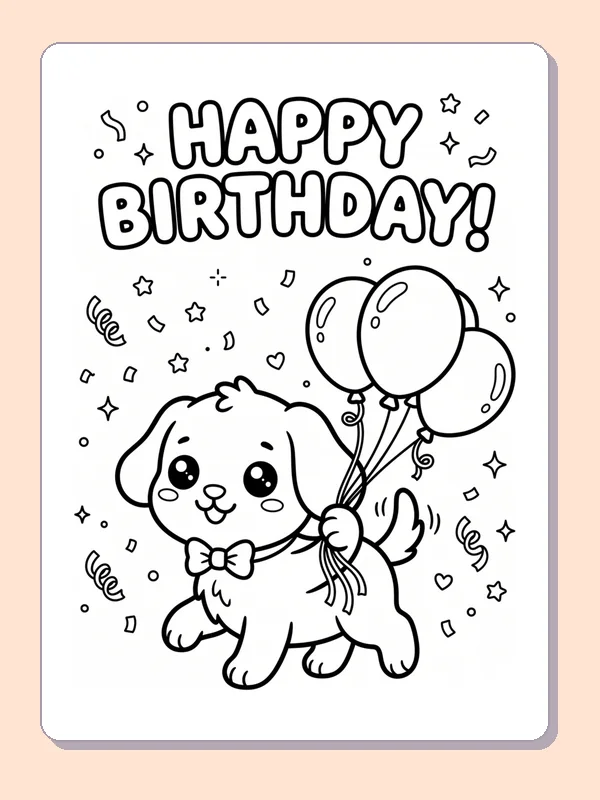
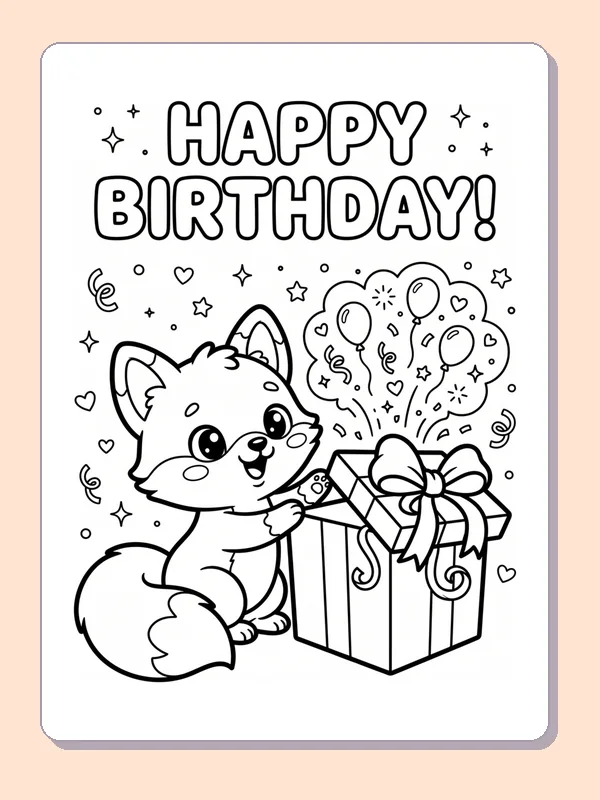
20 pagesAges 4–10Birthday guests
Skills: coloring outlined greeting letters · coordinating gift and balloon colors · composing a personal birthday message
Try this: Letter color rhythm. Alternate two colors through the Happy Birthday greeting before coloring the guest.


15 pagesChildren choosing burrow buddies picturesHome coloring tables
Skills: Comparing animal poses · Naming snowy and grassy setting clues · Describing sunshine props and imagined weather
Try this: Groundhog wardrobe. Choose two colors for the scarf-and-hat groundhog and repeat them on the mitten page.


13 pagesChildren choosing quiet symbols picturesHome coloring tables
Skills: Recognizing pictured remembrance symbols · Separating flag stripe colors · Coloring small wreath petals with care
Try this: Wreath palette. Choose two flower colors and repeat them around the memorial wreath with a fine pencil.


24 pagesAges 4–10Young wedding guests
Skills: planning a repeating color theme · coloring separate object details · making a small keepsake
Try this: Design a color theme. Use the same two colors on a cake, ribbon, and bouquet.


25 pagesAges 4–10Children who like funny fruit characters
Skills: following a repeated diamond pattern · choosing colors for summer settings · telling a story from picture details
Try this: Make a fruit pair. Print one pineapple and one watermelon, then compare their patterns and colors.
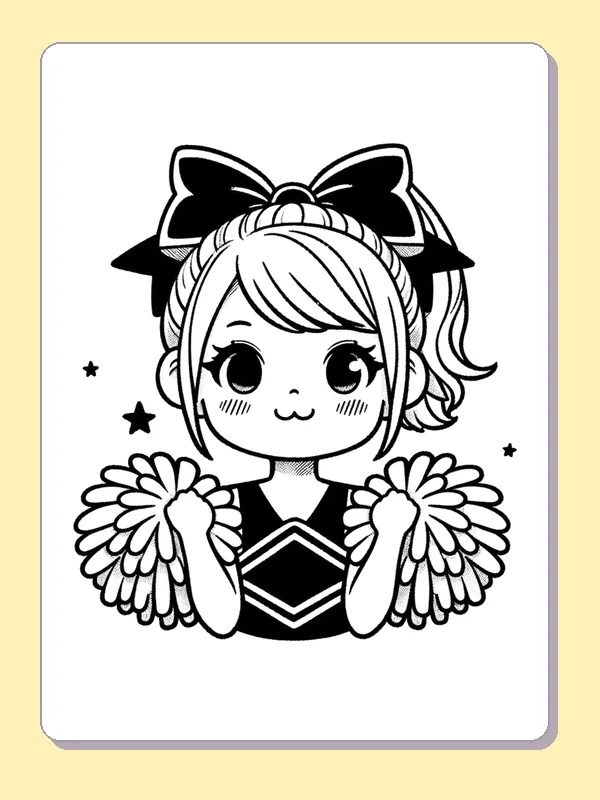


17 pagesAges 5–12Children interested in sports and movement
Skills: noticing body positions · repeating a team color palette · talking about cooperative activities
Try this: Invent team colors. Pick two colors for a uniform and repeat them in the bow and pom-poms.


24 pagesAges 4–10Children who like little storybook characters
Skills: following a clover shape · repeating colors in coins or rainbow bands · telling a story from small picture clues
Try this: Build a tiny story. Put the welcome sign, bicycle and treasure pages in an order and tell what happens.


20 pagesAges 5–12Families and teachers introducing gratitude
Skills: recognizing peace and thank-you symbols · coloring separate people and clothing · explaining a detail in a picture
Try this: Write one thank-you. Add a short note beside a finished service dog or reunion picture.

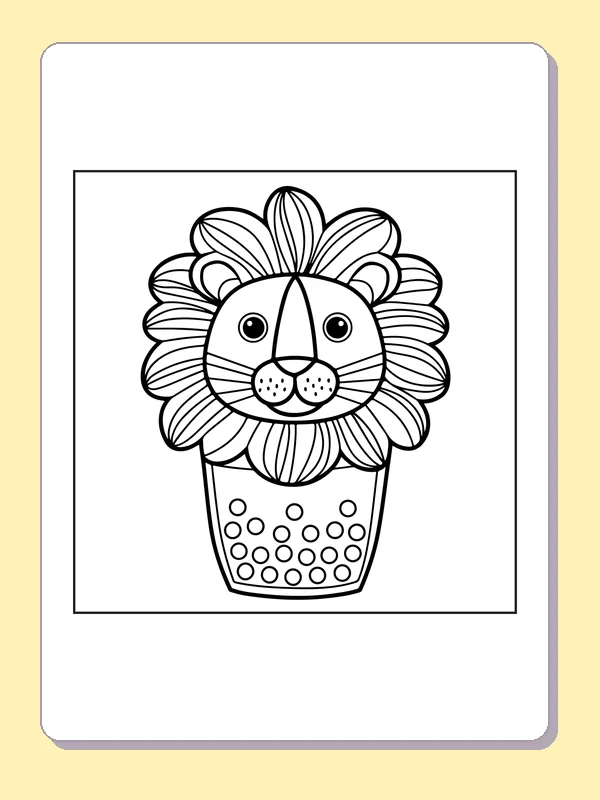

20 pagesAges 4–11Drink and snack fans
Skills: coloring repeated pearl shapes · planning a pretend flavor palette · telling a story from character poses
Try this: Name the flavor. Choose one cup, color it and invent a menu name for that tea.


20 pagesAges 4–10Fruit and small-world fans
Skills: recognizing fruit parts · separating foreground and background · inventing a setting from a picture
Try this: Find the leafy cap. Spot and color the leaf top each time a berry becomes a house.


20 pagesAges 3–9Seaside and summer fans
Skills: recognizing beach objects · sorting land and sea colors · sequencing a simple story
Try this: Pack the wagon. Circle every item a child would take to the sand before coloring the wagon.


20 pagesAges 5–12Landscape and sky fans
Skills: separating foreground and background · using repeated color bands · explaining a picture's setting
Try this: Sky bands. Choose three sunset colors and place them in bands above one horizon.


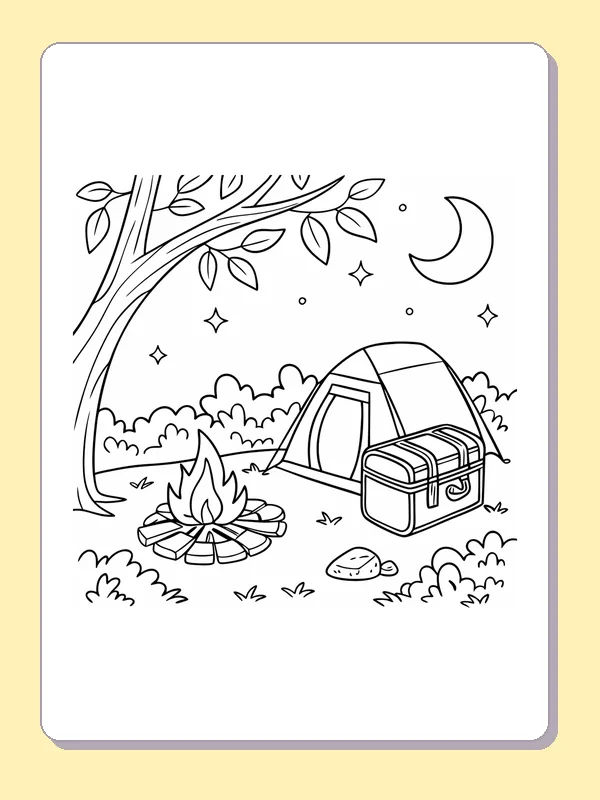
20 pagesAges 5–12Outdoor and camping fans
Skills: recognizing flame and log shapes · planning warm and cool contrast · sequencing an outdoor scene
Try this: Find the fire ring. Trace the stones around one campfire before coloring the flame.
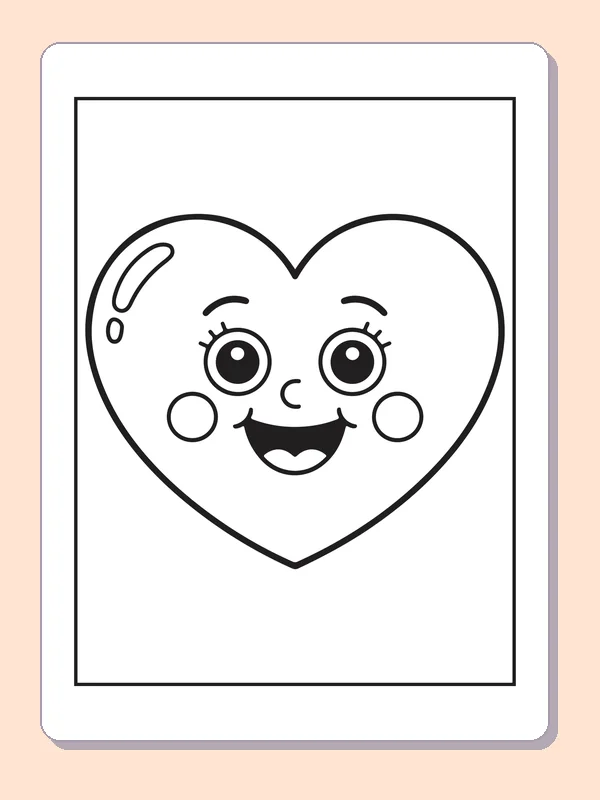


20 pagesAges 3–10Card makers and animal fans
Skills: coloring broad heart shapes · following simple patterns · choosing colors for a recipient
Try this: Make one card. Color the envelope or a heart and add a short kind message inside a folded sheet.


20 pagesChildren ages 5–12Families inventing stories
Skills: comparing architectural shapes · planning sky and stone colors · inventing a setting
Try this: Name the castle. Give one finished building an invented name and a place on a drawn map.
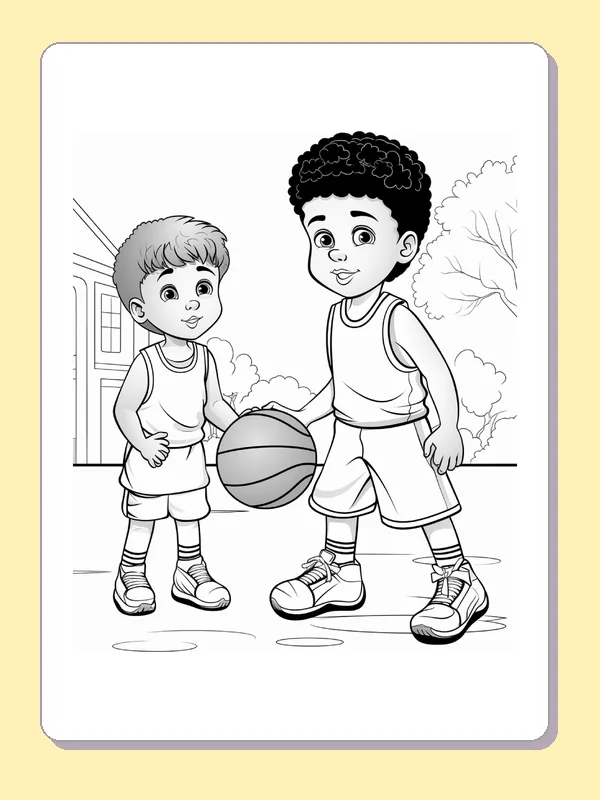


20 pagesChildren ages 5–12Families with young basketball fans
Skills: noticing ball seams · planning team colors · describing player movement
Try this: Design a team. Give three players matching shirts and invent a team name.


12 pagesChildren ages 3–8Families planning a quick coloring break
Skills: making repeating color patterns · noticing above and below · inventing a flight story
Try this: Stripe the balloon. Alternate two colors around one balloon's curved panels.


25 pagesChildren ages 3–9Families exploring different games
Skills: recognizing sports equipment · describing movement · trying new activities
Try this: Match the equipment. Point to each object and name the sport before coloring.


20 pagesChildren ages 7–12Vehicle fans who enjoy detail
Skills: comparing viewpoints · noticing wheel and body shapes · designing a color scheme
Try this: Design a paint job. Give the same body shape two different color plans on separate prints.


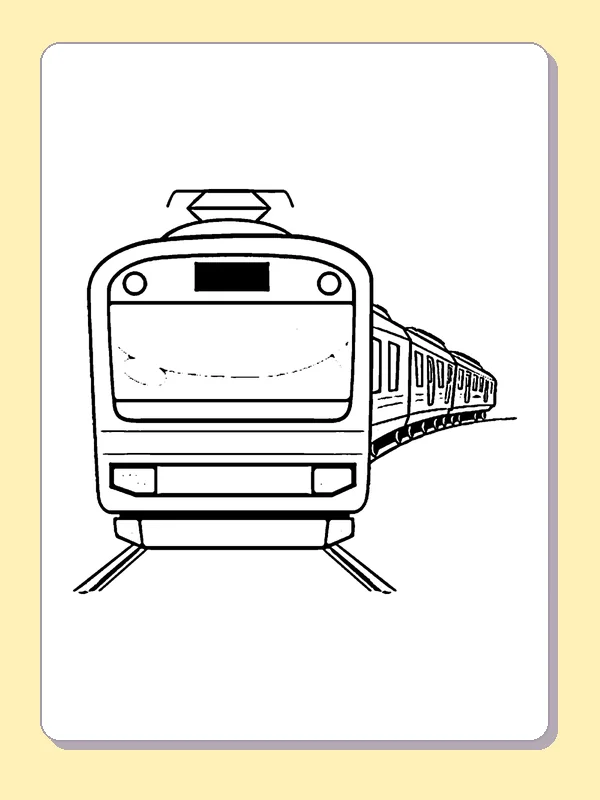
15 pagesChildren ages 4–10Families exploring transport
Skills: sorting by travel mode · noticing vehicle parts · sequencing a trip
Try this: Sort by route. Group printed pages into road, rail, water, and sky.


12 pagesAges 4–9Children curious about garden animals
Skills: counting legs and repeated web lines · choosing colors for small and large shapes · describing a garden hiding place
Try this: Count the legs. Find all eight legs before choosing a color for the round body.


14 pagesAges 3–9Children practicing simple color patterns
Skills: alternating colors across body segments · noticing leaves and flowers around animals · describing a short picture sequence
Try this: Make an AB pattern. Choose two crayon colors and alternate them along one caterpillar.
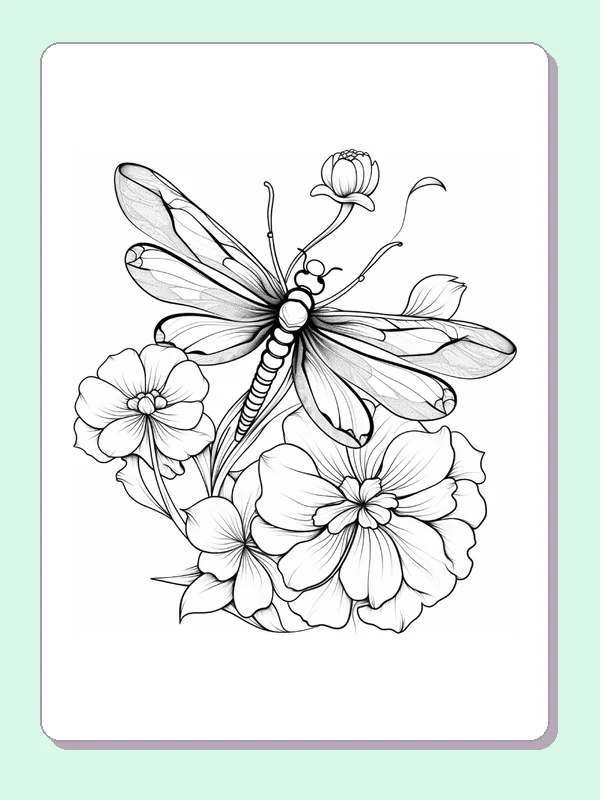


12 pagesAges 4–10Children who like ponds and garden bugs
Skills: matching colors across paired wings · following body stripes · comparing pond and flower habitats
Try this: Pair the wings. Color two upper wings alike and choose a second color for the lower pair.


19 pagesAges 4–10Children curious about animal shapes
Skills: following a curved animal outline · repeating simple scale patterns · sorting animals by visible movement
Try this: Trace the tail. Follow a snake or lizard tail with a finger before coloring it.


24 pagesAges 3–9Children who like sea animals
Skills: choosing colors for broad animal shapes · finding bubbles and small reef details · ordering pictures into a simple story
Try this: Sort by movement. Group animals that swim, float or walk along the seabed.


25 pagesChildren and familiesAnimal and habitat activities
Skills: Noticing horns, ears and animal shape · Comparing animal sizes · Choosing colors for weather and place
Try this: Compare two sizes. Place the rhino-and-turtle or rhino-and-bird sheet on the table and point to the big and little animal.


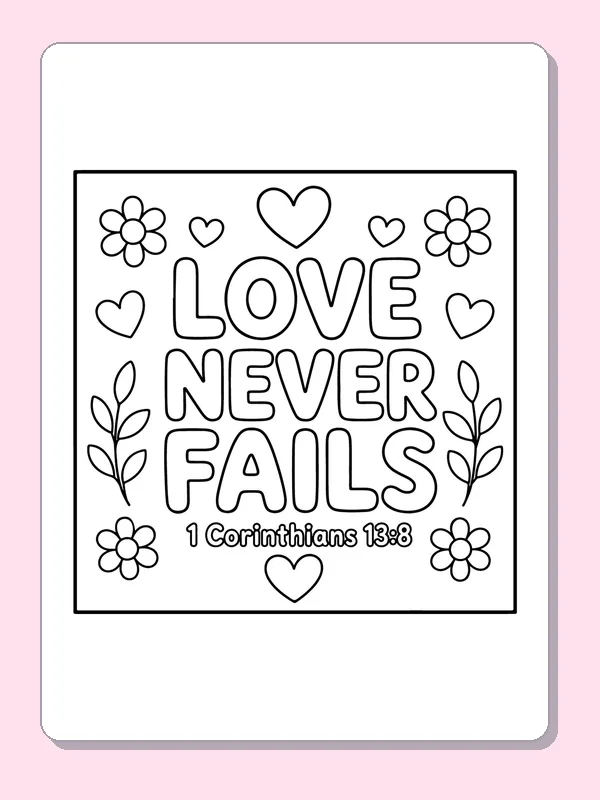
20 pagesAges 4–10Families seeking a gentle Bible activity
Skills: reading short messages · repeating color patterns in letters · talking about kindness and peace
Try this: Color one word first. Ask which word stands out, then make it the brightest part of the page.


20 pagesOlder children and teensAdults who enjoy symbol art
Skills: following an interlaced line · building contrast with a small palette · recognizing symmetry
Try this: Use just three colors. Pick a dark, light and accent color for one star or compass design.


20 pagesAges 4–8Young beach and ocean fans
Skills: identifying claws and beach objects · counting towers, flags and shells · planning colors for sea, sand and sky
Try this: Count the castle towers. Find each turret before choosing one color for the main wall and another for the roofs.


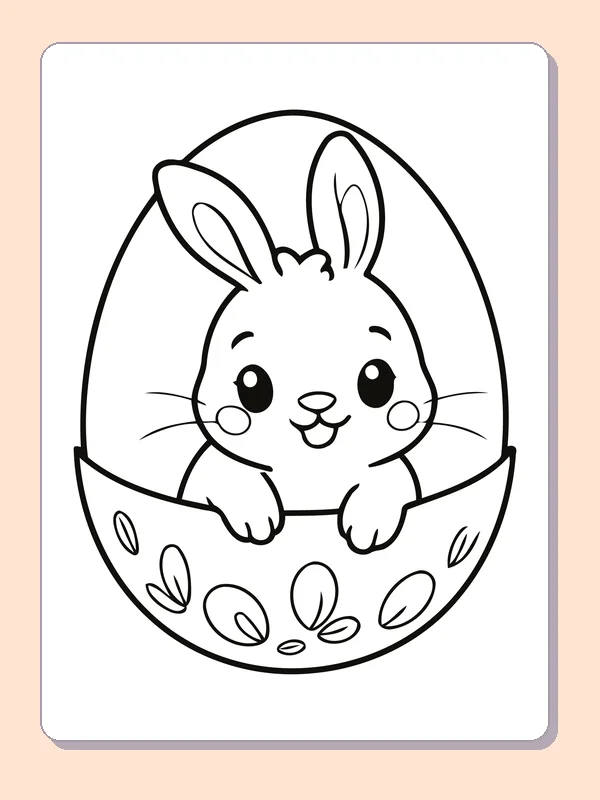
13 pagesAges 4–9Children who enjoy spring animals
Skills: recognizing stripes, dots and zigzags · counting eggs and rabbit ears · telling a short sequence with pictures
Try this: Make an egg pattern. Choose two colors and alternate them along one large zigzag egg.


25 pagesAges 4–10Children who enjoy food characters
Skills: matching repeating border colors · naming familiar food shapes · choosing one scene by detail level
Try this: Plan a pretend menu. Color a taco, guacamole bowl and lime, then name a pretend meal.


20 pagesStudents ages 5–12Families making teacher gifts
Skills: reading and choosing a message · coloring outlined letters · adding a personal written note
Try this: Choose a message. Read three pages together and let the child pick one that matches their teacher.
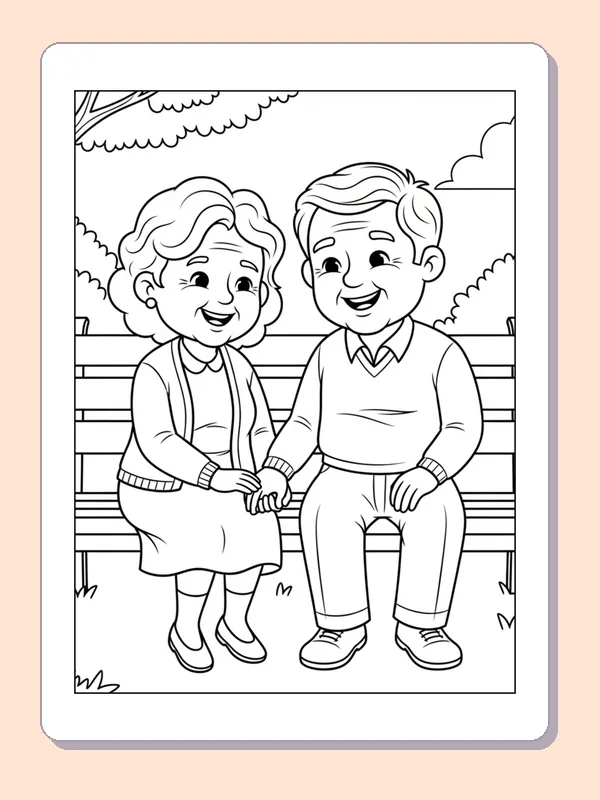


24 pagesAges 4–12Children making a personal greeting
Skills: describing a shared memory · choosing detail by confidence · writing a short personal note
Try this: Choose a memory. Pick a page that resembles something you have done together, then tell the story.


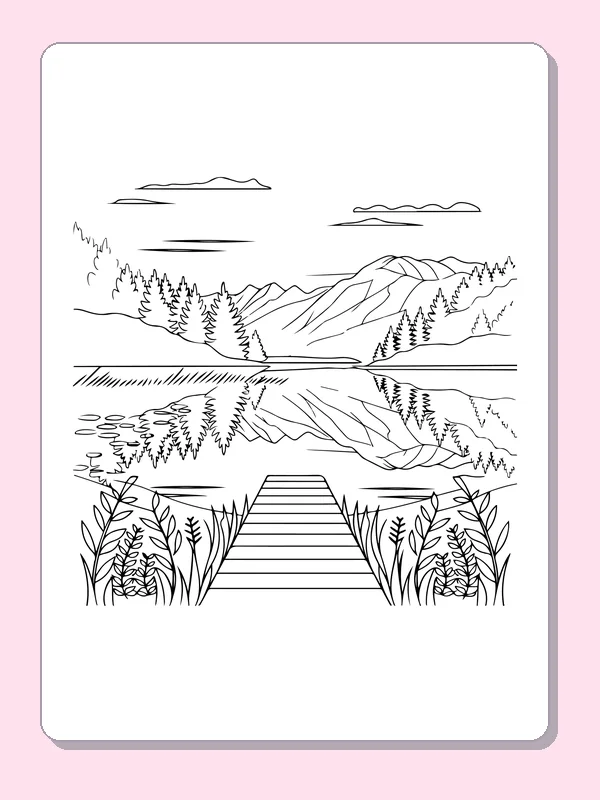
20 pagesAges 6–12Children who enjoy nature scenes
Skills: noticing repeated natural shapes · choosing a calm color palette · finishing a small area at a time
Try this: Color one branch. Choose just one tree branch and fill its leaves before moving elsewhere.


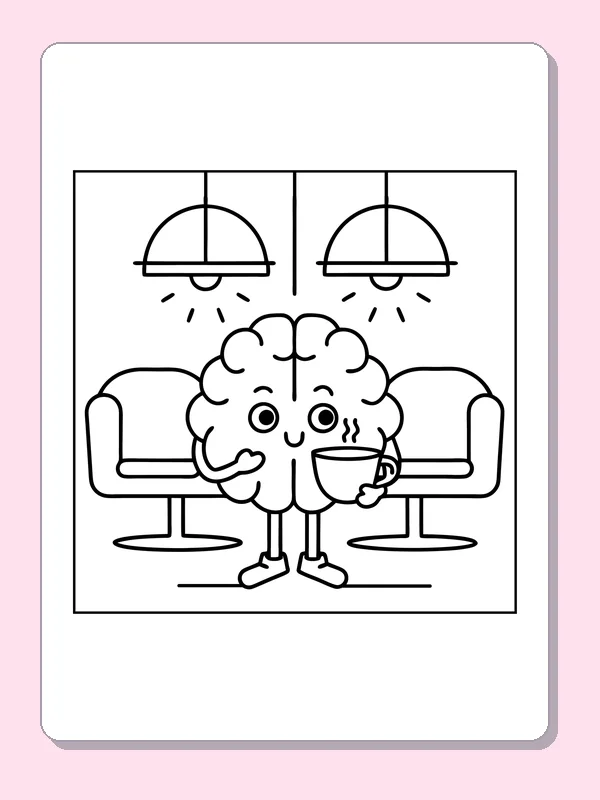
19 pagesAges 4–10Children curious about their bodies
Skills: recognizing a few body-part shapes · describing a character action · comparing broad and detailed scenes
Try this: Name the part. Point to the main shape before coloring and say the body part's name.


19 pagesAges 5–12Children who enjoy coloring letters
Skills: reading a short message · planning a simple letter palette · choosing whom to share a page with
Try this: Pick today's words. Read three short messages together and let the child choose one.


20 pagesAges 4–10Children curious about farm work
Skills: naming a visible farm task · following a planting-to-harvest sequence · choosing colors for plants and tools
Try this: Plant to harvest. Pair a planting scene with a produce basket and tell what happened between them.


24 pagesAges 4–10Children who like silly characters
Skills: noticing eyes and mouth shapes · comparing expressive details · telling a short character story
Try this: Guess the mood. Look at three pictures and describe what each character might be doing.


22 pagesAges 7–12Children curious about body structures
Skills: identifying major body shapes · comparing structures · using a simple color key
Try this: Trace the shape. Follow one large outline with a finger before filling it with color.


20 pagesAges 4–11Dress-up and design fans
Skills: spotting garment details · making repeating patterns · explaining an outfit choice
Try this: Design a print. Choose a plain dress and draw one tiny repeating motif before coloring it.


20 pagesAges 5–11Dress-up and pretend-play fans
Skills: reading visual clues · choosing colors for an outfit · telling a story from a setting
Try this: Name the doll. Choose a name and one favorite thing for each colored character.


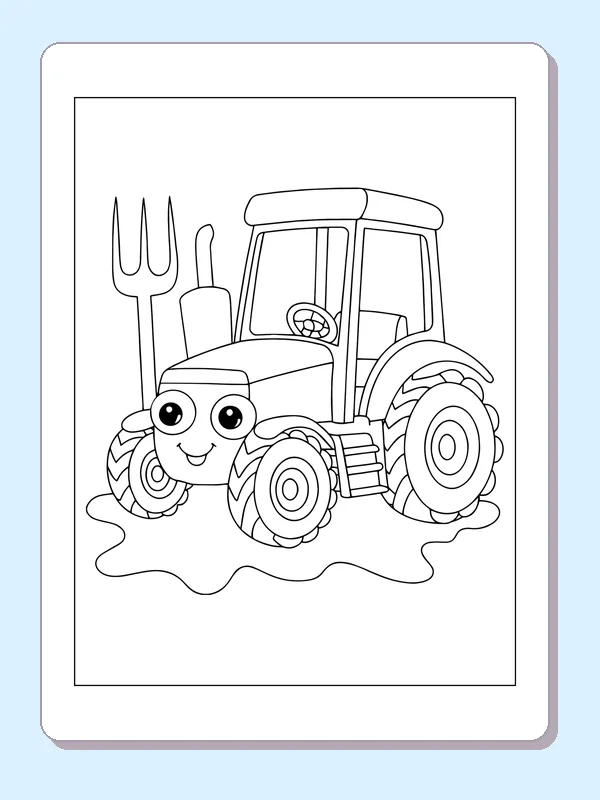
20 pagesAges 3–9Farm and vehicle fans
Skills: recognizing machine parts · counting and comparing wheels · linking a tool to a job
Try this: Wheel hunt. Find and color every tire before the tractor body.


18 pagesAges 5–12Space and science fans
Skills: recognizing planet features · comparing Earth and other worlds · sequencing a space journey
Try this: Find the rings. Circle each ringed planet, then color the rings separately.


20 pagesAges 4–10Dessert and pretend-café fans
Skills: spotting fruit toppings · making a flavor color plan · describing a finished design
Try this: Name the shake. Color one glass and make up a flavor name for a pretend menu.
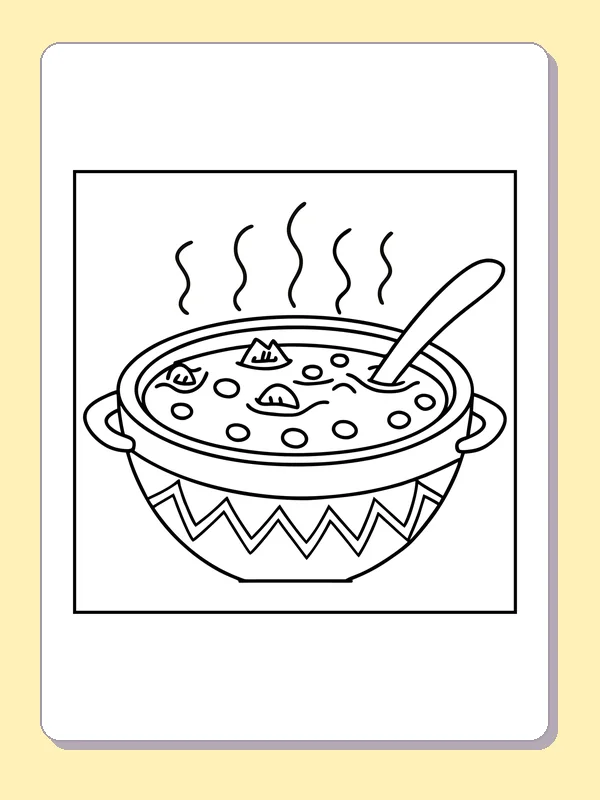

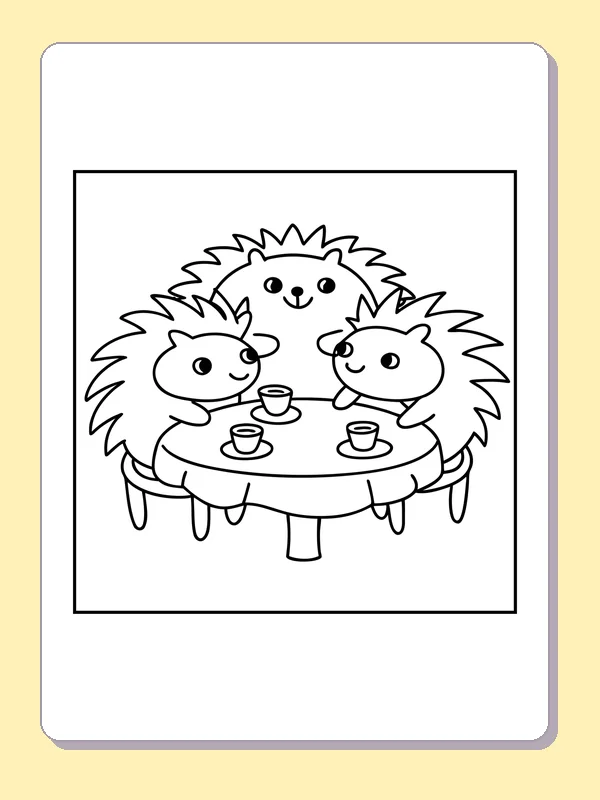
20 pagesAges 3–10Quiet-time and cuddle fans
Skills: recognizing comfort objects · using a limited color palette · describing a picture’s mood
Try this: Find the warm thing. Point to the cup, food, blanket or fire before coloring.


20 pagesAges 5–12Children who like quiet activities
Skills: choosing a limited palette · noticing small comfort objects · working at a self-chosen pace
Try this: One-color start. Pick one color for the largest cup, blanket or notebook shape.


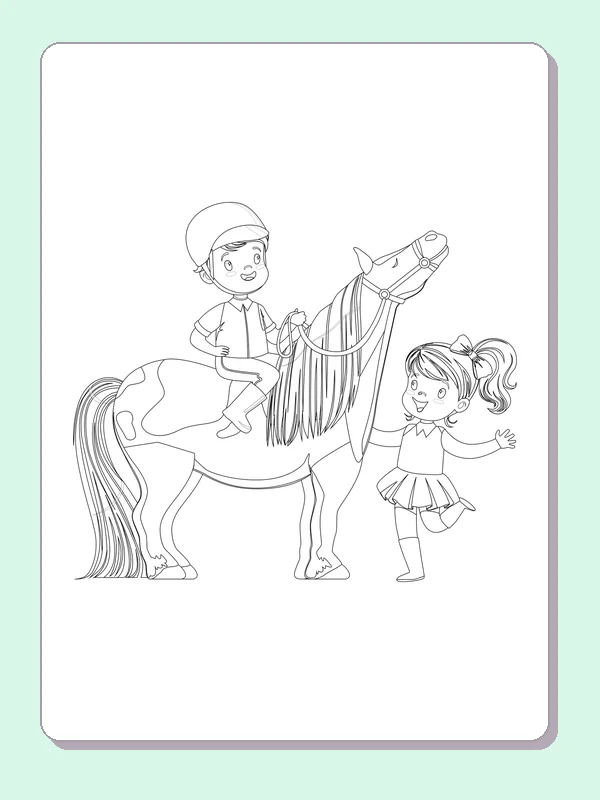
17 pagesAges 5–10Children curious about ponies and riding
Skills: separating mane, coat and tack · noticing caring gestures between child and animal · sequencing a short stable story
Try this: Choose a coat and mane. Give the pony’s broad body one shade and its flowing hair a different shade.


12 pagesAges 5–10Children interested in horses and western stories
Skills: separating horse, rider and tack · sequencing a ranch-day story · noticing how people care for animals
Try this: Choose a horse coat. Give the horse a coat color, then shade the mane, tail and saddle separately.
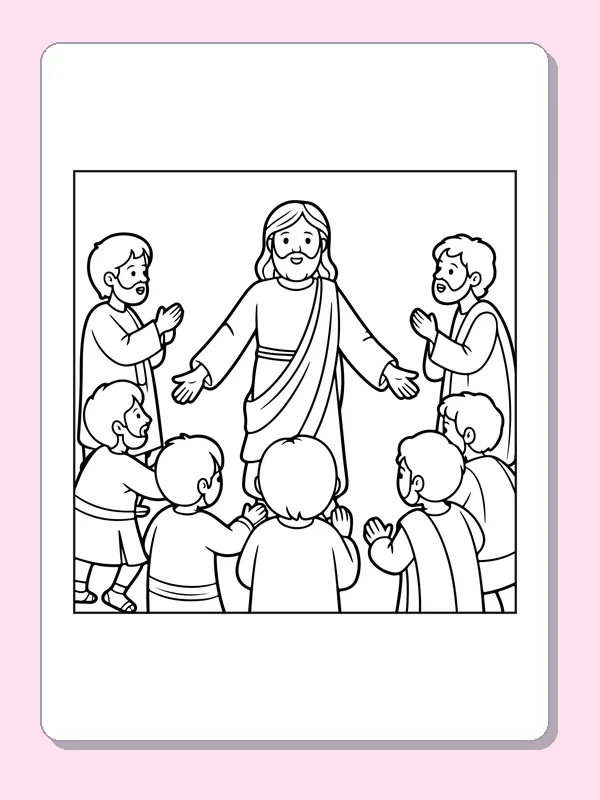


16 pagesFamilies reading Christian Bible storiesSunday school and faith lessons
Skills: noticing story clues in an image · planning colors across a group scene · retelling an illustrated moment
Try this: Find the clue. Point to a boat, basket, well or basin and ask which part of the story it might belong to.


16 pagesFamilies making faith craftsSunday school groups
Skills: Filling broad central shapes · Repeating colors through window panes · Following overlapping vines and petals
Try this: Choose a quick cross. Print a cloud or hilltop drawing when the activity time is short.


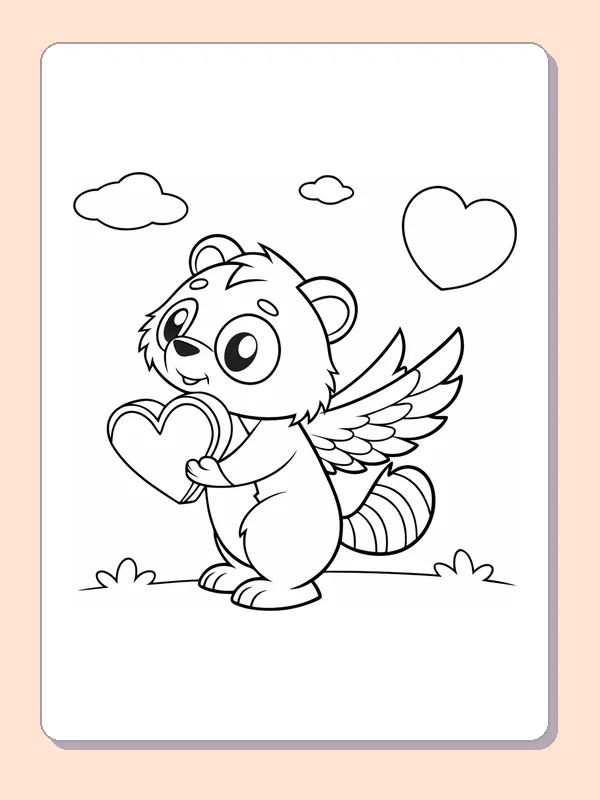
12 pagesAges 4–10Children making Valentine cards
Skills: coloring repeated heart shapes · noticing wing and fur details · writing a short kind message
Try this: Choose an animal. Pick one winged friend and decide whom the finished page is for.
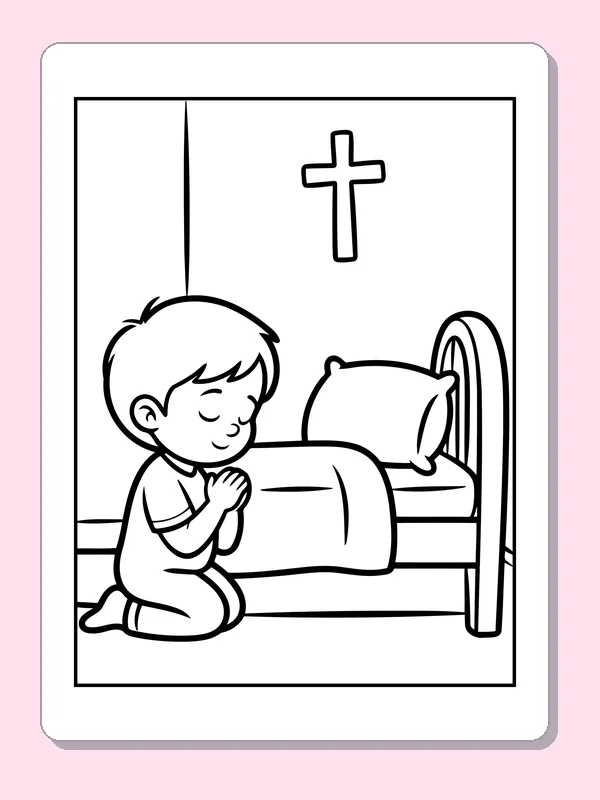

12 pagesAges 4–10Christian families
Skills: recognizing action in pictures · coloring people and settings · describing a quiet routine
Try this: Point to the action. Find folded hands, a candle, a book or music notes.


23 pagesAges 4–10Christian families
Skills: recognizing large words · connecting words with pictures · coloring broad outlined letters
Try this: Read one phrase. Point to a word before coloring its outline.


20 pagesChildren who enjoy pretend shop and package-design drawingHome, library and classroom art tables
Skills: Repeating a chosen package palette across different objects · Distinguishing visible tools from ambiguous containers · Noticing small shape patterns in palettes, brush heads and labels
Try this: Design a three-item shelf. Color a compact, lipstick and bottle with one matching label or cap color.


20 pagesAges 4–10Kawaii character fans
Skills: choosing a character palette · noticing setting clues · inventing a short story
Try this: Name a friend. Give a smiling object a name after coloring it.


20 pagesTeens and adults who enjoy portraitsFlower and plant colorers
Skills: Repeating a small palette through petals · Separating a figure from its background · Choosing warm and cool shades for a room
Try this: Choose a frame color. Color the outer flowers first, then bring one petal shade into the portrait or clothing.


20 pagesAges 3–7Beginner colorers
Skills: color recognition · repeating a sequence · basic hand control
Try this: Every other one. Choose two colors and alternate them across a row.


20 pagesTeens and adultsPatient colorers
Skills: Tracking adjacent narrow paths · Planning contrast in repeated bands · Completing one section at a time
Try this: Follow a single route. Trace one maze band before coloring so adjacent paths stay distinct.


20 pagesAdultsTeen detail colorers
Skills: Planning repeated color rings · Working around fine leaf shapes · Returning to a dense design in stages
Try this: Pick one starting ring. Finish the central flower before deciding whether the outer leaves will repeat its colors.


20 pagesAges 4–10Halloween craft tables
Skills: color repetition · counting treats · choosing contrasting accents
Try this: Design a wrapper. Give one wrapped sweet a new two-color pattern.


20 pagesAges 4–10Children curious about plants
Skills: noticing different leaf shapes · following a stem and vein · repeating colors in paired leaves
Try this: Compare three leaves. Choose the maple, fern and palm pages and name one difference in each shape.


20 pagesAges 6–12Fantasy worldbuilders
Skills: reading a scene · planning a color route · telling a setting-led story
Try this: Follow the bridge. Color a path from the foreground to a castle, then name its destination.


15 pagesAges 4–9Children who like homes and woodland stories
Skills: finding foreground and background · repeating colors across wood and pinecones · sequencing a day from morning to night
Try this: Choose a season. Make one cabin hill green for summer or white for a snowy winter.


30 pagesAges 5–11Children who prefer playful Halloween art
Skills: recognizing an animal under a costume · separating foreground figures from night scenery · choosing an appropriate detail level
Try this: Match a costume. Pick one animal and color its costume without hiding its identifying features.


20 pagesAges 6–12Children interested in dirt bikes and motorsports
Skills: separating rider gear from the bike · following a track line through an action scene · sequencing preparation, riding and rest
Try this: Pick racing colors. Repeat one helmet color on the bike fender for a simple team look.


22 pagesAges 6–12Children who like unusual Halloween toys
Skills: separating toy fabric from stitched details · using repeated colors in borders · sequencing toy scenes into a short story
Try this: Design a patchwork toy. Choose two fabric colors and repeat them on the doll’s body and clothes.


30 pagesAges 6–12Kids who enjoy basketball and friendly creatures
Skills: tracking the ball through a scene · planning team colors across pictures · describing a sequence of game actions
Try this: Invent team colors. Give two alien teammates matching jerseys, then make the opposing team a different pair of colors.


24 pagesChildren who enjoy horses, ranch animals and outdoor storiesHome, library and classroom coloring tables
Skills: Naming the difference between a calf, a horse, a pony and a dog · Sequencing riding, animal care and rest into a picture story · Comparing one broad figure with a two-subject ranch scene
Try this: Give the cowgirl a signature hat. Choose one hat color and carry it through the horse, calf and hay-bale pages as if they share a character.


20 pagesFamilies marking April 1 with a quiet activityClassrooms discussing gentle visual humor
Skills: spotting incongruous details in a picture · describing a visual joke in words · planning colors across letters and costumes
Try this: Name the odd detail. Before coloring, ask what makes the dog, dinosaur or cat look unexpected.


15 pagesAges 4–9Children who like animals and music
Skills: identifying instruments · comparing how instruments are played · repeating colors across a small group of pictures
Try this: Build a tiny band. Choose a drummer, a melody player and a singer from the pages, then name the group.


20 pagesChildren who enjoy trucks and toolsFamilies exploring community jobs
Skills: Matching a tool to a pictured job · Noticing sequences of building actions · Working from broad vehicle shapes to narrow frame beams
Try this: Point to the working part. Find the excavator arm, loader scoop, roller drum or saw before choosing colors.


27 pagesChildren who like animals and frozen treatsSummer activities at home or school
Skills: separating an animal from its setting · repeating a color across stripes or spots · telling a short scene-based story
Try this: Make a flavor menu. Name the scoops or popsicles in three pictures and choose a distinct color for each flavor.


24 pagesAges 4–12Spring and garden activities
Skills: Noticing the shape of tulip cups · Choosing colors for paired wings · Separating near and far flower rows
Try this: Start with one bloom. Print a close-up and color the butterfly before choosing a shade for the single tulip.


30 pagesAges 4–10Children who like giant-tired vehicles
Skills: Repeating colors across wheels and body panels · Separating truck outlines from terrain · Turning ramp, beach and race scenes into a story
Try this: Design a team truck. Choose two body colors and repeat them on three different truck scenes.


20 pagesChildren who enjoy cats, pretend shops and decorated pastriesHome, library and classroom storytelling tables
Skills: Finding repeated icing patterns across rows of donuts · Sequencing choosing, serving, packing and eating into a shop story · Noticing how one character appears in different settings
Try this: Invent the bakery colors. Choose two frosting colors and one box color, then repeat them in a display, takeaway and cart scene.


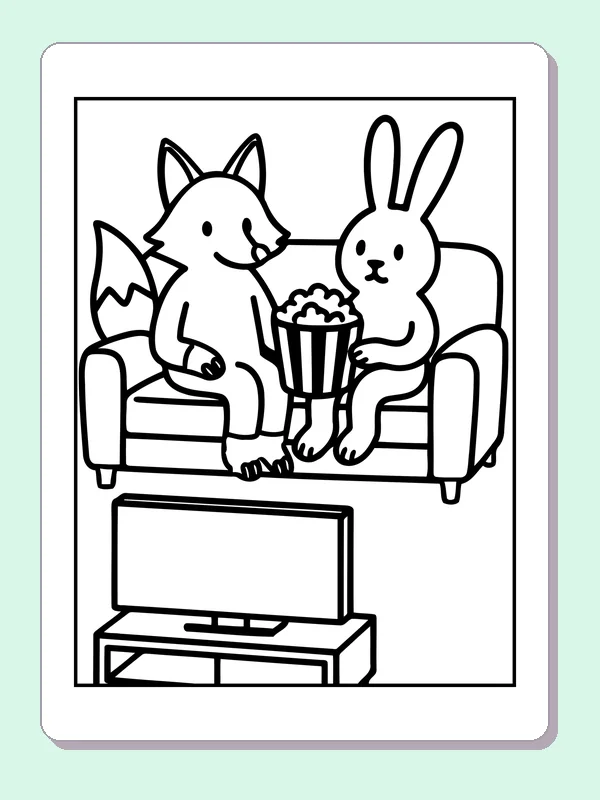
20 pagesChildren who enjoy friendly animal charactersHome and classroom story prompts
Skills: noticing a shared action between characters · telling a short sequence from separate pictures · planning colors for foreground and setting
Try this: Find the shared object. Point to the book, paintbrush, flowers or tray that brings the pair together.


22 pagesChildren who enjoy make-believe sea voyagesFamilies choosing between calm and storm scenes
Skills: Separating sail panels from rigging · Following overlapping wave lines · Ordering pictures into a three-part story
Try this: Choose a destination. Point to an island, mountain or lighthouse before coloring the ship.


15 pagesAges 4–9Children who enjoy dogs and fairy tales
Skills: recognizing a returning character · repeating colors across scenes · telling a simple daily sequence
Try this: Royal color. Keep one cape color across three corgi pictures.
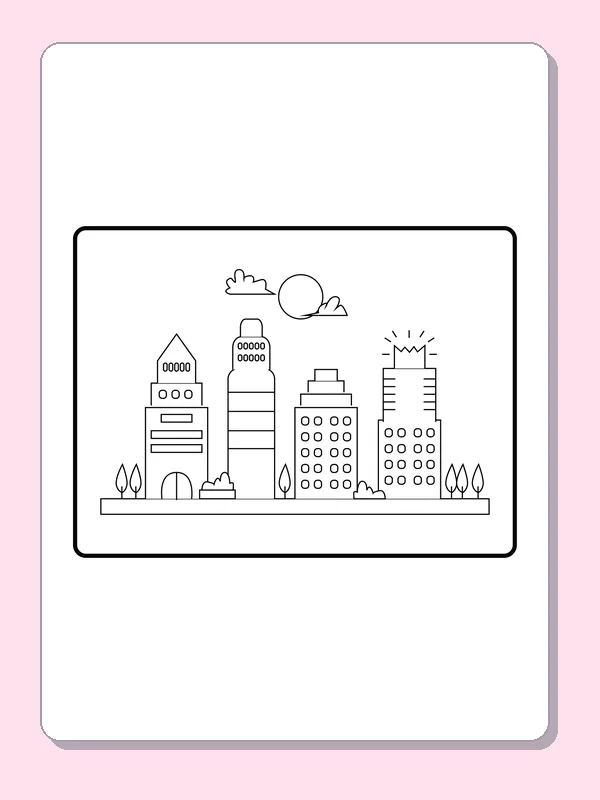


19 pagesChildren interested in buildings and transportClassroom city and neighborhood activities
Skills: finding near and distant parts of a scene · making repeating window patterns · following roads through a picture
Try this: Repeat a window color. Choose one building and color every other window the same shade.

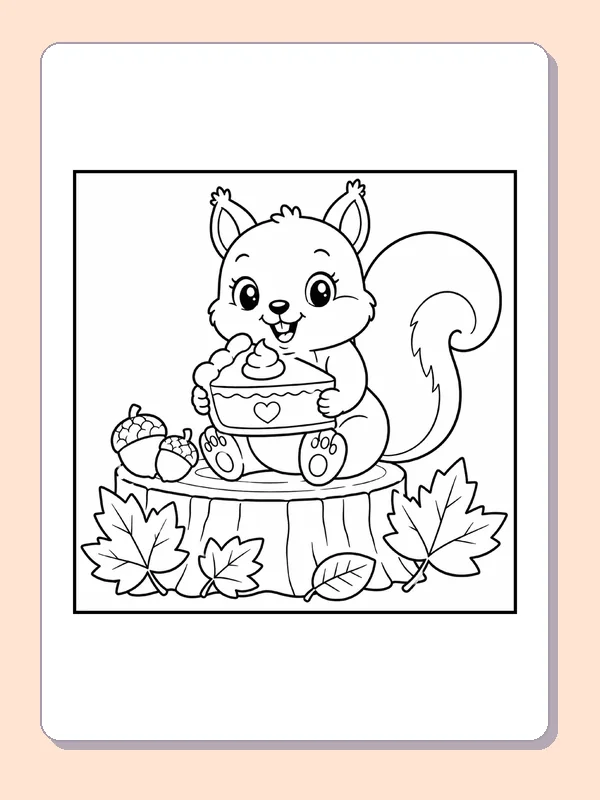
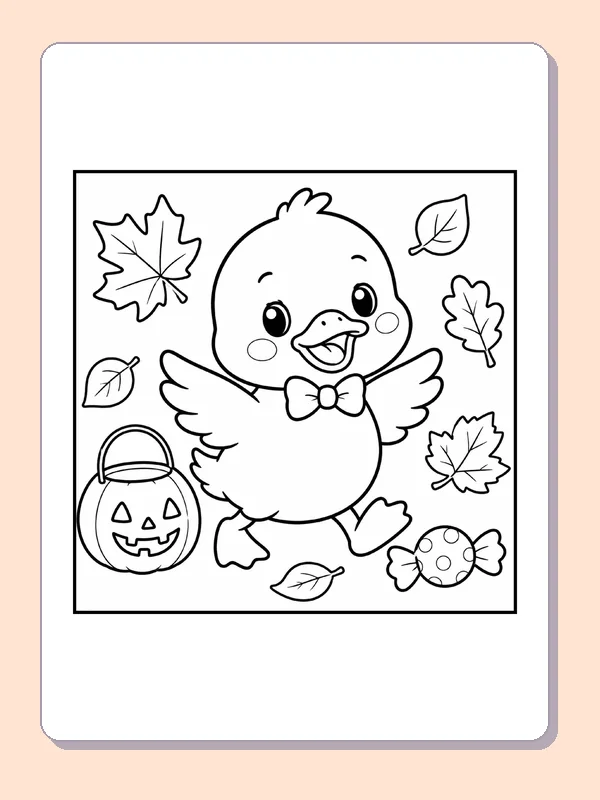
49 pagesChildren who prefer friendly Halloween picturesFamilies making a quiet autumn craft
Skills: Filling broad character shapes · Separating costume pieces from animal features · Comparing repeated pumpkin uses
Try this: Pick a warm object. Color a mug, candle or fireplace first, then add the room around it.


14 pagesChildren who enjoy spotted big catsFamilies looking for animal pictures with trees and paths
Skills: Following spots across a curved tail and legs · Separating the leopard outline from leafy backgrounds · Choosing a background value that keeps the animal visible
Try this: Follow the tail. Trace the tail from the body to its tip on three different poses before coloring the spots.


20 pagesAges 4–9Children who like crowns and heart shapes
Skills: matching repeated heart shapes · coloring large character shapes · inventing a simple setting
Try this: Crown colors. Choose three colors and repeat them on every heart in one crown.


50 pagesChildren who like original caped charactersFamilies inventing short fantasy stories
Skills: separating costume details from a character · choosing foreground and background colors · linking two pictures into a story
Try this: Give the team one badge. Choose a shared badge color for three heroes with different capes.


18 pagesChildren who like whales and narwhalsFamilies choosing between quick and detailed ocean sheets
Skills: following a large animal outline · separating foreground animal from reef · noticing differences between realistic and fantasy scenes
Try this: Color from whale to reef. Finish the main animal, then choose only three nearby coral or fish shapes.


20 pagesChildren curious about familiar jobs and toolsClassroom neighborhood discussions
Skills: recognizing a worker through tools and signs · describing how jobs connect in a neighborhood · separating a main figure from a detailed scene
Try this: Find the tool. Color the envelope, basket, stop sign, hose or shovel before the worker.


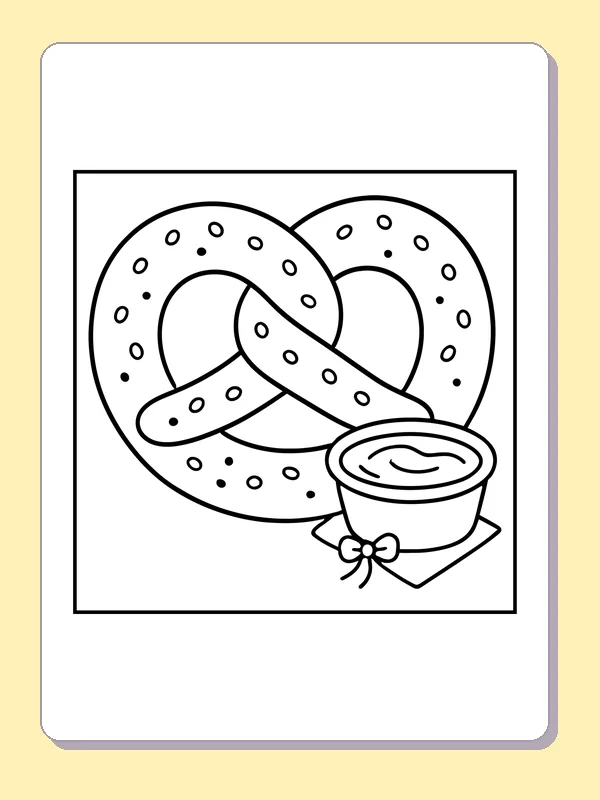
30 pagesChildren and familiesPretend cafe activities
Skills: Recognizing food shapes · Separating layers and fillings · Choosing colors and flavors
Try this: Build a menu. Choose one meal, drink and dessert, then give the finished dishes names on a pretend cafe menu.


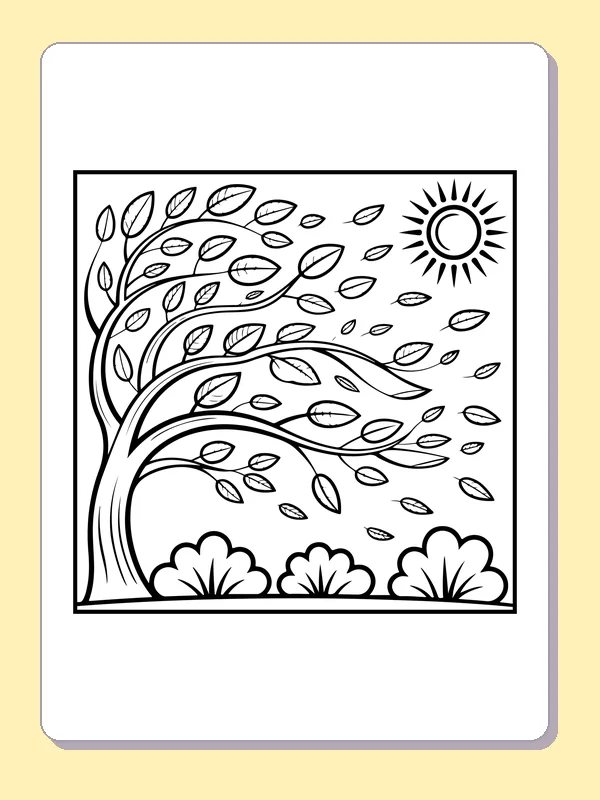
30 pagesChildren who like outdoor placesFamilies making a quiet nature-themed activity
Skills: Tracing a stream through a picture · Separating near flowers from far hills · Choosing colors for different weather
Try this: Follow the stream. Point to where the river begins and where it leaves the page.


30 pagesChildren who enjoy clothes and invented outfitsHome or classroom art and storytelling
Skills: matching accent colors across garments · spotting and repeating a fabric pattern · planning colors for clothes and their setting
Try this: Choose one accent. Repeat a color on a coat, shoe and bag across three sheets.


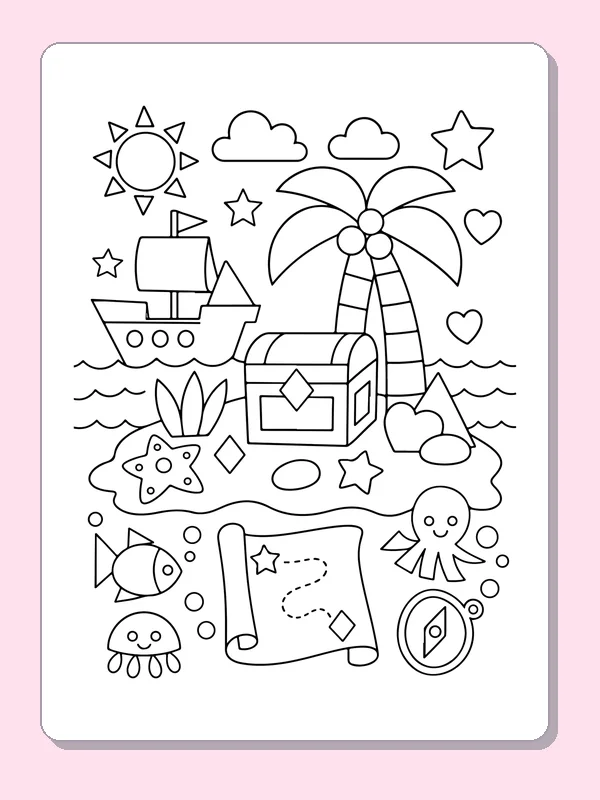
30 pagesAges 4–8Preschool and early elementary learners
Skills: identifying geometric forms · matching repeated shapes · noticing shapes in scenes
Try this: One-shape hunt. Find and color every circle on a chosen page.


20 pagesAges 4–9Children curious about garden creatures
Skills: noticing spots and stripes · comparing wing shapes · following spirals and segments
Try this: Spot count. Count the dots on one ladybug before coloring its shell.


30 pagesAges 4–9Children who like ocean animals
Skills: spotting fins and shells · counting groups of fish · planning colors for a foreground and background
Try this: Surface to seabed. Arrange a dolphin, seahorse and crab where each might swim or rest.


30 pagesAges 3–8Beginning pattern spotters
Skills: noticing repeated shapes · making simple color sequences · working through rows and grids
Try this: Two-color row. Alternate two colors across one row of houses or lollipops.


30 pagesAges 4–9Families planning a United States celebration
Skills: following stripes and star outlines · recognizing familiar symbols · planning a repeating color sequence
Try this: Three-picture set. Choose a symbol, a parade decoration and a decorated everyday object.


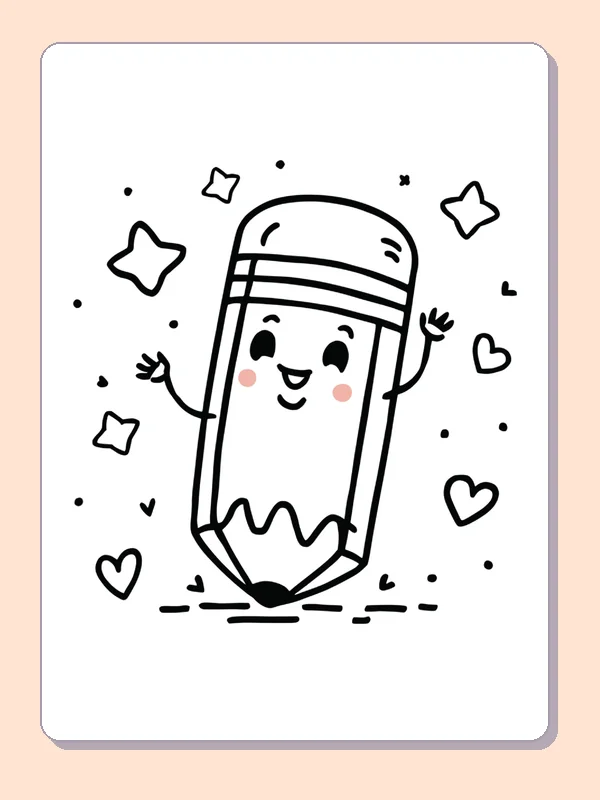
20 pagesAges 4–9Children preparing for a new school term
Skills: noticing familiar school objects · following straight and curved lines · talking through a simple routine
Try this: Pack a bag. Color a backpack and name two things to put inside it.


15 pagesFamilies choosing Christian faith-themed artSunday school and faith classrooms
Skills: coloring a main symbol before its border · working through repeated petals and leaves · describing visible details in a faith scene
Try this: Color the main symbol. Finish a cross or Bible first, then pick just three flowers around it.


28 pagesChildren who like singing, dancing and pretend showsFamilies making a three-picture concert story
Skills: Recognizing rehearsal, studio and stage settings · Reusing a costume color across scenes · Ordering pictures into a short performance story
Try this: Design a costume. Give one bear a recurring bow, jacket or shoe color.


50 pagesAges 4–9Home and classroom
Skills: Naming school supplies · Color planning · Talking about routines
Try this: Pack a pretend bag. Choose three objects from the pictures and explain why they belong inside.

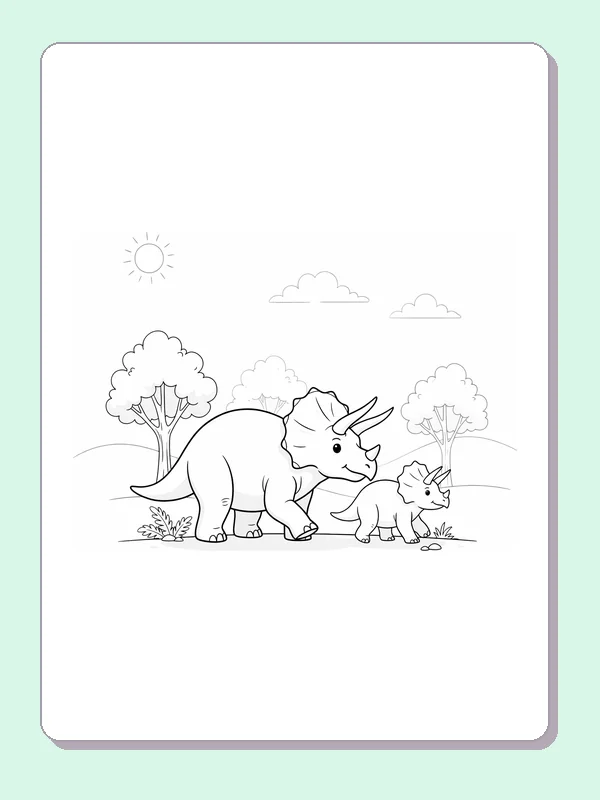
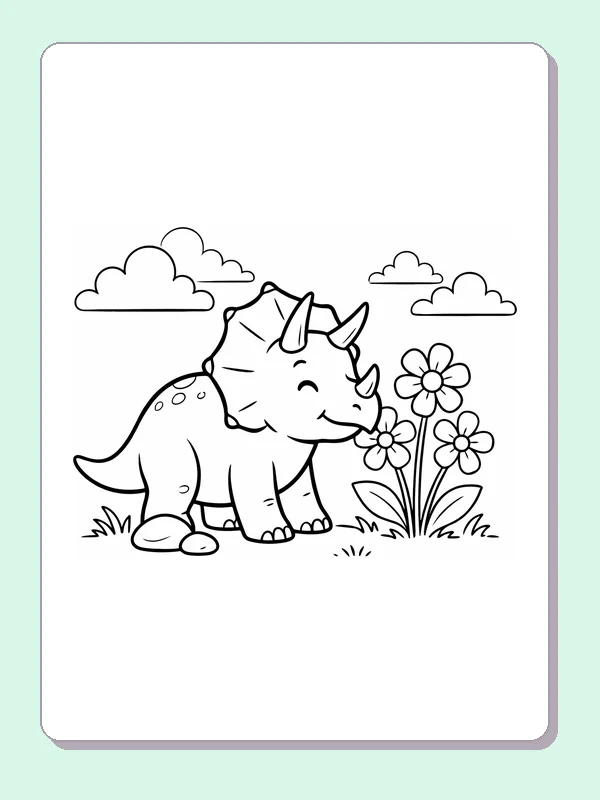
12 pagesAges 4–10Young dinosaur fans
Skills: identifying large and small shapes · following the frill and horn outlines · telling a sequence from pictures
Try this: Build a gentle herd. Color an adult and calf in related shades, then give each dinosaur a name.


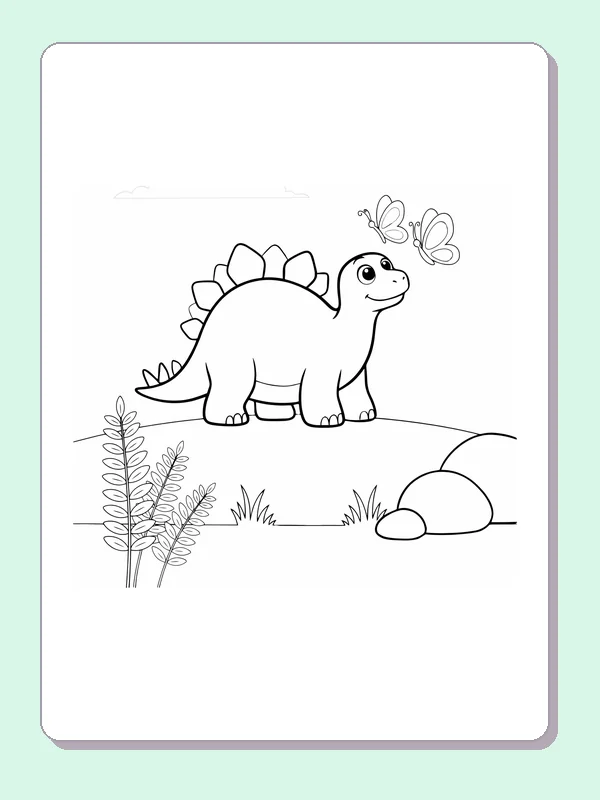
12 pagesAges 4–10Young dinosaur fans
Skills: following a repeated plate pattern · comparing large and small animals · building a day-and-night story
Try this: Color a plate pattern. Alternate two colors along the Stegosaurus back and see how the rhythm changes.


55 pagesChildren who enjoy animals and tropical sceneryHome and classroom nature-themed art sessions
Skills: separating near and distant plant layers · following a winding river or path · planning color around a focal animal
Try this: Color an animal first. Find a toucan, monkey, frog or snake before the leafy background.


12 pagesAges 4–12Bird fans
Skills: following feather patterns · telling a picture story · comparing bird shapes
Try this: Match a feather pattern. Color one wing with a repeating two-color pattern, then try a different pattern on the tail.


12 pagesAges 4–12Little bakers
Skills: recognizing simple shapes · planning repeating colors · telling a baking story
Try this: Invent a cookie flavor. Give a colored cookie a flavor name based on its icing and toppings.


12 pagesChildren comparing fruit growing, gathering and sharing scenesHome and classroom fruit-topic tables
Skills: Following the same fruit shape from branch to plate · Comparing whole, cut and character versions of fruit · Changing tools between broad mango shapes and fine leaf veins or weave
Try this: Make a three-step fruit story. Place the hanging mango, basket and plate pages in order and ask what happens between each picture.


12 pagesAges 3–9Garden and food activities
Skills: Sequencing a harvest · Noticing plant parts · Fine motor control
Try this: Tell a garden story. Put growing, harvesting and basket pictures in order after coloring.


12 pagesAges 4–10Home and classroom
Skills: Following a spiral · Counting small groups · Storytelling
Try this: Trace the swirl. Follow the spiral with a finger before adding color from the outside in.


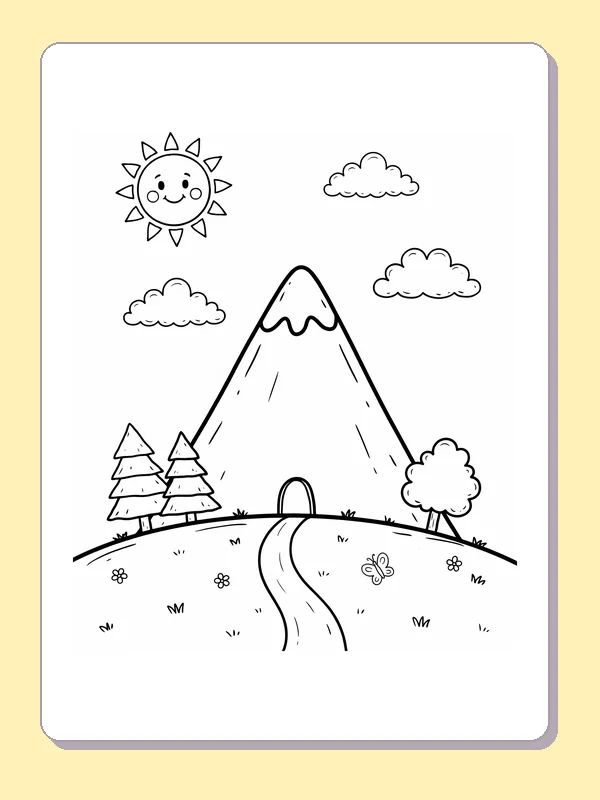
12 pagesAges 4–12Nature and geography activities
Skills: Near and far observation · Following a path · Creative storytelling
Try this: Trace a route. Follow a path or river with a finger and tell where it goes.


12 pagesChildren who enjoy dog stories and family outingsHome, library and classroom animal tables
Skills: Comparing coat markings across one and two dogs · Sequencing outdoor and home scenes into a story · Choosing colors for sunny, shaded and rainy settings
Try this: Make a dog-day sequence. Arrange family walk, ball game, wagon and porch sheets, then tell a short story about the route.


12 pagesChildren who enjoy dogs and seasonal settingsFamilies choosing an animal page with or without people
Skills: finding the same dog shape across different settings · working from broad coat areas to repeated background shapes · sequencing seasonal pictures into a story
Try this: Sort by weather. Place the lake, snowman, window and leaf pages in groups and tell what changed outside.


12 pagesChildren who enjoy friendly dog and family scenesGrown-ups choosing a quick portrait or longer outdoor page
Skills: finding one animal across different settings · working from broad coat shapes into small background details · sequencing pictures into a simple day-out story
Try this: Follow the dog outside. Place the kitchen, bicycle and creek pictures in order and ask how the dog got from one to the next.
More units are added as each collection goes live. Browse every topic in the A–Z index.
One theme a week, a few minutes a day, and a finished book on Friday.
Read a picture book on the theme, then color the simplest page together.
Pair each page with a short talk, a word to spell or something to count.
Print the coloring book, add the week's pages and let your child finish the cover.
Yes. All pages and books are free to print for classroom, co-op and homeschool use, as many copies as you need.
Start with the age and difficulty guidance on each collection. Pictures range from Easy to Detailed, so preview the artwork and choose what fits the children in your group.